
Assessing the Geopolitical and Economic Risks of the 2025 Thai-Cambodian Border Crisis on ASEAN Markets
Cross-Border Trade Disruptions: A Double-Edged Sword
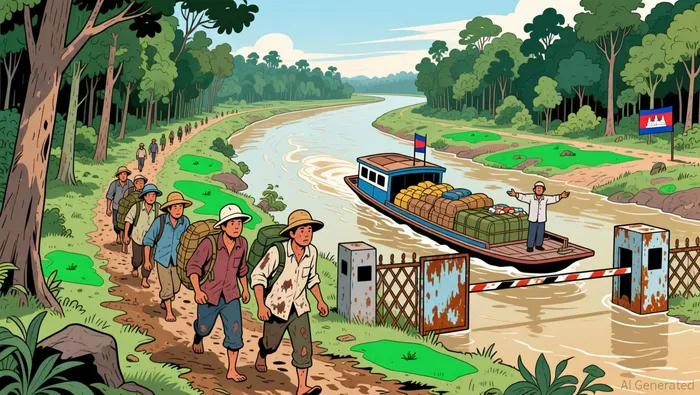
The closure of key border checkpoints, including Poipet and Bavet, has disrupted bilateral trade valued at $10.45 billion in 2024, with Thailand and Cambodia bearing significant economic losses. According to a report by The Diplomat, Cambodia's reliance on Thai imports-45% of essential goods and 30% of vehicle parts-has forced the country to redirect trade to Vietnam, albeit at the cost of lower prices for Cambodian farmers and increased economic dependence on its neighbor, as the Diplomat reported. Meanwhile, Thai businesses face monthly losses of approximately 15 billion baht due to border closures, compounding the strain on industries reliant on cross-border logistics, as noted in a Bangkok Post report.
The crisis has also triggered a labor migration crisis, with over 786,899 Cambodian workers returning to their home country between July and August 2025. This exodus has created labor shortages in Thailand's manufacturing and agricultural sectors, prompting the government to implement temporary measures such as the registration of undocumented workers, as reported by the Bangkok Post. For companies like Carabao Group Plc, the disruption has led to a 4% contraction in energy drink exports to CLMV markets, underscoring the fragility of supply chains in the region, as reported by Nation Thailand.
Tourism Sector Vulnerabilities: A Lingering Shadow
While the immediate impact on tourism has not been as severe as feared, the crisis has introduced a layer of uncertainty that could deter visitors in the long term. Government officials in both countries have noted that safety concerns linked to the conflict could exacerbate the sector's existing challenges, particularly in border regions, as noted in the Bangkok Post. Cambodia, which saw a 40% drop in tourist arrivals in July 2025, has already experienced a decline in hotel and restaurant occupancy, with the sector contributing to 12% of its GDP, as the Diplomat reported. The situation mirrors the 2008–2011 period, when nationalist tensions led to similar disruptions, illustrating the cyclical nature of the crisis, as noted in the Wikipedia entry.
Investor Sentiment and Market Reactions: A Shattered Confidence
The crisis has sent shockwaves through ASEAN markets, with Thailand's Stock Exchange of Thailand (SET) index plummeting by -4.17% over three consecutive trading days following the release of a controversial phone call between Thai Prime Minister Paetongtarn Shinawatra and Cambodian leader Hun Sen, as reported by The Vibes. This sharp decline reflects a broader erosion of investor confidence, exacerbated by political instability in Thailand, including the withdrawal of the Bhumjaithai Party from the governing coalition, as noted by The Vibes.
For multinational corporations, the conflict has forced strategic recalibrations. Thai brands operating in Cambodia have suspended advertising campaigns, while companies like Carabao Group have delayed market entries until the situation stabilizes, as Nation Thailand reported. The crisis has also exposed ASEAN's limited capacity to mediate intra-member disputes, raising concerns about the bloc's ability to maintain investor assurance in the face of geopolitical volatility, as Elite Plus reported.
Systemic Risks to ASEAN Integration: A Test of Resilience
The 2025 crisis has laid bare the systemic risks to ASEAN's economic integration, particularly in supply chain resilience and labor mobility. The rerouting of goods from Vietnam to Thailand has increased logistical costs and travel times, while Cambodia's economic dependence on Vietnam highlights the asymmetry in regional trade dynamics, as the Shiv blog reported. Additionally, the absence of durable dispute resolution mechanisms within ASEAN has left the bloc ill-equipped to address conflicts that threaten its economic cohesion, as the Royal United Services Institute reported.
The geopolitical dimension further complicates the situation. China's deepening ties with Cambodia, including infrastructure and military investments, contrast with Thailand's strategic alignment with the United States. This divergence risks fragmenting ASEAN's collective approach to regional security, with external powers exacerbating the crisis's volatility, as the Royal United Services Institute reported.
Conclusion: A Call for Pragmatic Solutions
The 2025 Thai-Cambodian border crisis serves as a stark reminder of the interconnectedness of geopolitical tensions and economic stability in Southeast Asia. While the recent ceasefire brokered by Malaysia offers a temporary reprieve, it does not address the deep-seated issues of border demarcation, nationalist sentiment, and external influence. For ASEAN to safeguard its economic integration, member states must prioritize institutional reforms, including the development of robust dispute resolution frameworks and enhanced regional cooperation. Investors, meanwhile, must remain vigilant, factoring in the heightened risks of political instability and supply chain disruptions when navigating ASEAN markets.







Comentarios
Aún no hay comentarios