
Assessing FTX's Creditor Repayment Progress: Implications for Cryptocurrency Liquidity and Investor Trust
Creditor Repayment Progress and Legal Controversies
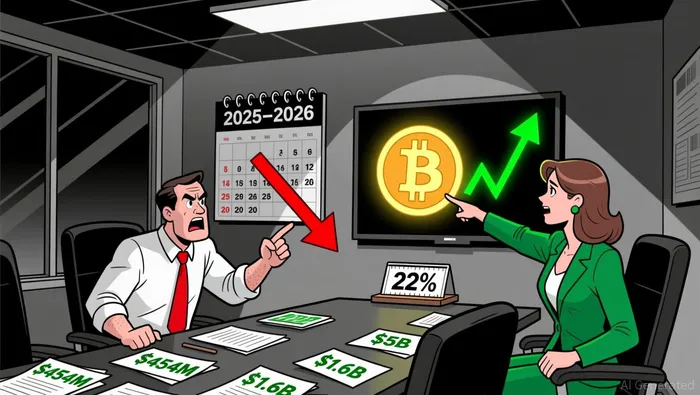
The FTX repayment plan has seen significant milestones, including $454 million in February 2025, $5 billion in May 2025, and $1.6 billion in September 2025, according to the LookOnChain analysis. However, the process has been mired in legal disputes. Sam Bankman-Fried, the convicted FTX CEO, has accused the bankruptcy legal team of mismanaging funds and delaying distributions, citing the existence of a $6.5 billion "disputed claims reserve" at the time of their takeover, according to a CoinEdition report. These claims, though contested by on-chain investigators like ZachXBT, highlight the tension between creditors seeking transparency and the complexity of crypto bankruptcy proceedings.
The FTX Recovery Trust's recent decision to lift repayment restrictions for creditors in 49 countries marks a procedural shift, aiming to streamline distributions and enhance transparency, according to a CryptoRank report. Yet, the legal and procedural delays have left many stakeholders frustrated, particularly as the next major payout hinges on a December 2025 eligibility deadline, as noted by the LookOnChain analysis.
Mixed Impacts on Liquidity and Investor Trust
The FTX repayment process has had a dual effect on crypto market liquidity. On one hand, the $7.1 billion in cash distributions has injected liquidity into the market, with 98% of creditors receiving 120% of their claims and final payouts projected to reach 143%, according to a LiveBitcoinNews report. This influx has stabilized some segments of the market, particularly as FTX's crypto holdings appreciated during the 2024–2025 bull run, as noted by the same LiveBitcoinNews report.
On the other hand, the repayment structure-converting claims into US dollars at 2022 prices-has locked in losses for creditors. For example, Bitcoin's price surged from $16,871 in 2022 to over $110,000 in 2025, meaning a 143% cash recovery equates to only 22% of the equivalent BTC amount, according to a Yahoo Finance analysis. Solana's recovery rate is even lower at 12%, according to the LiveBitcoinNews report. This disparity has eroded trust, with critics arguing that the repayment method fails to account for crypto's inherent volatility, as noted by the LiveBitcoinNews report.
Investor trust has also been undermined by SBF's claims that FTX was never bankrupt, according to a LiveBitcoinNews report. While the recovery plan demonstrates how asset appreciation can influence bankruptcy outcomes, it does not absolve the company of its original fraud allegations. Legal experts note that the FTX case sets a precedent for future crypto insolvencies, emphasizing the need for transparent asset valuation and equitable distribution mechanisms, according to a Gate article.
Liquidity Dynamics: Pre-2022 vs. 2023–2025
The FTX collapse in 2022 triggered a liquidity shock, with traders forced to move assets to stablecoins or exit the market entirely as bid-ask spreads widened, according to a ScienceDirect study. By 2025, the market has shown resilience, but structural vulnerabilities persist. The October 2025 flash crash-driven by a 100% tariff announcement on Chinese goods-exposed the fragility of leveraged positions, with $19.13 billion in forced liquidations over 24 hours, according to the ScienceDirect study. This event, unlike the FTX-induced contagion, stemmed from over-leveraging in perpetual futures, which now account for 70% of crypto trading volumes, according to the ScienceDirect study.
Market depth has also shifted. While bid-ask spreads on Binance remain low for large-cap assets, stablecoin liquidity is shallower when trading fiat, reflecting the dominance of on- and off-ramping activities, according to a SPGlobal report. The launch of BitcoinBTC-- and Ether ETFs in 2025 further complicated liquidity dynamics, with trading volumes spiking around their debut, as noted by the SPGlobal report.
Post-FTX Risk Mitigation Strategies
In response to the FTX crisis, crypto exchanges and regulators have prioritized risk mitigation. The U.S. Securities and Exchange Commission (SEC) under Chairman Gary Gensler has emphasized crypto innovation, exploring an "innovation exception" to foster growth while curbing fraud, according to a TheCapital article. Meanwhile, the Commodity Futures Trading Commission (CFTC) aims to streamline compliance and approve spot trading by year-end 2025, as noted by the TheCapital article.
At the protocol level, liquidity protocols and decentralized finance (DeFi) solutions are being integrated into portfolio strategies to balance risk across market cycles, according to a TokenMetrics report. Centralized exchanges (CEXs) have also adopted stricter custodial practices, with some implementing real-time asset audits to rebuild trust, as noted by the TokenMetrics report. These measures aim to prevent future crises by addressing counterparty risk and over-leveraging.
Conclusion
FTX's creditor repayment process underscores the complex interplay between liquidity dynamics, investor trust, and regulatory innovation in post-crisis crypto markets. While the $7.1 billion in distributions has provided tangible returns, the cash-centric repayment model has left creditors exposed to crypto's volatility. The October 2025 flash crash further highlights the need for robust risk mitigation strategies, from regulatory reforms to protocol-level safeguards. As the market evolves, the FTX case serves as a cautionary tale and a blueprint for balancing innovation with accountability.






Comentarios
Aún no hay comentarios