
Assessing Financial Resilience: Regional vs. Legacy Carriers in the Airbus A320 Recall Crisis
Operational Disruptions and Immediate Financial Pressures
The recall's timing-coinciding with one of the busiest travel periods of the year-amplified its impact. Airlines like American AirlinesAAL--, the largest A320 operator, initially reported 340 affected aircraft, later revised to 209, while Avianca faced a severe impact, with over 70% of its fleet grounded. The cost of addressing the issue is staggering: industry estimates suggest the recall could add $11 billion in expenses for airlines in 2025, including $3.1 billion in maintenance costs. For regional carriers, which often operate with thinner margins and less liquidity, these costs represent a significant strain. Avianca's decision to halt ticket sales for travel through December 8, for instance, underscores the immediate cash flow pressures faced by smaller operators.
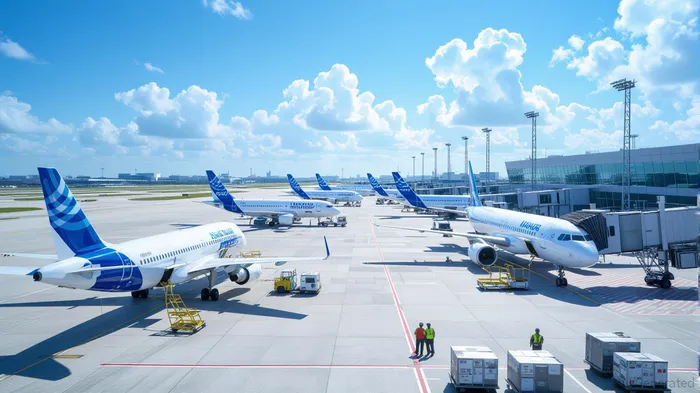 Legacy carriers, by contrast, have leveraged their scale and diversified fleets to absorb the shock. American Airlines, for example, revised its fleet requirements downward and prioritized rapid software updates, completing most repairs within 48 hours. Delta Air Lines and United Airlines similarly minimized disruptions, with Delta finishing updates by Saturday morning. These responses highlight the advantages of legacy carriers in mobilizing resources and executing large-scale fixes, even as they face higher absolute repair costs.
Strategic Adjustments: Regional vs. Legacy Resilience
Regional airlines have adopted more agile but riskier strategies. Flyadeal, a Middle Eastern carrier, completed all necessary software updates by midnight on November 29, resuming full operations with minimal delays. This efficiency, however, contrasts with the struggles of carriers like Avianca, which lacked the capacity to match such rapid adjustments. The disparity reflects regional airlines' reliance on smaller, more focused fleets but also their vulnerability to disruptions that disproportionately affect their limited assets.
Legacy carriers, meanwhile, have emphasized communication and contingency planning. American Airlines revised its initial estimates, while Wizz Air and Jetstar proactively informed passengers of potential schedule changes. These efforts, though costly, helped preserve customer trust and mitigate revenue losses from cancellations. For legacy airlines, the crisis also revealed the value of diversified fleets: carriers with a mix of aircraft types could shift operations to unaffected models, reducing downtime compared to regional operators with narrower fleet diversity.
Broader Financial Implications and Investor Takeaways
The recall has compounded existing challenges in the aviation sector, including ongoing engine repair backlogs and supply chain bottlenecks. For regional carriers, the added pressure could accelerate fleet rationalization or consolidation, as seen in Avianca's temporary suspension of ticket sales. Legacy carriers, while better positioned to weather the storm, face long-term questions about their ability to manage recurring technological risks without eroding profitability.
Investors should monitor how airlines balance short-term fixes with long-term resilience. Regional carriers with strong liquidity, such as Flyadeal, may emerge unscathed, but those with limited financial buffers could face liquidity crises. Legacy carriers, despite their scale, must demonstrate that their cost management strategies-such as American Airlines' revised fleet assessments-can prevent similar disruptions from recurring.
Conclusion
The Airbus A320 recall has laid bare the divergent financial resilience of regional and legacy airlines. While legacy carriers have leveraged their resources to minimize disruptions, regional operators have shown both agility and vulnerability. For investors, the key takeaway is clear: in an era of increasing technological complexity, the ability to adapt quickly and transparently will separate the resilient from the fragile. As the industry navigates this crisis, the focus will shift to how effectively airlines integrate lessons from this recall into their broader risk management frameworks.







Comentarios
Aún no hay comentarios