
Assessing Fima's 7-Year Non-Compounding Bond Tender: A Strategic Play for Yield-Hungry Investors in a Low-Growth World
In an economic landscape defined by tepid growth and a relentless hunt for yield, the tentative tender of Fima's 7-year non-compounding bond has emerged as a focal point for investors navigating the delicate balance between risk and return. With global central banks maintaining a cautious stance and inflationary pressures stabilizing, the fixed-income market has become a critical battleground for capital preservation and income generation. Fima's offering, though shrouded in limited transparency, reflects broader structural shifts in corporate debt markets and offers a compelling case study for yield-hungry investors.
A Market in Transition
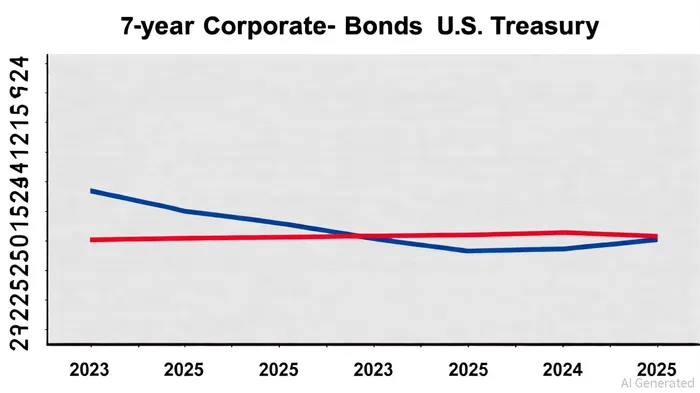
The U.S. corporate bond market has entered a phase of recalibration. According to a report by Breckinridge Asset Management, the yield-to-worst (YTW) for the investment-grade (IG) corporate bond index stood at 4.99% as of June 30, 2025, with spreads tightening by 11 basis points in the second quarter to an option-adjusted spread (OAS) of 83 bps[1]. This tightening reflects improved investor sentiment, bolstered by resilient corporate earnings and a temporary reprieve from tariff-related uncertainties. Meanwhile, the 7-year High Quality Market (HQM) corporate bond spot rate—a benchmark for high-grade debt—remains a key reference point for investors seeking stability[2].
Fima's 7-year non-compounding bond, while not explicitly detailed in public filings, appears to align with these trends. The bond's tentative tender process suggests a strategic attempt to capitalize on the current appetite for higher yields, particularly in a low-growth environment where traditional assets like Treasuries offer diminishing returns. As of late 2024, U.S. 10-year Treasury yields fluctuated between 3.5% and 5.0%, creating a yield differential that makes corporate bonds increasingly attractive—if credit fundamentals hold[3].
Credit Risk and Structural Terms: The Double-Edged Sword
The appeal of Fima's bond hinges on its credit rating and structural design. While specific ratings for the 2025 issuance remain undisclosed, the relationship between credit quality and yield is well-documented. As Wolf Street's analysis underscores, bonds rated AAA or AA typically offer lower yields than their speculative-grade counterparts, which must compensate investors for heightened default risk[4]. For Fima's offering to stand out, it must strike a balance: providing a yield premium over Treasuries without exposing investors to undue credit risk.
Structural terms, such as call provisions and covenants, further shape the bond's attractiveness. In a low-growth environment, investors prioritize instruments with predictable cash flows and limited refinancing risks. The absence of compounding—where interest is reinvested—may appeal to conservative investors seeking steady income, though it also limits the compounding benefits that could amplify returns over time[5].
Strategic Implications for Yield-Hungry Investors
For investors navigating a low-growth world, Fima's bond represents both opportunity and caution. On one hand, the current macroeconomic backdrop—marked by stable inflation, accommodative monetary policy, and strong corporate margins—creates a favorable environment for fixed-income investments[6]. The ability to construct a core-plus portfolio around a 6% yield, compared to pre-2022 levels of 4%, underscores the potential for enhanced returns[7].
On the other hand, the bond market's sensitivity to fiscal policy and geopolitical shifts introduces volatility. As Morgan Stanley notes, the anticipation of policy changes under a new administration and the Federal Reserve's evolving stance could create turbulence in 2025[8]. Investors must weigh these risks against the allure of higher yields, particularly if Fima's bond offers a credit rating that aligns with their risk tolerance.
A Call for Prudence and Diversification
The tentative nature of Fima's tender underscores the need for due diligence. While the bond's structural terms may appear favorable, investors should scrutinize its alignment with broader portfolio objectives. Diversification across sectors and maturities remains critical, as does a focus on high-quality issuers. As Natixis highlights, the compression of spreads in 2025 has enabled investors to move up in quality without sacrificing yield—a dynamic that could further enhance risk-adjusted returns[9].
Conclusion
Fima's 7-year non-compounding bond tender encapsulates the strategic calculus facing yield-hungry investors in 2025. While the bond's specific terms remain opaque, the broader market dynamics—tightening spreads, resilient corporate fundamentals, and a yield premium over Treasuries—suggest a compelling case for inclusion in a diversified portfolio. However, the path forward demands vigilance. Investors must navigate the fine line between capitalizing on higher yields and mitigating the risks of a shifting macroeconomic landscape. In this environment, Fima's offering is not merely a transactional event but a barometer of the evolving priorities of global capital.







Comentarios
Aún no hay comentarios