
Assessing Fiduciary Duty in the Norfolk Southern-Union Pacific Merger: Shareholder Value vs. Insider Influence
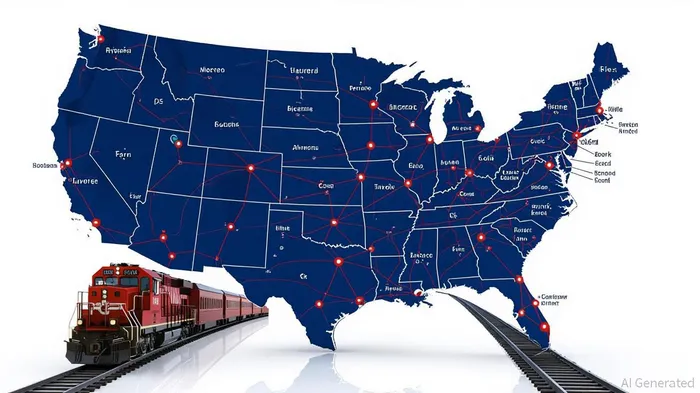
The proposed $85 billion merger between Union PacificUNP-- (UNP) and Norfolk SouthernNSC-- (NSC) has ignited a broader debate about corporate governance in large-scale transactions. While the deal promises a 25% premium for Norfolk Southern shareholders and $2.75 billion in annualized synergies, critics argue that fiduciary responsibilities to public investors may be compromised by structural incentives favoring insiders and management. This analysis examines whether the terms of the merger align with long-term shareholder value or reflect short-term gains for executives and board members.
The Compensation Structure: A Win for Shareholders?
The $320-per-share offer for NSC shareholders—a mix of Union Pacific stock and cash—appears generous on the surface. It values Norfolk Southern at a 25% premium to its 30-day volume-weighted average price, a significant uplift that suggests confidence in the combined entity's growth potential. However, the structure itself raises questions. By issuing 225 million new Union Pacific shares, the deal dilutes existing UNP shareholders, transferring ownership stakes to NSC holders. While this is standard in cross-border mergers, the dilution must be weighed against the projected $2.75 billion in annual synergies.
The cash portion of the deal, funded by new debt, also warrants scrutiny. With the combined company's debt-to-EBITDA ratio rising to 3.3x, investors must assess whether the leverage is justified by the expected $7 billion in annual free cash flow. A $2.5 billion reverse termination fee—a financial safeguard if the deal is blocked—adds another layer of complexity. While this protects both parties from regulatory or shareholder resistance, it also creates a disincentive to negotiate in good faith, potentially prioritizing deal completion over optimal outcomes for public shareholders.
Governance and Insider Influence
The merger's governance implications are equally critical. Jim Vena, Union Pacific's CEO, will lead the new entity, committing to a five-year tenure—a move that stabilizes leadership but concentrates power in a single executive. Meanwhile, three Norfolk Southern directors, including Mark George and Richard Anderson, will join the Union Pacific board. This cross-appointment could foster a more balanced perspective, yet it also risks entrenching a coalition that prioritizes post-merger integration over independent oversight.
The absence of a poison pill or other shareholder protections further highlights the lack of safeguards for public investors. In contrast, the $2.5 billion termination fee—a reverse poison pill—benefits both companies by penalizing dissenting shareholders or regulators. This asymmetry underscores a potential misalignment of interests: while the fee ensures the deal's completion, it does not directly compensate shareholders for the dilution or debt burden they bear.
Regulatory and Market Implications
Regulatory approval by the Surface Transportation Board (STB) remains a key hurdle, with the companies targeting a 2027 closing. The STB's scrutiny of competitive impacts will be pivotal, as the merger would create the largest freight rail operator in North America. While proponents argue the deal enhances service efficiency and customer choice, critics warn of reduced competition in key corridors.
From a market perspective, the $250 billion enterprise value of the combined entity suggests a premium valuation relative to peers. However, this hinges on the successful realization of synergies, which are often overstated in merger announcements. Investors should monitor the companies' integration plans, particularly in technology and operations, to gauge whether the projected $36 billion in annual revenues and 62% operating ratio are achievable.
Investment Advice: Proceed with Caution
The Norfolk Southern-Union Pacific merger offers a compelling case study in fiduciary responsibility. While the premium for NSC shareholders and the scale of synergies are attractive, the structural incentives—such as the reverse termination fee and dilution of UNP stock—introduce risks that may not align with long-term value creation. For investors, the key considerations are:
- Synergy Realization: Will the combined company deliver the $2.75 billion in annualized savings without cutting corners on safety or service quality?
- Debt Management: Can the new entity sustain a 3.3x debt-to-EBITDA ratio while maintaining dividend growth and share buybacks?
- Governance Resilience: Will the expanded board remain independent enough to challenge management's post-merger strategies, or will insider influence dominate decision-making?
Until these questions are answered, the deal appears to balance shareholder value with a degree of insider protection. For those with a high-risk tolerance, the 25% premium for NSC shareholders is a near-term win. However, long-term investors should wait for regulatory clarity and integration progress before committing. The merger's true success will be measured not by the size of the deal, but by the durability of its value proposition.





Comentarios
Aún no hay comentarios