
Assessing the Fed's Policy Shift: Timing the Rate Cut Cycle for Equity and Fixed Income Exposure
The Federal Reserve's September 2025 rate cut-marking the first easing of the year-has signaled a pivotal shift in monetary policy, with significant implications for investors. By reducing the federal funds rate by 25 basis points to a target range of 4.00–4.25%, the Fed acknowledged a cooling labor market and elevated inflation risks, according to an Advisor Perspectives piece. FOMC participants now project a further decline in rates to 3.50–3.75% by year-end 2025 and 3.25–3.50% by 2026, per the FOMC projections. This dovish pivot, coupled with labor market softness, demands a strategic reevaluation of portfolio allocations.
Labor Market Trends: A Mixed Picture
While the Fed's rate cut reflects concerns over slowing economic growth, labor market data reveals a nuanced landscape. The Chicago Fed labor indicators show a rise in the layoffs rate to 2.10% and a real-time unemployment rate of 4.34% (Chicago Fed labor indicators). Meanwhile, the New York Fed survey highlights declining optimism, with median one-year inflation expectations climbing to 3.4% and job loss probabilities rising (New York Fed survey). These trends suggest a fragile labor market, where wage growth and hiring momentum are stalling despite the Fed's accommodative stance.
Fixed Income: Targeting the "Belly" of the Curve
In this environment, fixed income strategies must adapt to the Fed's rate-cutting trajectory. Investors are increasingly favoring intermediate-term Treasuries-bonds with maturities of three to seven years-to balance income generation and duration risk, according to a BlackRock analysis. This "belly" of the yield curve is expected to outperform as rates decline, offering higher yields than short-term instruments while mitigating the volatility of long-dated bonds. Additionally, credit assets such as investment-grade and high-yield bonds are gaining traction, with their attractive spreads and lower volatility compared to Treasuries, per iShares insights.
Equity Exposure: Quality Growth and Global Diversification
Equities, particularly U.S. large-cap and quality growth stocks, are poised to benefit from lower discount rates, which enhance valuations in a falling-rate environment, according to an 8Figures analysis. International equities also present opportunities as the U.S. dollar weakens in response to Fed easing, boosting foreign earnings when converted to USD, as noted in a MAUFL blog post. However, investors must remain cautious about sector-specific risks, such as exposure to rate-sensitive industries like real estate and utilities.
Alternative Assets: Diversification in a Policy Transition
Alternative assets are emerging as critical diversifiers. Gold, historically a hedge against inflation and currency devaluation, has shown resilience during rate-cutting cycles, per a Morningstar piece. Similarly, Bitcoin's performance in low-rate environments-driven by its non-correlation to traditional assets-has attracted institutional interest, according to a CBS News report. Real estate investment trusts (REITs) are another beneficiary, with cheaper financing enabling capital recycling and higher dividend yields; the same 8Figures analysis mentioned earlier highlights REITs as potential beneficiaries.
Risk Management: Balancing Growth and Volatility
While the Fed's rate cuts aim to stimulate growth, they also signal underlying economic vulnerabilities. Portfolio rebalancing must prioritize liquidity and flexibility, avoiding overexposure to long-duration assets that could underperform if inflation surprises to the upside. A tactical approach-rotating into growth assets while maintaining a buffer of high-quality credit-can help navigate the uncertainties of a policy transition, according to a Reuters report.
Conclusion
The Fed's 2025 rate-cutting cycle represents a strategic inflection point for investors. By aligning portfolios with the Fed's dual mandate-supporting employment while taming inflation-investors can capitalize on shifting yield curves, equity valuations, and alternative opportunities. However, success hinges on disciplined rebalancing, rigorous risk management, and a keen eye on evolving labor market dynamics.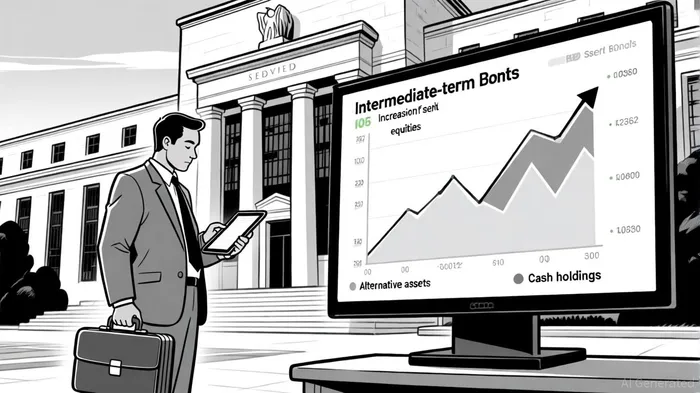





Comentarios
Aún no hay comentarios