
Assessing the Fed's Policy Shift: Preparing for a Rate Cut in 2025
Strategic Asset Allocation in a Rate-Cutting Environment
1. Fixed Income: Target the "Belly" of the Yield Curve
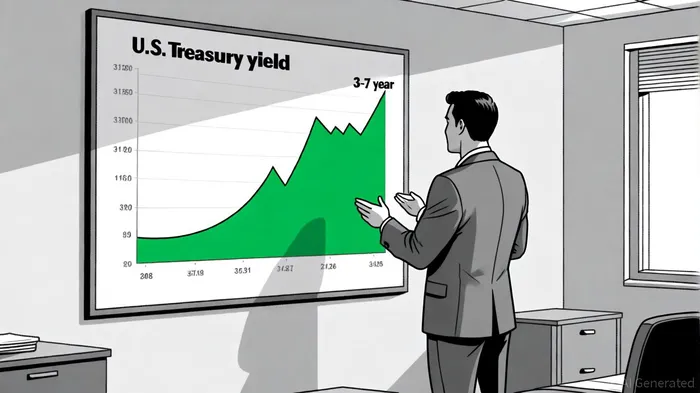
The U.S. Treasury yield curve's "belly"-bonds with maturities between 3 to 7 years-offers a compelling risk-reward profile in a rate-cutting environment. According to BlackRock, these bonds balance income generation with protection against rising prices, as shorter-term yields are expected to fall further. The BlackRockBLK-- piece also notes that longer-dated bonds face headwinds from a weaker dollar and benign inflation, which could dampen foreign demand for Treasuries.
Historically, bonds have outperformed cash during rate-cut cycles. Data from T. Rowe Price shows that bonds averaged 8.1% annualized returns compared to cash in 12 Fed easing cycles since 1980, with even stronger performance during inverted yield curves. This makes the belly of the curve a tactical sweet spot for income-focused investors.
2. Equities: Favor Large-Cap Growth and International Exposure
Large-cap growth stocks, particularly in the technology sector, are poised to benefit from lower discount rates. As the cost of capital declines, valuations for high-growth companies-often sensitive to interest rates-tend to rise, according to iShares. The S&P 500's historical performance, per a Northern Trust analysis, supports this: since 1980, the index has averaged 14.1% returns in the 12 months following the first cut, with expansionary cycles delivering even stronger gains.
International equities also gain from a weaker U.S. dollar, which is likely as the Fed eases. A depreciating dollar boosts the returns of foreign assets for U.S. investors and improves the competitiveness of multinational corporations, as noted by iShares.
3. Alternatives: Gold and Bitcoin as Diversifiers
Gold remains a preferred safe-haven asset in a world of falling real rates and persistent inflation. Its historical performance during Fed easing cycles underscores its role as a hedge against uncertainty, a point emphasized by iShares. Meanwhile, BitcoinBTC--, though riskier, has shown a pattern of outperforming during rate cuts; Northern Trust also highlights Bitcoin's volatility as a potential draw for investors seeking alternative exposure, though caution is warranted given its speculative nature.
4. Credit Strategies: High-Yield and Investment-Grade Bonds
For income seekers, high-yield and investment-grade corporate bonds offer higher yields than Treasuries. While high-yield bonds historically underperformed investment-grade bonds during rate cuts (by 7.2% on average, per T. Rowe Price), their current spreads and credit fundamentals suggest they could outperform in a low-inflation environment. Diversification into market-neutral and tactical funds can further mitigate volatility, a strategy discussed in the BlackRock analysis.
Historical Lessons: What Past Cycles Teach Us
The 2001, 2008, and 2020 rate-cutting cycles provide valuable insights. During these periods, equities and bonds often moved in tandem, with stocks leading in expansionary phases and bonds acting as a stabilizer during downturns, as documented by Northern Trust. Quality, value, and low-volatility equity factors also showed resilience, though their performance varied with economic conditions, according to the same Northern Trust review.
Conclusion: Positioning for 2025
The Fed's 2025 rate cuts are not just a policy shift-they're a signal to rebalance portfolios. By focusing on the belly of the yield curve, large-cap growth equities, international exposure, and strategic alternatives, investors can align with the Fed's easing trajectory. As always, diversification and a nuanced understanding of macroeconomic forces remain critical.





Comentarios
Aún no hay comentarios