
Assessing the Fed's Policy Path: Implications for Equity Valuations and Rotation
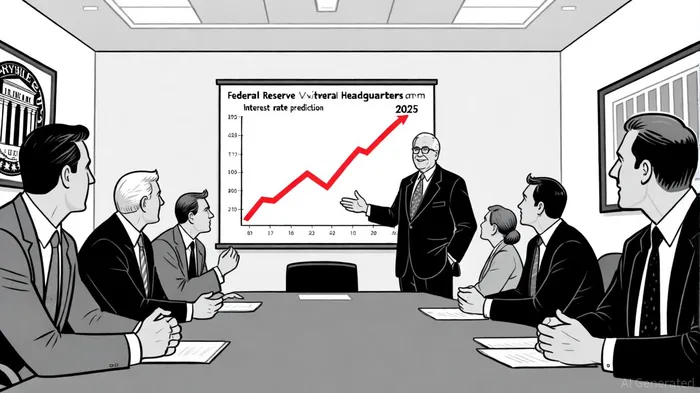
The Federal Reserve's 2025 policy trajectory has emerged as a pivotal force shaping equity valuations and sector rotations. After maintaining a 4.25%–4.50% federal funds rate for five consecutive meetings, the Fed approved a 25-basis-point cut in September 2025, signaling a shift toward a “more neutral” stance amid slowing job gains and persistent inflation[3]. This decision, supported by an 11–1 vote, marked the first rate reduction in nine months and triggered immediate volatility in financial markets[3]. The Fed's forward guidance now anticipates two additional cuts before year-end, reflecting a data-dependent approach to navigating stagflation risks and trade policy uncertainties[5].
Central Bank Communication and Investor Sentiment
The Fed's communication strategy has played a critical role in shaping market sentiment. Chair Jerome Powell's emphasis on “risk management” during the September press conference underscored the central bank's balancing act between inflation control and economic growth[3]. This messaging influenced key sentiment indicators: the VIX, a gauge of market volatility, spiked to a 99.9th percentile level in early April 2025 following President Trump's tariff announcements, but stabilized post-September as the Fed's dovish pivot alleviated recessionary fears[2]. Similarly, the AAII investor sentiment index showed a marked shift toward optimism, with bearish sentiment dropping to multi-year lows as rate-cut expectations crystallized[2].
The emotional tone of Fed communications has also directly impacted sector-specific risk perceptions. Research highlights that negative emotional cues in Powell's speeches—such as expressions of concern over stagflation—correlated with heightened downside risk in banking stocks[4]. Conversely, the September rate cut's framing as a “neutral” policy adjustment helped stabilize financial markets, though large banks still face margin pressures from narrowing net interest margins[2].
Sector Rotations and Equity Valuations
The Fed's policy pivot has catalyzed significant sector rotations. Growth-oriented sectors, particularly technology and real estate, have benefited from lower discount rates and improved financing conditions. For instance, real estate investment trusts (REITs) and homebuilders saw expanded margins as mortgage rates declined post-September[1]. Meanwhile, the Nasdaq Composite, which had fallen over 6% in the first half of 2025, rebounded modestly as rate cuts reduced the cost of capital for long-duration assets[2].
Conversely, value sectors like industrials and energy have shown mixed performance. While a soft landing scenario could support a rebound in these sectors, their gains remain contingent on stable economic data[1]. Defensive sectors—healthcare and utilities—have outperformed amid cautious investor sentiment, reflecting a flight to quality as wage growth moderates and hiring slows[2].
International markets have also gained traction as the U.S. dollar weakens. Emerging markets (EM) and European equities are attracting capital flows, driven by valuation gaps and structural reforms in green energy and digital infrastructure[2]. This shift aligns with the Fed's acknowledgment of global monetary policy divergence, as central banks in Asia and Europe adopt more accommodative stances[5].
Strategic Implications for Investors
The Fed's 2025 policy path underscores the importance of active portfolio management. Investors must navigate a landscape where rate cuts are accompanied by geopolitical risks (e.g., U.S.-China trade tensions) and domestic policy shifts (e.g., 2025 tax reforms favoring high-income households)[2]. Diversification across sectors and geographies is critical, as is a focus on earnings resilience in a low-growth environment.







Comentarios
Aún no hay comentarios