
Assessing the Fed's December 2025 Rate Cut and the Uncertain 2026 Policy Path
The Federal Reserve's December 2025 policy decision has become a focal point for investors navigating a complex macroeconomic landscape. With inflation inching closer to the 2% target and a cooling labor market, the central bank faces a delicate balancing act between supporting growth and guarding against inflationary resurgence. According to a report by Morningstar, the bond market is pricing in an 87% probability of a 0.25% rate cut at the December meeting, though internal divisions within the FOMC suggest the outcome is far from certain. This uncertainty, compounded by delayed data releases due to the government shutdown, underscores the need for investors to adopt flexible strategies as they prepare for a shifting monetary policy environment.
The December 2025 Dilemma: A Cut, But With Caution
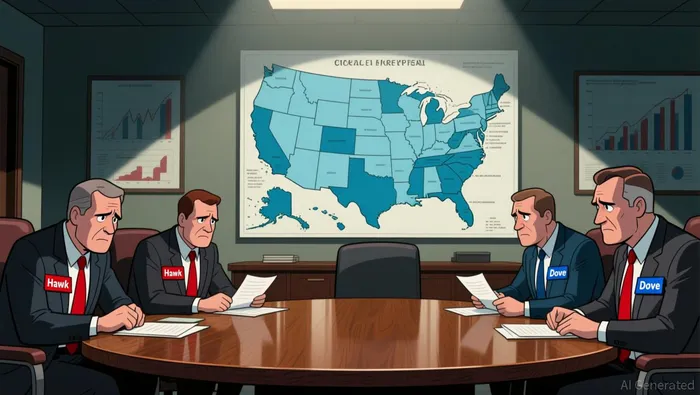
The economic rationale for a December rate cut hinges on two key factors: moderating inflation and a slowing labor market. While inflation remains above 2%, it has stabilized after the drag of tariffs, and the labor market shows signs of cooling, with job gains decelerating and unemployment edging upward. However, the FOMC's internal debate between "hawks" and "doves" has introduced volatility into market expectations. Hawks argue that holding rates steady is necessary to prevent inflation from rebounding, while doves advocate for further easing to cushion against a potential slowdown.
 Chair Jerome Powell has emphasized that a December cut is not a "foregone conclusion," signaling a risk-management approach rather than a conviction-driven move. If the Fed does cut rates, it would likely be interpreted as a "hawkish cut"-a signal that future adjustments will depend on incoming data. This nuanced stance highlights the importance of monitoring real-time economic indicators, such as wage growth and consumer spending, which could sway the Fed's trajectory in early 2026.
Positioning for 2026: Navigating a Modest Easing Cycle
Looking ahead, the Fed's projected rate path for 2026 suggests a gradual reduction in the federal funds rate, with the target expected to fall to 3.4% by year-end. Investors must adjust their portfolios to align with this evolving backdrop. Here are three key strategies to consider:
Asset Allocation: Prioritize Flexibility and Quality
As cash yields decline, reducing high-cash allocations becomes critical to avoid income erosion. Active ETFs and enhanced passive strategies in fixed income and derivatives are gaining traction for their ability to adapt to shifting rate expectations. For bonds, the "belly" of the yield curve-intermediate-term maturities-is favored over long-dated bonds, given the benign economic outlook and limited scope for aggressive rate cuts. High-quality credit, including investment-grade corporate bonds and Treasury Inflation-Protected Securities (TIPS), offers a compelling risk-return profile.Equity Exposure: Diversify Beyond the Magnificent Seven
U.S. large-cap stocks, particularly those in the AI-driven "Magnificent Seven," remain attractive due to their long-term growth potential. However, overconcentration in these names carries risks, especially as global markets begin to outperform. Diversifying into non-U.S. equities and small/mid-cap stocks can enhance resilience, particularly in a fragmented market environment. Active security selection and sector rotation-favoring infrastructure and technology-could further capitalize on macroeconomic tailwinds.Risk Management: Hedge Against Policy Uncertainty
In fixed income, managing duration risk is paramount. A focus on high-quality sovereign bonds and intermediate-term Treasuries aligns with the Fed's modest easing path, while avoiding long-duration assets that could underperform if inflation surprises to the upside. For equities, tactical allocations to market-neutral funds and alternative strategies, such as commodities (gold, copper, and aluminum), provide uncorrelated returns and downside protection.
The Currency and Commodity Angle
The U.S. dollar is expected to weaken early in 2026 as rate cuts unfold, though it may regain strength in the second half as global central banks follow suit. Investors in emerging markets should weigh the benefits of dollar depreciation against local economic fundamentals. Meanwhile, commodities remain a strategic asset class, with base metals and gold benefiting from supply constraints and inflation hedging demand.
Conclusion: Adapt, Diversify, and Stay Agile
The Fed's December 2025 decision and the uncertain 2026 policy path demand a proactive, adaptive approach. Investors should prioritize liquidity, quality, and diversification while remaining agile to shifting macroeconomic signals. As the Fed navigates the fine line between growth support and inflation control, those who position their portfolios for both rate cuts and potential volatility will be best poised to capitalize on the opportunities ahead.







Comentarios
Aún no hay comentarios