
Assessing the Feasibility of U.S. Energy Investment in Post-Maduro Venezuela
The removal of Nicolás Maduro in early 2026 and the subsequent U.S.-led reorganization of Venezuela's energy sector have created a complex landscape for foreign investment. With the world's largest proven oil reserves and a strategic position in Latin America, Venezuela presents both opportunities and risks for U.S. energy firms. However, the feasibility of investment hinges on navigating geopolitical tensions, regulatory ambiguities, and the long-term stability of the transitional government led by Delcy Rodríguez.
Regulatory Reforms and Fiscal Frameworks
Post-Maduro Venezuela has initiated a series of regulatory overhauls aimed at attracting private capital. The U.S. government has signaled its intent to selectively roll back sanctions to facilitate oil exports and infrastructure development, including the authorization of oilfield equipment imports and the temporary holding of oil revenues in U.S. banks. These measures align with broader efforts to restructure Venezuela's energy sector, which has been crippled by decades of underinvestment and mismanagement.
A critical legal framework remains the 2006 Hydrocarbons Act, which mandates state control over primary oil activities through public or mixed-ownership entities. While the transitional government has not yet proposed amendments to this law, U.S. officials have emphasized the need for Venezuela to sever economic ties with China, Russia, Iran, and Cuba and prioritize partnerships with American firms. This shift could reshape contractual frameworks, favoring U.S. companies like Chevron, Eni, and Repsol, which are already engaged in production or planning expansions.
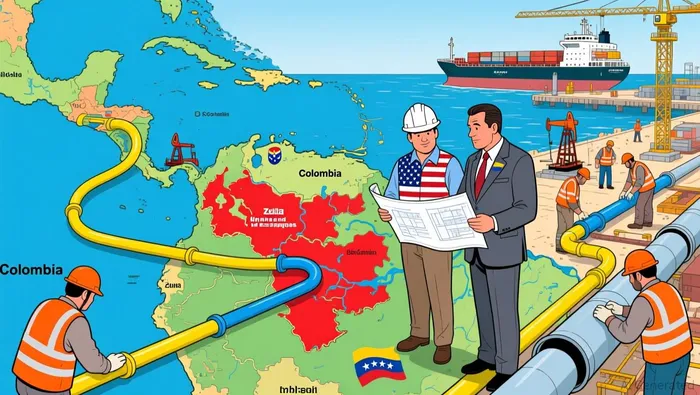 Natural gas and mining also present untapped potential. Venezuela's vast gas reserves, currently underutilized due to infrastructure gaps, could be exported to Colombia and Trinidad if pipelines are reactivated. Similarly, the country's critical minerals-nickel, coltan, and others-are vital for clean energy technologies but require sustainable governance to mitigate environmental and social risks.
Geopolitical Risks and Strategic Competition
The U.S. military's involvement in Venezuela has intensified regional and global tensions. The January 2026 operation to arrest Maduro, framed as a demonstration of U.S. dominance, has drawn criticism for its implications on sovereignty and energy market stability. While the U.S. aims to exclude China and Russia from Venezuela's energy sector, these rivals may resist through diplomatic or economic countermeasures, complicating long-term partnerships.
International reactions remain mixed. Some nations support the U.S. actions as a rebuke to non-regional powers, while others condemn them as destabilizing. This geopolitical divide could affect multilateral financing and regulatory clarity, essential for large-scale investments. Additionally, the U.S. military's control of key oil assets raises concerns about the security of infrastructure and the reliability of oil supply chains.
For U.S. firms, the risk of asset nationalization-historically a feature of Venezuela's energy politics-remains a red flag. Despite assurances from the transitional government, political instability and the lingering influence of Maduro-era figures could undermine investor confidence.
Feasibility of U.S. Investment: Capital, Markets, and Timing
Restoring Venezuela's oil production to pre-2010 levels would require between $7 billion and $100 billion in capital, depending on the scale of infrastructure rehabilitation. Current output, at under 1 million barrels per day, is a fraction of its 1990s peak of 3.5 million barrels. While the U.S. government has pledged to modernize facilities and increase output to several hundred thousand barrels daily, achieving this will depend on sustained political stability and favorable fiscal terms for foreign investors.
Global oil prices, however, remain subdued due to market oversupply, reducing short-term economic incentives for large-scale investment. The U.S. strategy of selling Venezuelan crude at market prices and using proceeds to fund infrastructure projects could mitigate this risk, but the timeline for returns remains uncertain.
Conclusion: Balancing Opportunity and Uncertainty
The post-Maduro transition offers a unique window for U.S. energy firms to engage with Venezuela's vast resources. Regulatory reforms and geopolitical realignments create a framework for investment, but significant hurdles remain. Political volatility, the need for massive capital outlays, and the shadow of historical expropriations necessitate a cautious approach.
For U.S. companies, success will depend on aligning with the transitional government's priorities while mitigating risks through phased investments and strategic partnerships. As Venezuela's energy sector evolves, the interplay of regulatory clarity, geopolitical stability, and market dynamics will ultimately determine the viability of this high-stakes opportunity.





Comentarios
Aún no hay comentarios