
Assessing the Economic and Investment Implications of a 36-Hour Closure of Hong Kong International Airport Due to a Super Typhoon
The Hong Kong International Airport (HKIA) stands as a linchpin of the city's logistics and aviation sectors, contributing HK$2.457 billion in profit during the 2024–25 fiscal year and serving as the world's busiest cargo hub for the 14th consecutive year[2]. However, the specter of a 36-hour closure due to a super typhoon—akin to the disruptions caused by Typhoon Wipha in July 2025—raises critical questions about short-term economic shocks and long-term resilience. This analysis evaluates the potential fallout and strategic adaptations shaping Hong Kong's aviation and logistics industries.
Short-Term Economic Shocks: A Case Study of Typhoon Wipha
A 36-hour closure would mirror the impact of Typhoon Wipha, which canceled 500 flights, stranded 100,000 passengers, and inflicted estimated losses of HK$2 billion (US$255 million) in a single day[2]. Retail and catering operations at the airport, which generated significant revenue during normal operations, would face immediate shutdowns. For context, the airport's cargo throughput alone reached 5.0 million tonnes in 2024–25[2], and a prolonged closure could disrupt global supply chains, particularly for time-sensitive goods transiting the Greater Bay Area.
Historical data underscores the vulnerability of air traffic to typhoons. During Typhoon Yagi in 2024, 38 flights were canceled, and while the airport managed 80% of its normal traffic within 24 hours[1], a 36-hour closure would amplify these challenges. The economic ripple effects would extend beyond the airport, affecting tourism, retail, and business travel—sectors that contributed 0.22% of Hong Kong's 2017 GDP during similar disruptions from Typhoons Hato and Mangkhut[3].
Long-Term Resilience: Infrastructure and Contingency Innovations
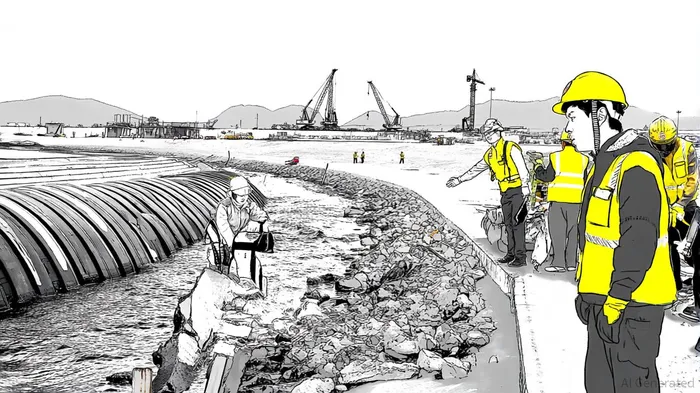
Hong Kong's preparedness, however, mitigates some risks. The city's investment in infrastructure—such as storm surge barriers in Tai O, rock-armored bunds in Lei Yue Mun, and updated building codes—has historically reduced economic losses from typhoons by up to 70% compared to neighboring regions[1]. The recent commissioning of the Three-runway System in November 2024, which boosted annual capacity by 50%[2], further enhances operational flexibility.
Contingency measures during past typhoons demonstrate adaptability. During Typhoon Yagi, the airport activated its Flight Rescheduling Control System, deployed 1,000 staff to assist passengers, and extended retail hours to maintain service continuity[1]. These efforts highlight the sector's capacity to absorb shocks through coordinated responses. Additionally, the adoption of digital tools—such as the Queue Ticket System for taxis and mobile app updates—reduces passenger inconvenience and operational bottlenecks[1].
Investment Implications: Balancing Risk and Resilience
For investors, the key lies in assessing how short-term vulnerabilities align with long-term resilience strategies. The HKIA's profitability—evidenced by its HK$1.61 billion net profit in 2023–24[1] and HK$2.457 billion in 2024–25[2]—reflects its strategic importance. However, climate risks, including rising typhoon intensity, necessitate scrutiny of infrastructure investments.
The airport's dividend of HK$1.3 billion to the Hong Kong SAR Government in 2024–25[2] underscores its role in public finance, making it a critical asset for policymakers. Investors should monitor the integration of climate-resilient infrastructure, such as the Three-runway System's flood-resistant design, and the adoption of AI-driven weather forecasting to optimize flight rescheduling[2].
Conclusion: A Dual-Track Strategy for Stakeholders
While a 36-hour closure would inflict acute economic pain—akin to the HK$2 billion losses from Typhoon Wipha[2]—Hong Kong's infrastructure and contingency frameworks position the aviation and logistics sectors for recovery. For investors, the challenge is to balance exposure to short-term volatility with confidence in long-term resilience. The city's proactive approach—combining physical infrastructure upgrades, digital innovation, and strategic dividend policies—offers a blueprint for managing climate risks in a global hub.







Comentarios
Aún no hay comentarios