
Assessing the Economic Impact of Long Island Rail Road Labor Disruptions on Real Estate and Regional Commerce
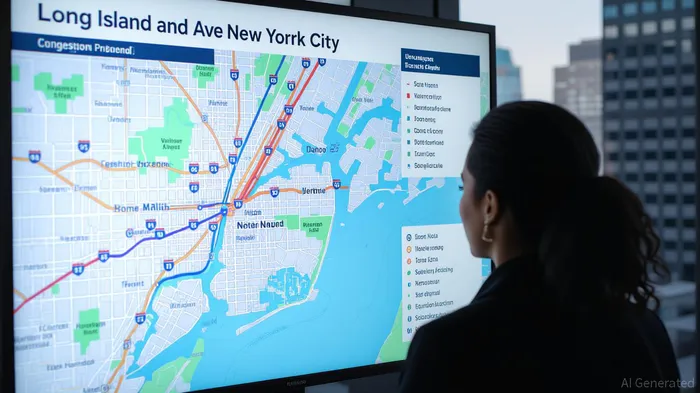
The Long Island Rail Road (LIRR) is a lifeline for regional commerce and real estate markets, connecting millions of commuters to Manhattan daily. Yet, labor disruptions—whether strikes, service interruptions, or systemic underinvestment—pose significant risks to property values, business operations, and long-term economic resilience. As infrastructure vulnerabilities and climate risks intensify, investors must assess how these disruptions shape market dynamics and identify opportunities in alternative transit solutions.
The LIRR's Fragile Economic Role
Public transit disruptions have historically had measurable effects on real estate. For instance, the temporary closure of the L-train tunnel under the East River in 2024 led to a 6.5% decline in property values near affected stations, a drop of approximately $32,234 for the average home in the area[1]. This underscores the critical role of reliable transit access in sustaining demand for residential real estate. Conversely, investments in transit infrastructure, such as the extension of the Second Avenue subway line, have driven property value increases in surrounding neighborhoods[3].
The LIRR itself has seen shifting dynamics. The implementation of New York City's congestion pricing in 2025, which charges drivers $9 to $23 during peak hours to enter Manhattan, spurred a surge in demand for homes near LIRR stations. Properties within one mile of these stations appreciated 8% more in 2024 compared to similar properties further away[4]. However, this trend is contingent on the LIRR's ability to maintain consistent service. The Metropolitan Transportation Authority's (MTA) ongoing financial struggles—exacerbated by pandemic-era ridership declines and delayed infrastructure projects—threaten to undermine this momentum. Reduced service frequency or fare hikes could deter buyers in LIRR-dependent areas and destabilize commercial real estate markets[5].
Infrastructure Vulnerabilities and Climate Risks
The LIRR's aging infrastructure, coupled with climate risks like flooding and extreme heat, amplifies its fragility. A 2025 report by the World Economic Forum highlights that global infrastructure investment gaps could reach $15 trillion by 2040, with regions like Long Island particularly vulnerable due to underfunded systems and rising sea levels[2]. The MTA's deferred maintenance backlog, now exceeding $40 billion, further compounds these risks[5].
Meanwhile, the global push for sustainable infrastructure—exemplified by the European Green Deal and the U.S. “Build Back Better” agenda—has shifted focus toward resilient systems. In New York, this includes electrifying transit networks and integrating climate adaptation measures. For example, the Biden administration's 2021 infrastructure bill, while modest in direct funding for New York, signals a national commitment to modernizing transit and reducing carbon emissions[3].
Alternative Transit Investments: A Path Forward
To mitigate LIRR vulnerabilities, alternative transit projects are gaining traction. Electric vehicle (EV) infrastructure, for instance, is emerging as a critical complement to traditional rail. Start-ups and public-private partnerships are innovating solutions like building-powered EV charging stations, which reduce strain on utility grids and accelerate deployment in urban areas[6]. These projects not only address climate goals but also provide commuters with viable alternatives during LIRR disruptions.
Decentralized micro-infrastructure—such as localized transit hubs and shared mobility networks—is another promising avenue. By 2025, Long Island has seen pilot programs for micro-mobility corridors linking LIRR stations to underserved neighborhoods, enhancing accessibility and reducing reliance on single-occupancy vehicles[4]. Such investments could stabilize real estate markets by preserving connectivity even during service interruptions.
Investment Opportunities and Strategic Considerations
For investors, the interplay between transit reliability and real estate demand presents both risks and opportunities. Properties near LIRR stations with robust alternative transit access—such as EV charging corridors or micro-mobility hubs—are likely to outperform in a post-congestion-pricing era. Conversely, areas with limited transit options may see slower growth as buyers factor in rising transportation costs[4].
Moreover, infrastructure funds targeting climate-resilient projects—like electrified rail upgrades or flood-resistant transit corridors—offer long-term value. These initiatives align with global sustainability trends and are increasingly supported by public funding. For example, the World Economic Forum notes that private capital is critical to closing infrastructure gaps, particularly in regions like Long Island where public resources are strained[2].
Conclusion
The LIRR's economic impact is inextricably tied to its operational reliability. While labor disruptions and aging infrastructure pose risks, they also highlight the urgency of investing in alternative transit solutions. By prioritizing climate resilience, electrification, and decentralized mobility networks, investors can hedge against volatility while supporting a more sustainable regional economy. As Long Island and New York City navigate the challenges of 2025 and beyond, the intersection of infrastructure vulnerability and innovation will define the next era of real estate and commerce.







Comentarios
Aún no hay comentarios