
Assessing the U.S. Dollar's Near-Term Outlook Amid a Pivotal Data-Release Week
A Pivotal Week of Data Releases
The week of November 18, 2025, is packed with key economic indicators that could further complicate the Fed's calculus. The New York Fed's economic calendar highlights a series of critical releases, including the Business Leaders Survey and Imports/Exports report on November 18 according to the calendar. Later in the week, Industrial Production and Capacity Utilization data on November 18, New Residential Construction on November 19, and the Philadelphia Fed Manufacturing Survey on November 20 will provide fresh insights into the economy's health as detailed in the calendar. These metrics will be closely scrutinized for signs of inflationary pressure or signs of a slowdown, particularly as the Fed weighs its next move.
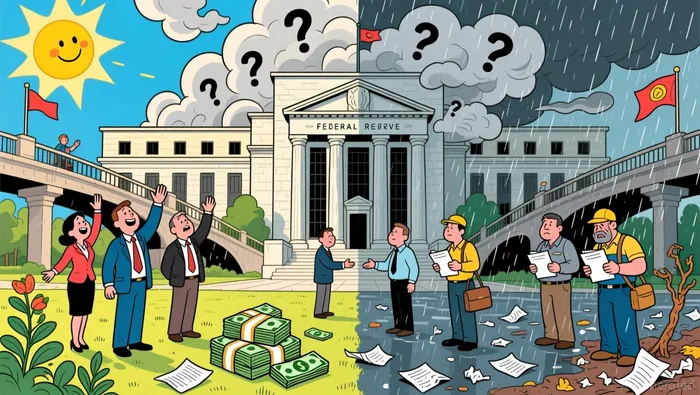
Market Positioning for Volatility
Market positioning data underscores the uncertainty surrounding the Fed's policy path. As of November 22, 2025, Fed funds futures priced a 71% probability of a 25-basis-point rate cut in December, a sharp increase from 39% just one day earlier. This surge in expectations reflects dovish comments from New York Fed President John Williams, contrasting with hawkish stances from officials like Susan Collins and Lorie Logan. The U.S. 10-year Treasury yield, which had peaked at 4.51% earlier in the month, retreated to 4.42%, signaling market skepticism about the Fed's ability to maintain a tight policy stance.
Meanwhile, CFTC positioning data reveals speculative traders holding net short positions of approximately –78,000 contracts on the euro (EUR/USD), indicating bearish sentiment. However, recent short-covering activity suggests growing interest in long positions near the 1.1500 support level, as the dollar's rally stalls as indicated by market data. This dynamic highlights the broader tension between the Fed's potential pivot to easing and the European Central Bank's (ECB) cautious approach, with ECB President Christine Lagarde emphasizing that inflation remains above target.
Implications for the U.S. Dollar
The U.S. Dollar Index (DXY), trading near 100.08, has found support amid risk-averse flows and carry-trade dynamics according to market data. However, the narrowing U.S.-Eurozone rate differential-driven by the Fed's dovish tilt and the ECB's policy patience-poses a headwind for the dollar's long-term strength as noted in analysis. Real GDP growth in the U.S. remains near 2.1%, outpacing the Eurozone's 0.2% expansion, but the euro's resilience near 1.1500 suggests markets are pricing in a potential Fed rate cut as reported in financial analysis.
For investors, the key takeaway is the need to position for volatility. The Fed's divided policy outlook and mixed economic data create a high-risk environment where sudden shifts in positioning could amplify short-term swings. Options activity and CFTC positioning data indicate that traders are hedging against both a dovish Fed pivot and a hawkish ECB stance, with the EUR/USD pair likely to remain in a corrective band until the December meeting as indicated by market positioning.
Strategic Considerations
Investors should monitor the November 26 data releases-Advance Durable Goods, International Trade, and the second GDP estimate-for clarity on the Fed's next steps as outlined in the calendar. A weaker-than-expected GDP could accelerate rate-cut expectations, while stronger industrial production might delay easing. Given the current positioning, a break below 1.1500 for the euro could trigger a wave of short-covering, offering a tactical entry point for longs. Conversely, a surprise in labor data or a Fed official's dovish remarks could reignite dollar strength.
In this environment, a balanced approach-hedging against both rate cuts and policy tightening-appears prudent. Investors might consider dollar-long positions against the euro and yen, while maintaining short-term options exposure to capitalize on volatility. As the Fed's policy path remains in flux, agility and discipline will be paramount.







Comentarios
Aún no hay comentarios