
Assessing Dividend Consistency in the EV Sector: A Deep Dive into Fidelity Electric Vehicles and Future Transportation ETF
The electric vehicle (EV) and future transportation sector has emerged as a cornerstone of innovation-driven investing, with thematic ETFs like the Fidelity Electric Vehicles and Future Transportation ETF (FDRV) capturing investor interest. However, for income-focused investors, a critical question remains: Can FDRVFDRV-- sustain and grow its dividend payments in a sector dominated by growth-oriented, non-dividend-paying companies? This analysis evaluates FDRV's dividend consistency, portfolio dynamics, and structural risks to determine its viability as a source of reliable income.
Dividend Volatility and Structural Uncertainty
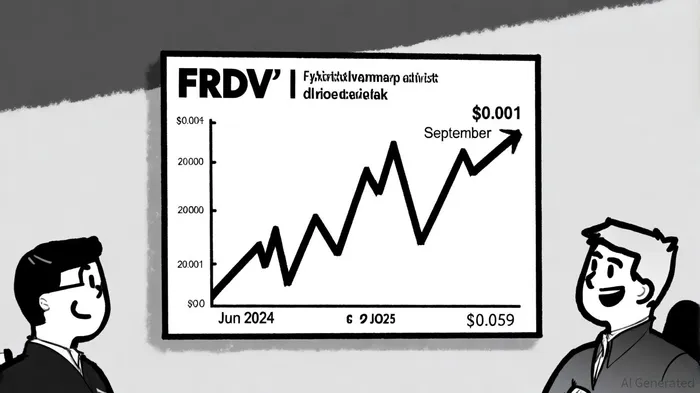
FDRV has distributed quarterly dividends since its inception in October 2021, but its payout history reveals stark inconsistencies. For instance, the most recent dividend of $0.059 per share on June 24, 2025, contrasts sharply with a mere $0.001 per share in September 2024[2]. While the ETF's trailing twelve-month (TTM) dividend yield stands at 0.492%[3], this figure masks the erratic nature of its distributions. Such volatility raises concerns about sustainability, particularly for investors seeking predictable income streams.
A key factor complicating FDRV's dividend strategy is the lack of clarity on its payout sources. According to a report by Stock Analysis, FDRV's dividends are derived from income generated by its underlying holdings[1]. However, a closer look at its portfolio reveals that major constituents like TeslaTSLA-- (4.56% weight), NIONIO-- (4.71%), and UberUBER-- (4.12%) have no history of paying dividends[4][5][6]. This disconnect suggests that FDRV's dividends may originate from non-traditional sources such as capital gains or return of capital—a practice that, while legal, lacks the sustainability of earnings-based distributions[7].
Portfolio Concentration and Sector Risks
FDRV's portfolio is heavily concentrated in a narrow subset of the EV and transportation space. The top ten holdings account for 53.92% of the fund's assets[8], with a beta of 1.61 indicating heightened sensitivity to market fluctuations[9]. This concentration amplifies risks during sector downturns. For example, regulatory shifts, supply chain disruptions, or technological obsolescence could disproportionately impact the fund's performance, directly affecting its ability to generate returns—and by extension, dividends.
The ETF's expense ratio of 0.40% is moderate for a thematic fund[10], but it does not offset the inherent volatility of its holdings. Moreover, FDRV's focus on growth-oriented companies—many of which reinvest earnings rather than distribute them—creates a structural challenge. As noted by Macrotrends, Tesla and NIO have prioritized reinvestment over shareholder returns, a trend unlikely to shift in the near term[11][12]. This dynamic forces FDRV to rely on alternative distribution mechanisms, which may not align with long-term income goals.
Dividend Growth: Illusion or Reality?
FDRV's dividend growth rate of 391.67% over the past year appears impressive at first glance[3]. However, this metric is largely a function of its historically low base. For example, the $0.059 payout in June 2025 follows a $0.014 payout in March 2025 and a $0.001 payout in September 2024[2]. Such erratic growth patterns undermine confidence in the fund's ability to maintain a consistent upward trajectory. Furthermore, a 0% payout ratio—a metric typically used to assess dividend sustainability—suggests that FDRV's distributions are not tied to earnings or cash flow[13]. This anomaly hints at non-sustainable practices, such as return of capital, which erode principal over time.
Strategic Implications for Investors
For investors prioritizing dividend consistency, FDRV presents a paradox: it offers exposure to a high-growth sector but lacks the structural foundations for reliable income. The ETF's reliance on non-dividend-paying companies, coupled with its opaque payout sources and concentrated portfolio, creates a high-risk profile. While thematic ETFs like FDRV can capitalize on sector momentum, their dividend sustainability remains questionable without a clear alignment between holdings and distribution strategies.
Conclusion
The Fidelity Electric Vehicles and Future Transportation ETF exemplifies the challenges of generating consistent dividends in a growth-centric sector. While its thematic focus on EVs and future transportation aligns with long-term trends, its dividend strategy is undermined by portfolio concentration, non-dividend-paying holdings, and unclear payout sources. For income-focused investors, FDRV may serve as a speculative bet rather than a reliable income generator. Those seeking sustainable dividends should prioritize funds with earnings-based distributions and diversified, dividend-paying portfolios.





Comentarios
Aún no hay comentarios