
Assessing Cybersecurity Risks in the Crypto Sector: Strategic Implications for Investors
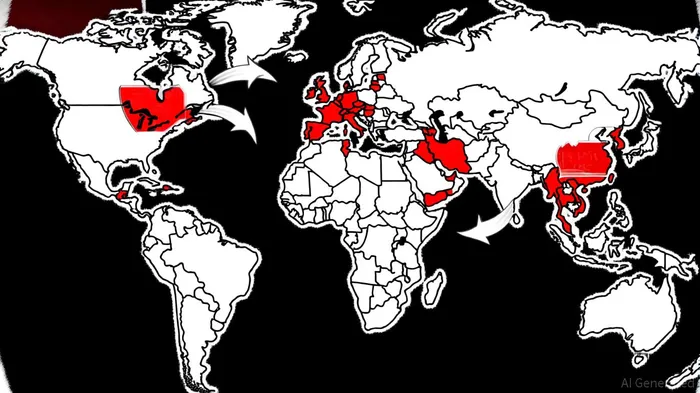
The cryptocurrency sector in 2025 is no longer just a playground for technologists and speculators—it is a battleground for geopolitical power. As state-sponsored cyberattacks escalate, the intersection of geopolitics and cybersecurity has become a defining factor in crypto asset valuations. Investors must now navigate a landscape where digital assets are both targets and tools of geopolitical strategy.
The Geopolitical Cyber Threat Landscape
Recent data paints a grim picture: over $2.17 billion has been stolen from cryptocurrency services in 2025 alone, with North Korea's $1.5 billion heist of ByBit—the largest crypto theft in history—accounting for 69% of these losses [1]. These attacks are not random; they are part of a broader strategy by sanctioned regimes to evade international sanctions and fund critical programs. For instance, North Korea's Lazarus Group has systematically exploited vulnerabilities in blockchain infrastructure, funneling stolen funds into its nuclear and missile development efforts [2]. Similarly, Israel's cyber operations against Iran's Nobitex exchange—resulting in a $100 million breach—highlight how regional conflicts are increasingly fought through digital assetDAAQ-- theft [3].
The financial toll of these attacks is staggering. By the end of 2025, global crypto-related cybercrime is projected to cost $30 billion annually, with ransomware and phishing alone accounting for over $1 billion in losses [4]. These figures underscore a critical reality: geopolitical tensions are no longer confined to physical borders. They now manifest in the form of cyberattacks that destabilize market confidence and drive volatility in crypto prices.
Investor Behavior and Strategic Adaptation
The rise in geopolitical cyber threats has fundamentally altered investor behavior. In response to breaches like ByBit's, demand for digital asset insurance has surged to $4.28 billion, reflecting a shift toward proactive risk management [5]. Investors are now prioritizing platforms with transparent security audits, quantum-resistant cryptography, and multi-signature wallet solutions. For example, the WazirX hack—caused by compromised multi-signature wallets—has accelerated adoption of hardware wallets and decentralized key management systems [6].
Moreover, geopolitical instability has driven a reevaluation of crypto as a safe-haven asset. While Bitcoin's price volatility remains a concern, its role as a hedge against fiat devaluation—particularly in countries like El Salvador and Zimbabwe—has grown [7]. However, this shift is not without risks. The same geopolitical forces that drive demand for crypto also make it a target. For instance, the U.S. and EU's regulatory efforts to combat sanctions evasion through stablecoins and CBDCs have created a fragmented landscape where compliance costs and geopolitical risks are intertwined [8].
Strategic Implications for Investors
To thrive in this environment, investors must adopt a dual strategy: defensive cybersecurity investments and geopolitical risk diversification.
Cybersecurity as a Core Investment
The global cybersecurity market is projected to reach $298.5 billion by 2028, driven by the need to counter AI-powered phishing, quantum computing threats, and cross-chain vulnerabilities [9]. Investors should prioritize firms developing quantum-resistant cryptography, AI-driven threat detection, and decentralized identity solutions. For example, platforms integrating zero-trust architecture and cybersecurity mesh frameworks are better positioned to withstand sophisticated attacks [10].Geopolitical Diversification
Diversification is no longer just about asset classes—it is about geographic and geopolitical exposure. Investors must avoid overconcentration in regions prone to cyber conflict (e.g., the Middle East, East Asia) and instead allocate to jurisdictions with robust regulatory frameworks and cybersecurity infrastructure. The EU's Digital Operational Resilience Act (DORA) and the U.S. GENIUS Act, which mandate regular cyber resiliency assessments for crypto platforms, offer safer havens for capital [11].Monitoring Geopolitical Signals
Investors should closely track geopolitical developments that could trigger cyberattacks. For instance, escalations in U.S.-China trade tensions or Russia's cyber operations in Eastern Europe often precede spikes in crypto thefts. Real-time monitoring of sanctions, cyber threat intelligence, and CBDC adoption trends can provide early warnings of market instability [12].
The Road Ahead
The crypto sector's future hinges on its ability to adapt to the geopolitical-cyber convergence. While state-sponsored attacks will continue to testTST-- the resilience of blockchain infrastructure, they also present opportunities for innovation. Investors who align their strategies with cybersecurity advancements and geopolitical foresight will not only mitigate risks but also capitalize on the next wave of digital finance.
As the lines between geopolitics, cyber warfare, and financial markets blurBLUR--, one truth remains: in 2025, security is no longer optional—it is the foundation of value.






Comentarios
Aún no hay comentarios