
Assessing Cybersecurity Risks in Crypto Platforms: Trust and Long-Term Viability in Digital Finance
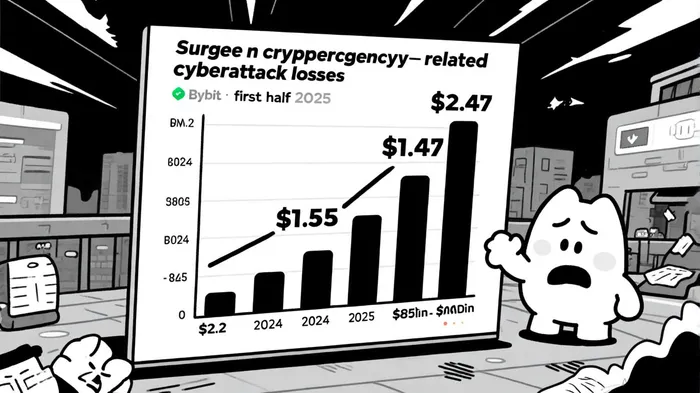
The cryptocurrency industry's rapid growth has been accompanied by an escalating arms race between innovators and cybercriminals. As digital assets become increasingly integral to global finance, the security of crypto platforms—particularly exchanges and wallets—has emerged as a critical determinant of trust and long-term viability. Recent data underscores a troubling trend: in 2024, $2.2 billion was stolen through cyberattacks, a 21.07% year-over-year increase, while losses surged to $2.47 billion in the first half of 2025 alone [1]. High-profile breaches, including the $1.5 billion theft from Bybit and the $85 million Phemex hack, have exposed vulnerabilities in even the most prominent platforms, raising urgent questions about the resilience of the crypto ecosystem.
The Financial and Psychological Toll of Breaches
The financial impact of these incidents is staggering, but the psychological toll on users is equally significant. A single breach can erode years of trust, as seen in the aftermath of the Bybit hack, where attackers exploited a supply chain vulnerability in the Safe UI to siphon funds [2]. Similarly, the politically motivated Nobitex breach—linked to hacktivist groups—highlighted how geopolitical tensions can spill into the digital realm, further destabilizing user confidence [3].
Post-breach recovery efforts often involve costly measures such as emergency liquidity injections and real-time transaction monitoring, yet these are reactive rather than preventive. For instance, DMM Bitcoin's $305 million loss in 2024 prompted the exchange to adopt multisignature security and cold storage solutions, but such steps come at the expense of operational efficiency and user convenience [4]. Meanwhile, regulatory scrutiny has intensified, with calls for mandatory solvency audits and stricter oversight of third-party vendors [5].
Regulatory Evolution and Global Divergence
The regulatory landscape in 2025 reflects a fragmented but evolving response to these challenges. In the United States, the GENIUS Act and STABLE Act have introduced frameworks for stablecoins and digital commodities, mandating 1:1 reserve backing and enhanced AML/KYC protocols [6]. Conversely, the European Union's Markets in Crypto-Assets (MiCA) regulation has standardized licensing and transparency requirements across member states, though inconsistencies persist due to resistance from some countries [7].
Asia's approach is equally dynamic. Singapore and Hong Kong have positioned themselves as crypto hubs by implementing licensing frameworks that balance innovation with risk mitigation [8]. Meanwhile, India's mandatory cybersecurity audits for exchanges underscore the growing emphasis on proactive compliance [9]. These divergent strategies highlight the challenge of harmonizing global standards while addressing jurisdiction-specific risks.
Technological and Behavioral Solutions
Long-term viability hinges on a dual focus on technological innovation and user education. Hardware wallets and quantum-resistant cryptography are now essential for securing private keys, while AI-powered fraud detection tools are being deployed to counter phishing and deepfake attacks [10]. Platforms like Bybit have also adopted symmetry-based anomaly detection using large language models (LLMs), achieving a 10% improvement in threat identification accuracy [11].
However, technology alone is insufficient. Users must adopt best practices such as avoiding phishing scams, securing recovery phrases with offline methods, and diversifying storage across multiple wallet types [12]. Regulatory bodies are also stepping up, with the U.S. SEC and DOJ launching specialized units to combat crypto-related threats, and the OECD introducing the Crypto-Asset Reporting Framework (CARF) to enhance transparency [13].
Investment Implications and the Path Forward
For investors, the key lies in assessing platforms based on their security infrastructure, regulatory compliance, and transparency. Exchanges that prioritize quantum-resistant cryptography, real-time fraud validation, and user education are better positioned to withstand future threats. Additionally, the rise of digital asset insurance—projected to reach $4.28 billion by 2025—offers a safety net for institutional investors [14].
Yet, the road ahead remains fraught. As North Korean hackers and AI-driven attacks grow more sophisticated, the industry must balance innovation with caution. Global collaboration on standards, such as NIST's post-quantum cryptography guidelines, will be critical to future-proofing the ecosystem [15].
In conclusion, while cybersecurity risks pose a significant threat to the crypto industry, they also present an opportunity for platforms to differentiate themselves through robust security and regulatory alignment. For digital finance to achieve long-term viability, trust must be rebuilt not just through technology, but through a culture of vigilance and accountability.






Comentarios
Aún no hay comentarios