
Assessing Cresud's Investment Potential in the Context of Undervalued Global Farmland
Agricultural real assets have increasingly emerged as a compelling hedge against inflation and macroeconomic uncertainty, particularly in a post-pandemic world marked by geopolitical tensions and shifting trade policies. As global inflation remains stubbornly elevated—projected at 4.2% in 2025 and 3.6% in 2026—investors are seeking tangible assets that preserve purchasing power. Among these, farmlandFPI-- and agribusinesses stand out due to their dual role in producing essential commodities and generating stable cash flows. This analysis evaluates CresudCRESY-- SACIF y A (CRESY), a major Argentine agribusiness and real estate firm, through the lens of these macroeconomic dynamics and its alignment with global farmland investment trends.
Agricultural Real Assets: A Resilient Inflation Hedge
Agricultural real assets have demonstrated resilience amid inflationary pressures, driven by their inelastic demand and the physical nature of land. According to a report by JPMorganJPM--, the volatility in agricultural prices—stemming from supply chain disruptions and trade policy shifts—has reinforced their appeal as a buffer against inflation [1]. Meanwhile, McKinsey's Global Economics Intelligence notes that new tariffs and trade agreements could introduce both upside and downside risks, but the sector's long-term fundamentals remain robust [2].
The global farmland investment landscape has also evolved significantly. By 2025, agricultural and fish production is projected to grow by 14% over the next decade, fueled by productivity gains in middle-income countries and innovations like precision farming [3]. However, challenges such as rising input costs for fertilizers and crop protection persist, with 48% of farmers citing these as critical concerns in 2024 [4].
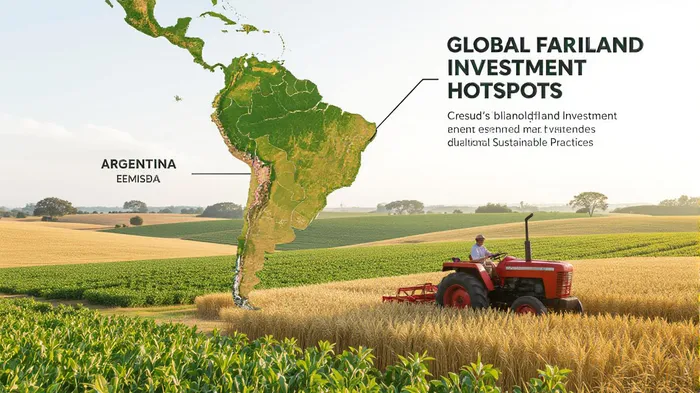
Cresud's Strategic Position in a Shifting Landscape
Cresud, a diversified agribusiness and real estate company, has navigated a complex 2025 operating environment with a mix of resilience and strategic adaptability. Despite adverse climate conditions in parts of Argentina and Paraguay that reduced farm sales by 30% year-over-year, the company reported a robust net income increase and strategic real estate gains [5]. Key crops like soybean and corn saw price rebounds of 9% and 8%, respectively, while cattle operations improved significantly in margins and production [5].
The firm's debt management strategy further underscores its financial prudence. Cresud issued $43.7 million at 8% for three years and $31.3 million at 7.25% for two years, aiming to stabilize liquidity while returning value to shareholders [5]. Management has also emphasized the role of its real estate and agricultural assets as inflation hedges, particularly as Argentina's reintegration into global markets boosts liquidity in farmland [5].
Cresud's alignment with global trends is evident in its adoption of sustainable practices. While regenerative agriculture accounts for just 4% of global farmland by 2025, the company is investing in technologies like IoT and blockchain to enhance traceability and reduce environmental impact [3][4]. These efforts align with growing consumer demand for sustainable food systems and position Cresud to capitalize on long-term productivity gains.
Risks and Considerations
While Cresud's strategic moves are promising, several risks warrant attention. Climate variability remains a persistent threat, with Argentina and Paraguay's agricultural regions vulnerable to droughts and floods. Additionally, geopolitical tensions—such as trade disputes between major economies—could disrupt export flows and depress commodity prices.
The company's reliance on debt financing also introduces interest rate risk, particularly in a high-inflation environment. However, Cresud's proactive approach to debt management and its focus on high-yield assets mitigate some of these concerns.
Conclusion
Cresud's investment potential lies in its ability to leverage agricultural real assets as a hedge against inflation while adapting to global sustainability trends. Its 2025 performance, marked by strong net income and strategic debt restructuring, demonstrates resilience in a volatile macroeconomic climate. As global farmland demand continues to rise—driven by population growth and technological innovation—Cresud's diversified portfolio positions it to benefit from long-term tailwinds. However, investors must remain vigilant about climate and geopolitical risks. For those seeking exposure to undervalued farmland assets in a region with high growth potential, Cresud offers a compelling, albeit complex, opportunity.





Comentarios
Aún no hay comentarios