
Assessing Credit Risk in a Post-Pandemic Lending Landscape
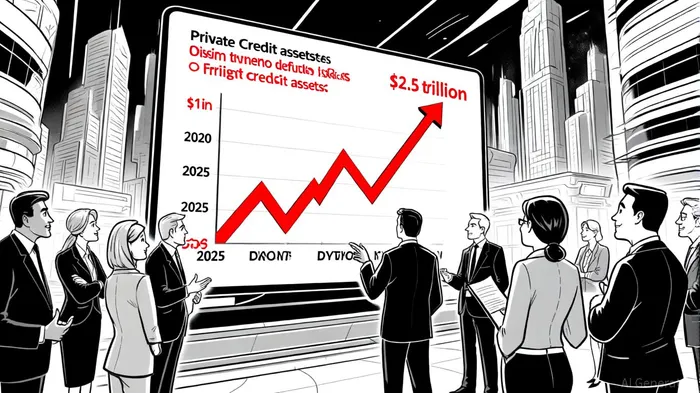
In the shadow of the post-pandemic economic recovery, Jamie Dimon's warnings about credit risk have crystallized into a central concern for investors and regulators alike. The CEO of JPMorgan ChaseJPM-- has repeatedly sounded the alarm on the private credit boom, likening its unchecked growth to the reckless lending practices that precipitated the 2008 financial crisis. With private credit assets now surpassing $2.5 trillion in 2025, the sector's rapid expansion-fueled by institutional investors' hunger for yield in a low-interest-rate environment-has created a fragile ecosystem that could amplify systemic risks during a downturn, according to an Investopedia analysis.
Macroeconomic Headwinds and Financial Sector Volatility
The macroeconomic landscape in 2025 is marked by a delicate balancing act. The Federal Reserve's decision to cut the fed funds rate by 25 basis points in late September 2025, amid signs of a potential slowdown, underscores the central bank's cautious approach to managing inflation and liquidity, as noted in Schroders' Q3 review. However, inflation remains stubbornly above the 2% target, driven by sticky service-sector prices and housing costs. This environment has led to tighter credit spreads, as investors recalibrate risk premiums in response to heightened uncertainty, according to a Fidelity quarterly update.
For financial sector stocks, these dynamics create a dual-edged sword. While lower interest rates can temporarily buoy earnings by reducing borrowing costs, the underlying risks-such as rising defaults and regulatory scrutiny-threaten long-term stability. According to a Boston Fed report, private credit's growth has introduced "credit substitution" risks, where non-bank lenders are capturing market share from traditional banks, potentially destabilizing the broader financial system.
The Paradox of Private Credit: Opportunity and Peril
Dimon's warnings highlight a paradox: JPMorganJPM-- itself is allocating $50 billion to private credit, recognizing its potential to fill gaps left by post-2008 regulatory constraints on traditional banks. Yet, the CEO has expressed "slight reluctance" about the sector's sustainability, noting that private credit loans often come with looser terms, lower interest coverage, and weaker buffers compared to public market loans, according to a Fortune explainer. This duality reflects the sector's appeal-tailored financing for private equity-backed companies-and its dangers, including opaque valuations and limited access to central bank liquidity during crises, as noted in a CFA Institute blog post.
The Federal Reserve's 2025 financial stability report further underscores these risks, warning that private credit's lack of transparency could delay early detection of systemic vulnerabilities. As Stoy Hall, a financial advisor, aptly summarized, the sector is built on "optimism and opacity," a phrase used in the same Fortune explainer - a combination that could prove catastrophic if economic conditions deteriorate.
Investment Implications and Strategic Considerations
For investors, Dimon's warnings signal the need for a recalibration of risk management strategies. The illiquidity of private credit investments, coupled with the potential for defaults in a recession, demands rigorous due diligence. According to Moody's 2025 outlook, institutional investors such as pension funds and insurers must remain vigilant in assessing credit quality and managing asset-liability mismatches.
Financial sector stocks, meanwhile, face a bifurcated outlook. While banks with diversified lending portfolios may benefit from the shift to private credit, those with concentrated exposure to high-risk sectors could see volatility. The expansion of private credit into asset-backed financing and commercial real estate also raises concerns about contagion risks, particularly if banks are heavily involved in funding these markets, according to a McKinsey analysis.
Conclusion: Navigating the New Normal
As the financial sector grapples with the legacy of the pandemic and the rise of private credit, investors must adopt a nuanced approach. Dimon's warnings serve as a reminder that while innovation in lending can drive growth, it also demands prudence. The interplay of macroeconomic factors-rising interest rates, inflationary pressures, and regulatory scrutiny-will shape the trajectory of financial stocks in the coming years. For now, the market's resilience hinges on its ability to balance yield-seeking opportunities with the sobering realities of credit risk.







Comentarios
Aún no hay comentarios