
Assessing Brazil's Economic Slowdown: Strategic Entry Points in Resilient Sectors
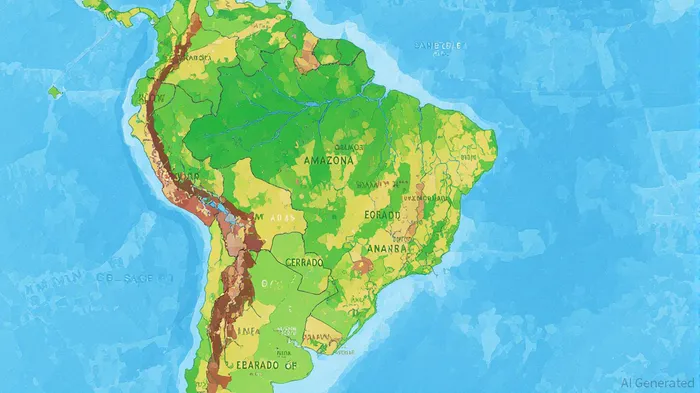
Brazil's economy, long a paradox of promise and volatility, now faces a confluence of challenges that threaten to dampen its growth trajectory. While third-quarter 2025 GDP data remains elusive, the broader macroeconomic landscape is shaped by persistent headwinds: surging crime rates, environmental degradation, and political uncertainty. Yet, within this turbulence lie opportunities for investors willing to navigate the risks. By dissecting the interplay of these factors and identifying sectors with structural resilience, high-conviction positions can be forged.
The Macro Headwinds: A Perfect Storm
Brazil's economic slowdown is not merely cyclical but rooted in structural vulnerabilities. High crime rates, particularly in urban centers like Rio de Janeiro and São Paulo, have eroded consumer confidence and deterred tourism—a critical revenue stream [1]. Environmental concerns, notably deforestation in the AmazonAMZN--, compound these issues, drawing global scrutiny and threatening Brazil's ecological and economic stability [2]. Meanwhile, the political landscape remains fragmented, with policy shifts under President Luiz Inácio Lula da Silva's administration introducing uncertainty for long-term investors [3].
Policy Dynamics: Balancing Act
Lula's administration has prioritized structural reforms, emphasizing sustainability and social equity. While specific Q3 2025 policy changes are not yet documented, the government's focus on strengthening financial systems and managing public debt suggests a cautious approach to macroeconomic stability [4]. These efforts, however, face pushback from entrenched interests and fiscal constraints, creating a mixed outlook for policy-driven growth.
Resilient Sectors: Where Opportunity Meets Necessity
Despite the headwinds, certain sectors exhibit resilience, driven by demand inelasticity or strategic government support:
Renewable Energy
Brazil's vast natural resources position it as a leader in renewable energy. The government's commitment to reducing carbon emissions, coupled with declining costs in solar and wind technologies, creates a tailwind for clean energy investments. State-backed initiatives, such as the Plano Nacional de Energia, underscore this trajectory [5].Agriculture and Agribusiness
The Cerrado region's arable land and Brazil's role as a global soybean and beef exporter ensure demand resilience. Infrastructure bottlenecks, while a drag on efficiency, also present opportunities for private investment in logistics and storage solutions [6].Security and Technology
Rising crime rates have spurred demand for surveillance systems, cybersecurity, and community policing technologies. Startups and foreign firms offering scalable security solutions are gaining traction in a market underserved by public-sector capacity [1].Infrastructure Development
Lula's emphasis on modernizing transportation and energy grids aligns with long-term growth needs. Public-private partnerships (PPPs) in roadways, ports, and digital connectivity could attract capital, though execution risks remain [7].
Strategic Entry Points: Navigating the Risks
Investors should adopt a selective, long-term approach. In renewable energy, prioritize firms with government contracts or land rights in high-potential regions. For agribusiness, focus on companies leveraging precision agriculture to mitigate climate risks. In security tech, target firms with proven scalability and partnerships with municipal governments. Infrastructure investments, meanwhile, require rigorous due diligence on regulatory timelines and cost overruns.
Conclusion: Patience as a Virtue
Brazil's economic slowdown is a test of endurance for investors. While macro risks persist, the interplay of policy, demand, and innovation in key sectors offers a roadmap for resilient returns. Those who align with structural trends—rather than short-term volatility—may find Brazil's challenges a catalyst for outsized opportunities.







Comentarios
Aún no hay comentarios