
Assessing the Attraction of FlexShares US Quality Large Cap Index Fund's Quarterly Dividend in a Shifting Market Environment
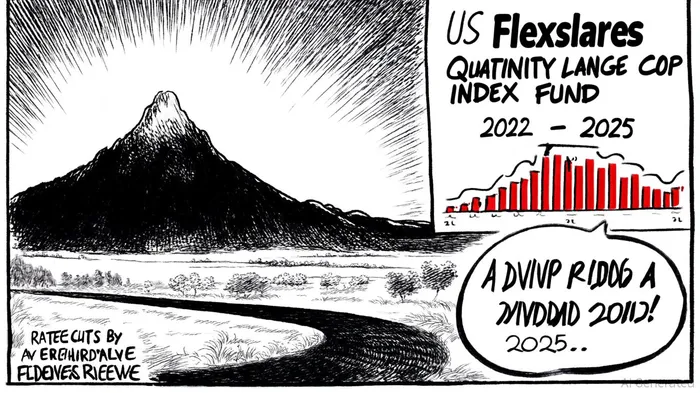
The FlexShares US Quality Large Cap Index Fund (QLC) has long been a staple for income-focused investors seeking exposure to large-cap U.S. equities with a focus on quality and momentum. However, as we navigate a shifting market environment marked by Federal Reserve rate cuts and renewed economic uncertainty, the fund's dividend sustainability and growth potential warrant closer scrutiny.
Dividend Sustainability: A Mixed Bag of Resilience and Vulnerability
, 2025, appears modest compared to high-yield alternatives, but its historical trajectory tells a more nuanced story. Over the past three years, , driven by consecutive annual increases [1]. Yet, this momentum has faltered recently, . This volatility underscores the fund's sensitivity to macroeconomic conditions, particularly interest rate fluctuations.
When interest rates rise, borrowing costs for corporations increase, squeezing profit margins and, by extension, dividend-paying capacity. QLC's portfolio—anchored by large-cap stocks like AppleAAPL-- and NVIDIA—has historically weathered rate hikes better than smaller, more leveraged firms. For instance, in 2023 and 2024, , respectively, even as the Fed tightened policy [3]. However, the recent slowdown in dividend growth suggests that even “quality” stocks are not immune to broader market pressures.
Rate Cuts and the Dividend Growth Rebound
The Federal Reserve's pivot to rate cuts in 2025 has introduced a new dynamic. With the first 50-basis-point reduction in September 2024 and further easing anticipated, companies in QLC's portfolio may find it cheaper to borrow, potentially boosting earnings and freeing up cash for dividends [4]. Historical precedents support this optimism: During prior , firms like ExxonMobilXOM-- and Johnson & .
QLC's focus on large-cap companies with strong balance sheets and consistent cash flows positions it to benefit from this environment. For example, tech giants in its portfolio, such as Apple, have demonstrated resilience in maintaining dividend growth even during periods of economic stress [6]. However, the fund's lack of an ESG rating from Morningstar—a metric increasingly valued by investors—could limit its appeal to those prioritizing sustainability alongside income [7].
The Risks of a Rate-Sensitive Landscape
While rate cuts may bolster dividend sustainability, they also create a paradox for income investors. Lower rates increase the opportunity cost of holding low-yield assets like QLC, as bonds and savings accounts become more competitive. , raising questions about its relative attractiveness [8].
Moreover, QLC's dividend is not immune to sector-specific risks. Its exposure to industries like technology and financials—sectors that have swung wildly in response to rate changes—introduces volatility. For instance, during the 2022 rate-hiking cycle, , reflecting the drag on growth stocks [3]. , short-term fluctuations remain a concern [9].
Conclusion: A Strategic Bet for Income Investors
QLC's dividend profile is a double-edged sword in a rate-sensitive market. On one hand, its focus on quality large-cap stocks and the tailwinds of Fed rate cuts could catalyze a rebound in dividend growth. On the other, its recent performance and low yield highlight the need for caution. For investors willing to tolerate short-term volatility in exchange for long-term stability, QLC remains a compelling option—particularly if the Fed's easing cycle continues. However, those prioritizing immediate income may need to look beyond this fund to higher-yielding alternatives.
As always, the key lies in balancing macroeconomic trends with the fundamentals of the underlying holdings. In QLC's case, the coming quarters will be critical in determining whether its dividend can regain its former momentum—or if the shifting rate environment will force a reevaluation of its role in income portfolios.





Comentarios
Aún no hay comentarios