
Assessing APEI's Strategic Position in the Postsecondary Education Sector Amid Rising Demand for Affordable and Accessible Learning
Enrollment Momentum in Nursing Education
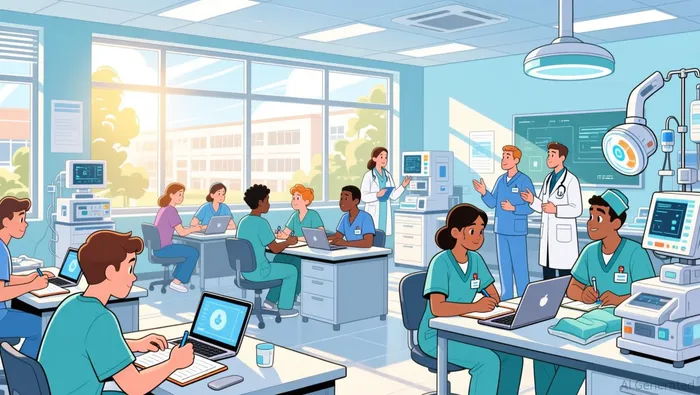
APEI's nursing education initiatives have emerged as a cornerstone of its growth strategy. Hondros College of Nursing (HCN), a key subsidiary, reported a 17.6% year-over-year increase in student enrollment in Q3 2025, reflecting robust demand for practical nursing (PN) and associate degree in nursing (ADN) programs. This growth is not isolated: Rasmussen University also saw a 10.4% rise in total student enrollment during the same period. The company attributes this success to its "filling the back row" strategy, which prioritizes maximizing campus capacity to improve margins while addressing the national nursing shortage.
The strategic alignment with workforce needs is further underscored by HCN's 28 campuses nationwide, which offer hybrid and on-ground programs tailored to students seeking flexible, outcomes-driven education. As healthcare employers increasingly partner with institutions to train frontline workers, APEI's focus on structured curricula and employer alliances positions it to capitalize on this demand.
Strategic Infrastructure and Operational Efficiency
APEI's infrastructure investments, though not always explicit in capital expenditures, are evident in its operational strategies. The "filling the back row" approach has enabled the company to optimize existing facilities, reducing per-student costs while expanding access to education. For instance, RU's on-ground healthcare enrollments are projected to grow by 13% in Q4 2025, a trend that aligns with the sector's shift toward hybrid learning models.
Financial discipline has also strengthened APEI's balance sheet. The company redeemed preferred equity, saving $6 million annually, and eliminated a $28 million lease liability through the sale of Graduate School USA. These moves, combined with unrestricted cash reserves of $193.1 million as of September 30, 2025, provide flexibility to reinvest in high-growth areas or navigate short-term disruptions.
Challenges and Resilience in Military Education
While APEI's nursing segment thrives, its military-focused programs face temporary headwinds. The American Public University System, which serves a significant share of military-affiliated students, has been impacted by the government shutdown, leading to a projected 33–23% decline in net course registrations for Q4 2025. However, the company anticipates a recovery, citing the One Big Beautiful Bill Act, which authorizes $100 million in tuition assistance (TA) funds for military students. This legislative support, coupled with APEI's existing infrastructure for online education, suggests a path to sustained growth in this segment.
Investment Implications
APEI's strategic positioning in high-demand fields-nursing and military education-offers a dual advantage: addressing critical workforce shortages while maintaining financial resilience. The company's ability to scale enrollment through operational efficiency and its focus on infrastructure optimization (e.g., campus utilization, cost reduction) enhance its margins and long-term viability.
However, investors must remain cautious. The government shutdown's impact on APUS highlights the sector's vulnerability to policy shifts. Yet, APEI's diversified portfolio, including Rasmussen University and HCN, provides a buffer against such risks. Truist Securities' recent upgrade of APEI's price target to $35 from $30, despite near-term challenges, underscores confidence in the company's ability to navigate these dynamics.
Conclusion
As the demand for affordable, accessible education intensifies, APEI's focus on infrastructure tailored to military, veteran, and nursing needs positions it as a key player in the postsecondary sector. By leveraging enrollment growth, operational efficiency, and strategic financial management, the company is well-equipped to address both immediate challenges and long-term opportunities. For investors, APEIAPEI-- represents a compelling case study in aligning educational innovation with market demand.





Comentarios
Aún no hay comentarios