
Assessing S&P 500 Valuation Risks and Sector Resilience in 2025
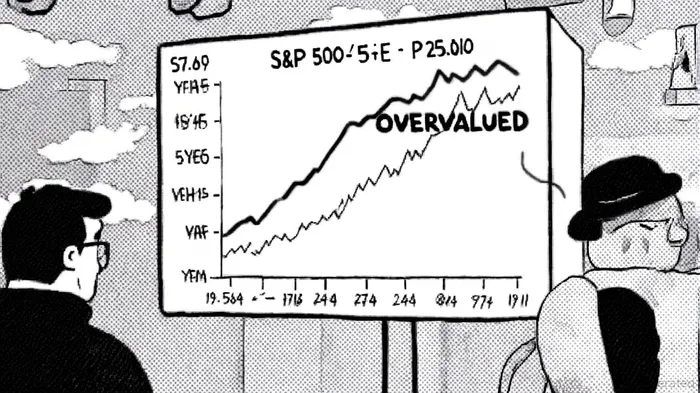
The S&P 500's valuation metrics in 2025 raise critical questions about market sustainability. As of September 30, 2025, the index trades at a trailing price-to-earnings (P/E) ratio of 27.45, significantly above its 5-year historical range of 19.50–24.84 and its 10-year average of 19.18, according to the current P/E ratio. This divergence suggests the market may be entering a period of overvaluation, a hallmark of speculative bubbles. While the P/E ratio has historically fluctuated between 17.97 and 28.98, as shown in the GuruFocus PE charts, the current level sits near the upper end of this spectrum, amplifying concerns about a potential correction.
Defensive Sectors: Anchors in a Shifting Market
Investor behavior in Q1 2025 underscores a growing preference for defensive sectors amid economic and trade policy uncertainties. Energy, Health Care, Consumer Staples, and Utilities outperformed the broader index, with Energy delivering a robust 9.3% return driven by rising natural gas prices (per worldperatio). Health Care and Consumer Staples followed with gains of 6.1% and 4.6%, respectively, reflecting their resilience during periods of volatility (per worldperatio).
Valuation metrics for these sectors suggest they remain relatively grounded compared to the broader market. As of Q3 2025, Health Care trades at a P/E of 25.14 (versus a 5-year average of 20.37), while Consumer Staples has a P/E of 22.61 (compared to 20.62) (per worldperatio). Utilities and Energy, with P/E ratios of 21.91 and 17.46, respectively, appear even more attractively valued (per worldperatio). These sectors also benefit from stable demand and essential services, making them logical hedges against macroeconomic risks.
Growth Sectors: Optimism vs. Reality
In contrast, growth-oriented sectors like Information Technology and Consumer Discretionary have faced headwinds. Information Technology, which led the market in revenue growth projections (13.1% for 2025) (per worldperatio), trades at a lofty trailing P/E of 40.65, according to sector P/E data, reflecting investor optimism about AI and cloud computing adoption. Similarly, Consumer Discretionary's P/E of 29.21 (per the same sector P/E data) indicates high expectations for consumer demand. However, these elevated multiples raise concerns about sustainability, particularly if earnings growth fails to meet forecasts.
While 10 of 11 S&P 500 sectors are projected to see positive revenue growth in 2025 (per worldperatio), the Utilities sector stands out for its improving net profit margins (per the sector P/E data). This highlights a nuanced reality: even within growth sectors, defensive characteristics (e.g., stable cash flows) can provide resilience.
Balancing the Equation: A Path Forward
The S&P 500's current valuation does not necessarily signal an imminent bubble, but it does demand caution. Historical bubbles, such as the dot-com peak in 2000, were marked by P/E ratios exceeding 30 and disconnects between valuations and fundamentals (see GuruFocus PE charts). While 2025's P/E of 27.45 is not unprecedented, the rapid shift toward defensive sectors suggests investors are already hedging against potential downturns.
For investors, a diversified approach that blends defensive sectors (e.g., Utilities, Energy) with selectively positioned growth sectors (e.g., Health Care, AI-driven Technology) may offer the best balance. Defensive sectors provide stability, while growth sectors-despite their high valuations-could deliver outsized returns if macroeconomic conditions stabilize and earnings meet expectations.
Conclusion
The S&P 500's valuation in 2025 reflects a market at a crossroads. While overvaluation risks persist, the interplay between defensive and growth sectors offers a roadmap for navigating uncertainty. Investors must remain vigilant, leveraging sector-specific fundamentals and macroeconomic signals to position portfolios for both resilience and growth.






Comentarios
Aún no hay comentarios