
Assessing the $100 Billion Venezuela Oil Bet: A Structural Analysis
The political narrative is clear: President Trump has pledged that U.S. oil giants will invest at least $100 billion to rebuild Venezuela's energy sector. Yet the immediate reaction from the industry's top executives tells a different story. At a White House meeting, the CEOs of ExxonMobilXOM-- and ConocoPhillipsCOP-- delivered a blunt reality check, stating that Venezuela will need major reforms to attract investment. More critically, they did not commit to a rapid re-entry or a specific capital outlay, leaving the $100 billion figure as a political aspiration without a financial anchor.
This disconnect highlights a fundamental structural barrier. Venezuela possesses the world's largest proven oil reserves, 303.221 billion barrels. But its current production is a mere fraction of that potential, hovering around 900,000–1.1 million barrels per day. The chasm between this vast underground wealth and on-the-ground output is the central challenge. It is a gap created by years of mismanagement, deteriorating infrastructure, and crippling sanctions.
The most potent obstacle, however, is legal and commercial. The legacy of asset seizures has poisoned the well for major international investors. Venezuela seized Exxon's and ConocoPhillips' assets in 2007, and the companies still hold billions of dollars in outstanding claims from arbitration cases. ExxonXOM-- CEO Darren Woods was unequivocal: "If we look at the legal and commercial constructs and frameworks in place today in Venezuela today, it's uninvestable." The risk of a third nationalization, even with U.S. security guarantees, remains a non-starter for these capital-intensive businesses. While Chevron has a path forward through its existing joint ventures, the two largest U.S. majors see no viable framework to deploy the scale of capital required to bridge the gap between reserves and production. The promise is grand; the structural reality is a complex web of legal claims, operational decay, and unresolved political risk.
The Stakes: Production, Sanctions, and Market Access
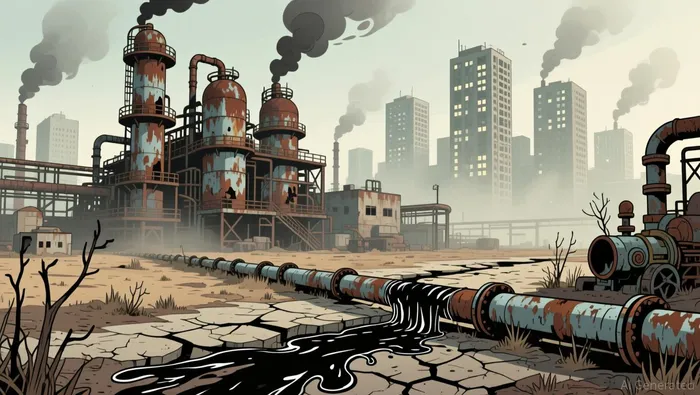
The operational hurdle is staggering. Venezuela's current crude oil production sits at roughly 1.14 million barrels per day, a level that is a shadow of its historical peak. The country's output has averaged 2.19 million barrels per day since 1973, with a record high of over 3.4 million barrels per day in 1997. Restoring production to even a fraction of that potential would require a capital infusion far beyond the initial $100 billion pledge. The scale of the task is clear: decades of underinvestment have left the nation's oilfields and refineries in a state of severe decay, demanding a multi-decade, multi-billion-dollar rehabilitation effort.
This capital challenge is compounded by a persistent legal and financial overhang. The U.S. Treasury continues to enforce a campaign of pressure, recently sanctioning four companies and four associated tankers for operating in Venezuela's oil sector. These vessels are part of a shadow fleet that facilitates sanctionable activity and generates revenue for the regime. For any U.S. investor, the risk of being entangled in this network or facing secondary sanctions remains a critical deterrent. The legal framework is not just about past seizures; it is an active, evolving regime of penalties that complicates every financial transaction and market access decision.
Finally, the political transition introduces a new layer of uncertainty. With President Nicolás Maduro jailed and Vice President Delcy Rodríguez serving as interim leader, the country is in a state of flux. While Rodríguez is seen as a pragmatist, the stability of any new regulatory regime and the enforceability of future contracts are untested. For capital-intensive oil projects, this creates a significant risk premium. The industry's executives have made it clear: they need to see a stable, predictable, and legally sound environment before committing. The current setup-a production level far below its potential, a sanctions regime actively targeting the sector, and a government in transition-creates a perfect storm of risk that any viable investment scenario must first navigate.
The Realistic Investment Landscape: Giants vs. Wildcatters
The investment landscape for Venezuela is not monolithic. It bifurcates sharply between the capital-intensive, risk-averse giants and a cohort of smaller, more agile players. The former possess the scale and expertise to meaningfully rebuild an oil economy, but their private reservations are profound. ExxonMobil and ConocoPhillips, despite acknowledging the country's vast opportunity, have made it clear that the current environment is "uninvestable". Their hesitancy is rooted in a history of asset seizures and a legacy of billions in outstanding claims. For these majors, the calculus demands stability and legal certainty-a threshold that remains unmet. Their role, should they ever engage, would be to lead a multi-billion-dollar, multi-decade rehabilitation of the upstream sector. Yet, as of now, they are not committing to that path.
By contrast, a different set of actors is reportedly eager to move. Smaller businesses and independent operators, often referred to as 'wildcatters,' have been clamoring to establish or expand oil production in Venezuela. Their interest is understandable; they operate with smaller capital footprints and may be more tolerant of operational and political friction. However, their individual investments are likely in the tens of millions, not the billions required for a systemic revival. They represent a potential source of incremental activity, perhaps in marginal fields or niche operations, but they lack the resources to bridge the massive gap between Venezuela's reserves and its current production.
This leaves a more immediate and tangible catalyst for the market. The primary near-term opportunity may not be for upstream production investment at all, but for refining and trading firms to secure discounted Venezuelan crude. With the country's output already constrained and its financial system in disarray, there is a potential for a flow of low-cost crude to U.S. and European markets. This would benefit traders and refiners looking for a reliable, albeit politically sensitive, feedstock. For the majors, the focus may remain on technical evaluations and waiting for a fundamental shift in the legal and commercial framework before any serious capital deployment. The $100 billion promise remains a political aspiration, while the realistic investment landscape is one of cautious giants and opportunistic small players, with the near-term action likely in the trading pits, not on the oilfields.
Catalysts, Scenarios, and Key Watchpoints
The path from political promise to financial reality hinges on a series of forward-looking conditions. For the $100 billion bet to materialize, the current "uninvestable" calculus must flip. The critical catalyst is a clear, credible political and legal framework that resolves the legacy of asset seizures and the billions in outstanding arbitration claims. As Exxon CEO Darren Woods stated, re-entry would require "some pretty significant changes from what we've historically seen." This means not just a change in leadership, but enforceable contracts, a transparent dispute resolution mechanism, and a demonstrated commitment from the interim government to protect foreign investment. Without this foundational shift, even the most optimistic production forecasts remain theoretical.
A parallel, equally important catalyst is any reduction in the U.S. sanctions regime targeting the oil sector. The Treasury's recent action, which sanctioned four companies and four associated tankers, underscores the persistent risk premium. For major investors, the fear of secondary sanctions or entanglement in a "shadow fleet" is a deal-breaker. A credible, phased easing of these penalties would signal a de-escalation of geopolitical risk, making the capital commitment more palatable. The market will watch for any official policy shift from Washington that lowers the legal and financial friction for U.S. firms.
In practice, the most tangible signal of progress will be in the production data itself. The industry's executives have acknowledged the country's vast opportunity, but they need to see a functional recovery. The key watchpoint is sustained growth above 1.2 million barrels per day. This level, which is still well below historical averages, would indicate that the energy system is beginning to function again. It would demonstrate that technical evaluations and incremental investments are translating into physical output, thereby attracting more capital. Conversely, stagnation or a decline would confirm the structural decay and likely reinforce the majors' wait-and-see stance.
The scenario setup is therefore binary. The positive path requires a dual-engine push: a new political and legal framework from Caracas, coupled with a de-escalation of U.S. pressure. The negative path is a continuation of the current status quo, where legal overhang and sanctions risk keep the majors on the sidelines. For now, the watchpoints are clear-monitor the legal and political developments in Venezuela, track the evolution of U.S. sanctions policy, and, above all, look for the first sustained uptick in production data. The investment thesis depends on all three converging.





Comentarios
Aún no hay comentarios