
Assessing the 10% Credit Card Rate Cap: A Trial Balloon or a Structural Threat?
The proposal landed with a jolt. On Friday night, President Trump issued a social media ultimatum, calling for a one-year, 10% cap on credit card interest rates effective January 20, 2026. The timing was abrupt, with the deadline just over a week away. In a follow-up on Sunday, he doubled down, stating card issuers would be "in violation of the law" if they didn't comply, though the mechanism for enforcement remains murky. This is not a new idea-it mirrors a campaign pledge and echoes stalled congressional bills from early 2025-but its revival as a presidential directive has immediate, tangible consequences.
The financial markets reacted swiftly and severely. Shares in major credit card lenders tumbled on Monday, with Capital OneCOF-- and Synchrony FinancialSYF-- stocks falling 6% and 8% respectively. Broader bank stocks also felt the pressure, as JPMorgan Chase and Bank of America shares fell 3.2% and 2.5% in premarket trading. The sell-off underscores the market's view that a sudden, mandatory cap would directly attack the core profit engine of these businesses.
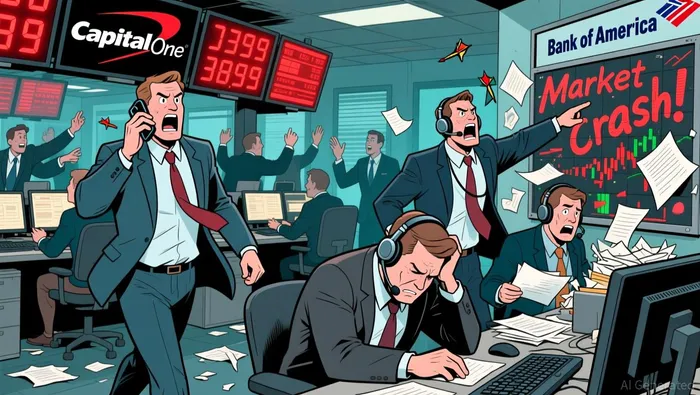
The industry's counter-argument is now in full force. Banking and credit union groups warn that such a cap would do more harm than good. America's Credit Unions, for instance, wrote to the president detailing why a 10% cap would "reduce access to credit and harm consumers". Their core point is structural: if lenders cannot charge rates high enough to cover risk and costs, they will simply stop issuing cards to many borrowers, particularly those with lower credit scores. This could "make credit unattainable for millions of working Americans", pushing them toward even more expensive alternatives like payday loans. The warning is clear: a policy aimed at affordability could end up restricting the very access it seeks to protect.
The Legal and Political Reality Check
The proposal's immediate market impact is undeniable, but its path to becoming law faces a steep legal and political wall. The administration's approach is fundamentally flawed. President Trump has framed the cap as an executive directive, stating issuers would be "in violation of the law" if they didn't comply. Yet, legal experts widely doubt the executive branch possesses unilateral authority to impose such a sweeping, economy-wide cap on private financial products. This is not a regulatory tweak; it would rewrite the fundamental risk-return calculus for a major industry. As veteran strategist Ed Yardeni noted, enforcing it would "require congressional legislation-not just executive action". The administration's ultimatum, therefore, appears more like a political trial balloon than a credible legislative blueprint.
Even if the administration wanted to act, the legislative process is a formidable obstacle. The proposal would need to be introduced and passed by Congress, a body where it faces strong opposition. Banking and credit union trade groups have already mobilized, warning that a 10% cap would "reduce credit availability and be devastating for millions of American families". Their lobbying power is significant, and the industry's dire warnings about restricted access and economic harm are likely to resonate with lawmakers. The proposal's revival as a presidential directive does not change the fact that it would require a major legislative fight in a chamber where powerful financial interests hold sway.
The timeline compounds the improbability. The effective date is set for January 20, 2026, just days away from the time of this writing. In the real world of lawmaking, that is an impossible deadline. It would require a bill to be drafted, debated, amended, and voted on by both chambers in a matter of days-a process that simply does not function under normal circumstances. The compressed schedule suggests the administration is testing the political waters, not preparing for a swift legislative victory. The bottom line is that while the policy's potential economic consequences are serious, its current form lacks both a legal foundation and a realistic legislative path.
Structural Impact on the Credit Card Ecosystem
The proposed 10% cap would trigger a fundamental restructuring of the credit card ecosystem. The scale of the shock is clear in the numbers. As of November 2025, the average credit card rate was at 22.3%, more than double the proposed limit. This isn't just a minor adjustment; it represents a potential 55% compression of the industry's core revenue stream. For banks, this would directly attack the profitability of their revolving loan portfolios, forcing a rapid recalibration of risk and pricing models.
The industry's response would be predictable and severe. With the high-margin business of financing revolving balances suddenly constrained, lenders would seek to protect their bottom lines through tighter credit controls. The Bank Policy Institute has already warned that two-thirds of cardholders who roll over their balance month-to-month could lose access to credit lines, or have them limited. This would manifest as a sharp tightening of underwriting standards, a rise in minimum payment requirements, and a reduction in credit limits for existing revolving balances. The goal would be to minimize exposure to the riskiest borrowers, who are precisely the ones that rely on high rates to remain profitable.
This operational shift carries a significant consumer risk. By restricting access for higher-risk borrowers, the policy could inadvertently push them toward less regulated, and often more expensive, alternatives. The banking associations' warning that the cap would "only drive consumers toward less regulated, more costly alternatives" is not merely a lobbying point-it's a structural outcome. Consumers who can no longer qualify for a credit card might turn to payday lenders, pawn shops, or other forms of short-term, high-cost credit. In this way, a policy intended to cap rates could end up increasing the overall cost of borrowing for vulnerable households, undermining the very consumer protection it claims to deliver. The ecosystem would contract, but the new players in that market are unlikely to be more affordable.
Catalysts, Scenarios, and What to Watch
The coming days will separate political theater from policy substance. The market's initial panic has subsided, but the real test is ahead. Three forward-looking developments will determine whether this is a fleeting scare or the start of a structural shift.
First, watch for any formal legislative proposals or executive actions. The administration's social media post is a directive, not a law. The critical signal will be whether it is followed by a bill introduced in Congress or a formal executive order issued by the Treasury or Federal Reserve. The evidence shows the proposal mirrors a pledge and aligns with stalled congressional bills, but those bills have seen no action since early 2025. A new legislative push would be the clearest sign this is moving from a trial balloon to a serious fight. Without that, the policy remains a political statement with no clear enforcement mechanism.
Second, monitor the industry's response. Banking and credit union groups have already mobilized, warning of "devastating" consequences for millions. The coming weeks will reveal the scale of their lobbying and legal preparations. Expect formal comments to regulatory agencies, potential lawsuits challenging any enforcement attempt, and a coordinated campaign to sway public opinion and lawmakers. The industry's ability to present a unified front and articulate the economic risks will be a major factor in the policy's fate.
Finally, assess the long-term political capital at stake. President Trump's revival of the proposal as a presidential directive does not change the fundamental reality: it would require a major legislative fight in a chamber where powerful financial interests hold sway. The compressed timeline suggests the administration is testing the waters, not preparing for a swift victory. The key question is whether the political payoff for a symbolic win on a popular issue is worth the significant capital it would consume from the administration's broader agenda. As strategist Ed Yardeni suggests, this may be "merely one of many administration 'trial balloons'" designed to gauge reaction. The market's initial sell-off was a reaction to the threat; the real story will be what happens next.







Comentarios
Aún no hay comentarios