
Assad Regime on Brink of Collapse as Rebel Forces Claim Damascus
Generado por agente de IAEli Grant
domingo, 8 de diciembre de 2024, 4:27 am ET1 min de lectura
AENT--
The Syrian civil war, which has raged for over a decade, appears to be reaching a critical turning point as rebel forces have claimed control of the capital, Damascus. The sudden offensive launched by insurgents on Nov. 27 has caught everyone off guard, with Syrian forces melting away and Russian airstrikes proving ineffective. The international community is divided, with the U.N. envoy calling for an "orderly political transition" and Russia unable to forecast the outcome. The collapse of the Assad regime will have significant implications, potentially reshaping power dynamics in the Middle East and requiring a coordinated international response to prevent chaos and disorder.
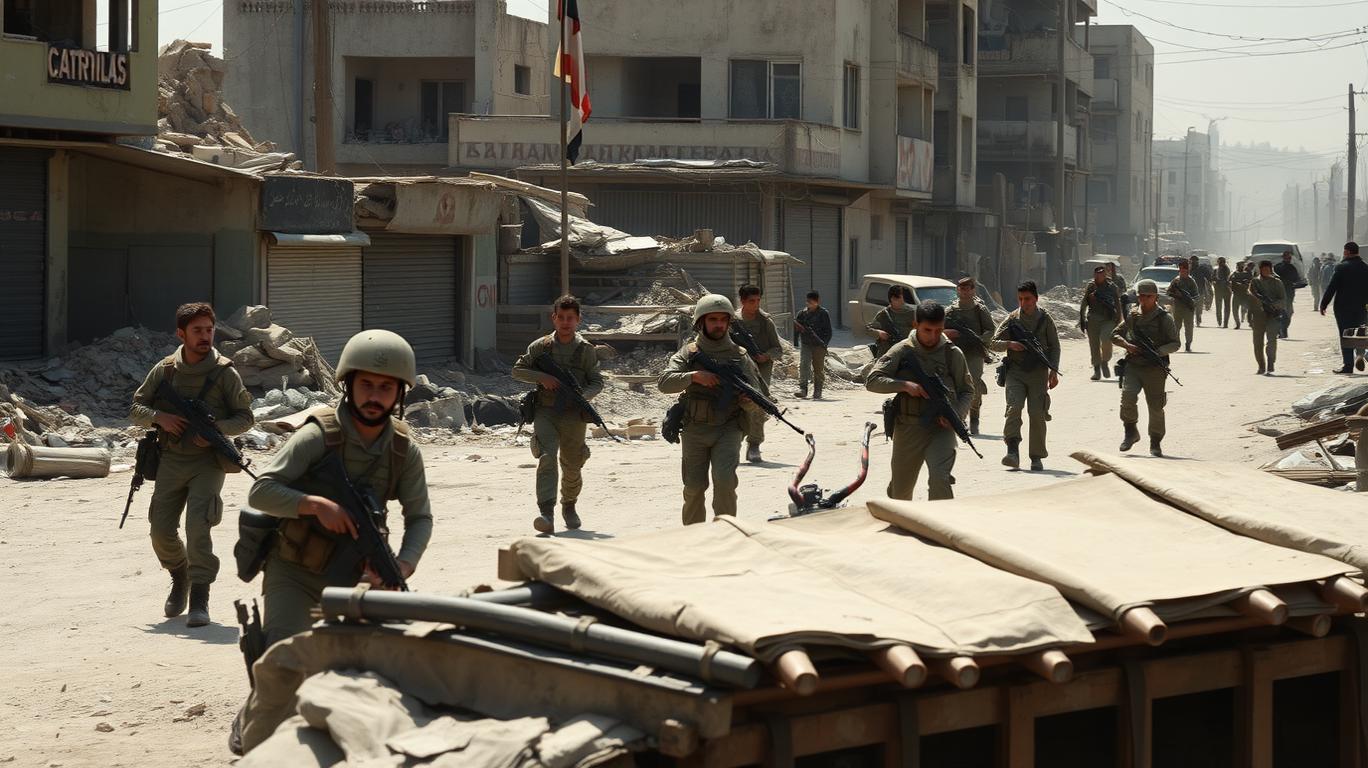
The geopolitical shifts, particularly Russia's war in Ukraine and Israel's conflict with Hezbollah, have weakened Assad's allies and contributed to the regime's vulnerability. Russia's war in Ukraine has diverted resources and attention, leaving Assad largely unsupported. Israel's conflict with Hezbollah has degraded Iran's proxies across the region, further weakening Assad's backers. Economic factors, such as U.S. sanctions, the banking crisis in Lebanon, and the earthquake last year, have exacerbated the regime's internal issues and undermined its ability to maintain control.
The rebels' strategic alliances, such as those with Turkey and the Syrian National Army, have been crucial in their recent offensive against the Assad regime. Turkey, a key backer, has provided military support and allowed rebels to launch operations from its territory. The Syrian National Army, backed by Turkey, has played a significant role in the offensive, capturing key towns like Tel Rifaat from Kurdish forces. This alliance has enabled the rebels to coordinate their efforts and gain ground, despite the Assad regime's international backing from Russia and Iran.
The collapse of the Assad regime in Syria could significantly reshape regional power dynamics, with Iran, Russia, and Hezbollah facing substantial losses. Iran's strategy of menacing Israel with proxies may collapse, as Hezbollah, already reduced by Israel, loses a key patron. Russia may be forced to end its Levantine project, dealing a bitter blow to Putin's prestige. The rebel group, Hayat Tahrir al-Sham (HTS), has evolved and displayed surprising discipline, but its intentions remain unclear. If the situation unravels into chaos, the Middle East's pivotal position could exacerbate regional conflicts and divisions.
In conclusion, the Assad regime's collapse in Syria is a significant development with far-reaching implications for the region and beyond. The geopolitical shifts, economic pressures, and strategic alliances have all contributed to the regime's vulnerability. As the situation unfolds, the international community must work together to prevent chaos and disorder, ensuring a stable and peaceful future for Syria and the broader Middle East.
AL--
The Syrian civil war, which has raged for over a decade, appears to be reaching a critical turning point as rebel forces have claimed control of the capital, Damascus. The sudden offensive launched by insurgents on Nov. 27 has caught everyone off guard, with Syrian forces melting away and Russian airstrikes proving ineffective. The international community is divided, with the U.N. envoy calling for an "orderly political transition" and Russia unable to forecast the outcome. The collapse of the Assad regime will have significant implications, potentially reshaping power dynamics in the Middle East and requiring a coordinated international response to prevent chaos and disorder.
The geopolitical shifts, particularly Russia's war in Ukraine and Israel's conflict with Hezbollah, have weakened Assad's allies and contributed to the regime's vulnerability. Russia's war in Ukraine has diverted resources and attention, leaving Assad largely unsupported. Israel's conflict with Hezbollah has degraded Iran's proxies across the region, further weakening Assad's backers. Economic factors, such as U.S. sanctions, the banking crisis in Lebanon, and the earthquake last year, have exacerbated the regime's internal issues and undermined its ability to maintain control.
The rebels' strategic alliances, such as those with Turkey and the Syrian National Army, have been crucial in their recent offensive against the Assad regime. Turkey, a key backer, has provided military support and allowed rebels to launch operations from its territory. The Syrian National Army, backed by Turkey, has played a significant role in the offensive, capturing key towns like Tel Rifaat from Kurdish forces. This alliance has enabled the rebels to coordinate their efforts and gain ground, despite the Assad regime's international backing from Russia and Iran.
The collapse of the Assad regime in Syria could significantly reshape regional power dynamics, with Iran, Russia, and Hezbollah facing substantial losses. Iran's strategy of menacing Israel with proxies may collapse, as Hezbollah, already reduced by Israel, loses a key patron. Russia may be forced to end its Levantine project, dealing a bitter blow to Putin's prestige. The rebel group, Hayat Tahrir al-Sham (HTS), has evolved and displayed surprising discipline, but its intentions remain unclear. If the situation unravels into chaos, the Middle East's pivotal position could exacerbate regional conflicts and divisions.
In conclusion, the Assad regime's collapse in Syria is a significant development with far-reaching implications for the region and beyond. The geopolitical shifts, economic pressures, and strategic alliances have all contributed to the regime's vulnerability. As the situation unfolds, the international community must work together to prevent chaos and disorder, ensuring a stable and peaceful future for Syria and the broader Middle East.

Divulgación editorial y transparencia de la IA: Ainvest News utiliza tecnología avanzada de Modelos de Lenguaje Largo (LLM) para sintetizar y analizar datos de mercado en tiempo real. Para garantizar los más altos estándares de integridad, cada artículo se somete a un riguroso proceso de verificación con participación humana.
Mientras la IA asiste en el procesamiento de datos y la redacción inicial, un miembro editorial profesional de Ainvest revisa, verifica y aprueba de forma independiente todo el contenido para garantizar su precisión y cumplimiento con los estándares editoriales de Ainvest Fintech Inc. Esta supervisión humana está diseñada para mitigar las alucinaciones de la IA y garantizar el contexto financiero.
Advertencia sobre inversiones: Este contenido se proporciona únicamente con fines informativos y no constituye asesoramiento profesional de inversión, legal o financiero. Los mercados conllevan riesgos inherentes. Se recomienda a los usuarios que realicen una investigación independiente o consulten a un asesor financiero certificado antes de tomar cualquier decisión. Ainvest Fintech Inc. se exime de toda responsabilidad por las acciones tomadas con base en esta información. ¿Encontró un error? Reportar un problema


SOBRE NOSOTROS
Nuestra historiaAutores de noticiasBase de conocimientosPolítica de privacidadTérmino de usoDescargo de responsabilidad de corretaje de tercerosTérminos de uso de AIMEDivulgaciones de riesgos de AInvest AICarrerasCONTÁCTENOS
Email: support@ainvest.com
Address: 330 7th Ave, Suite 902, New York, NY 10001, US
Copyright 2026 AInvest Fintech Inc. All rights reserved.


Comentarios
Aún no hay comentarios