
ASPI.O Plunges 10%: A Technical and Order-Flow Deep Dive
1. Technical Signal Analysis
Today’s sharp drop in ASP IsotopesASPI-- (ASPI.O) was not flagged by most traditional technical indicators, which remain neutral or bearish. The only signal that activated was the RSI Oversold trigger, which typically suggests a potential buying opportunity as the stock may be due for a rebound. However, in this case, the RSI signal appears to have been ignored or even contradicted by the market’s aggressive selling pressure.
Notably, reversal patterns like the Head and Shoulders and Double Bottom did not trigger, indicating that the market may not be seeing a potential reversal in play. With no KDJ Golden Cross or MACD divergence to suggest a shift in momentum, the drop appears more spontaneous than trend-following.
2. Order-Flow Breakdown
Order-flow data for ASPIASPI--.O is limited, with no block trading or major bid/ask clusters reported. However, the massive intraday trading volume of 13.6 million shares suggests high participation from retail or algorithmic traders. The absence of large institutional block orders implies the sell-off is more likely driven by broad market sentiment or technical triggers rather than a corporate event or large investor exit.
3. Peer Comparison
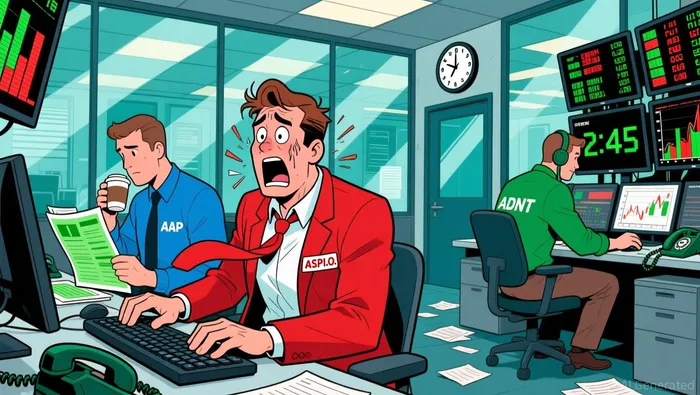 ASPI.O moved in sharp contrast to several related theme stocks. While names like AAP (up 6.88%) and ADNT (up 6.35%) saw strong intraday gains, ASPI.O fell over 10%. This divergence suggests that the move is not part of a sector-wide rotation or thematic momentum shift.
Among peers in similar markets (BEEM, AREB), most saw modest gains or stable performance, further indicating that ASPI.O’s drop was a stock-specific event. The lack of synchronized movement implies that this is not a market-driven correction or a regulatory or macroeconomic shift affecting the broader sector.
4. Hypothesis Formation
Given the available data, the most plausible explanations for the sharp intraday drop in ASPI.O are:
- Algorithmic Selling Pressure: The high volume and lack of institutional orders suggest that automated trading systems may have initiated a short-term bearish swing. Traders reacting to the RSI hitting oversold territory could have triggered stop-loss orders or shorting strategies, leading to a rapid price drop.
- Short-Squeeze Gone Wrong: If there was a buildup of short positions, a failed attempt to short-cover or a triggering of stop-losses on the long side could have created a cascading sell-off. The large volume supports this scenario, as short-covering or panic selling often leads to sharp intraday moves.
5. Conclusion
The sharp 10% drop in ASP Isotopes (ASPI.O) on high volume appears to be driven by short-term algorithmic or retail-driven selling, rather than a fundamental change or sector-wide shift. While the RSI hit an oversold level, which usually signals a buying opportunity, the market failed to react accordingly, pointing to a breakdown in technical discipline or a sudden surge of bearish sentiment.
With no block trading data and mixed peer performance, the move looks isolated. Investors should monitor the stock for potential recovery signs, such as a rebound above key support levels or a positive divergence in the RSI. For now, the move remains unexplained by fundamentals or sector dynamics.





Comentarios
Aún no hay comentarios