
Asian Shares Slip Despite Nvidia's Solid Earnings
Generado por agente de IAEli Grant
miércoles, 20 de noviembre de 2024, 11:38 pm ET2 min de lectura
MSCI--
NVDA--
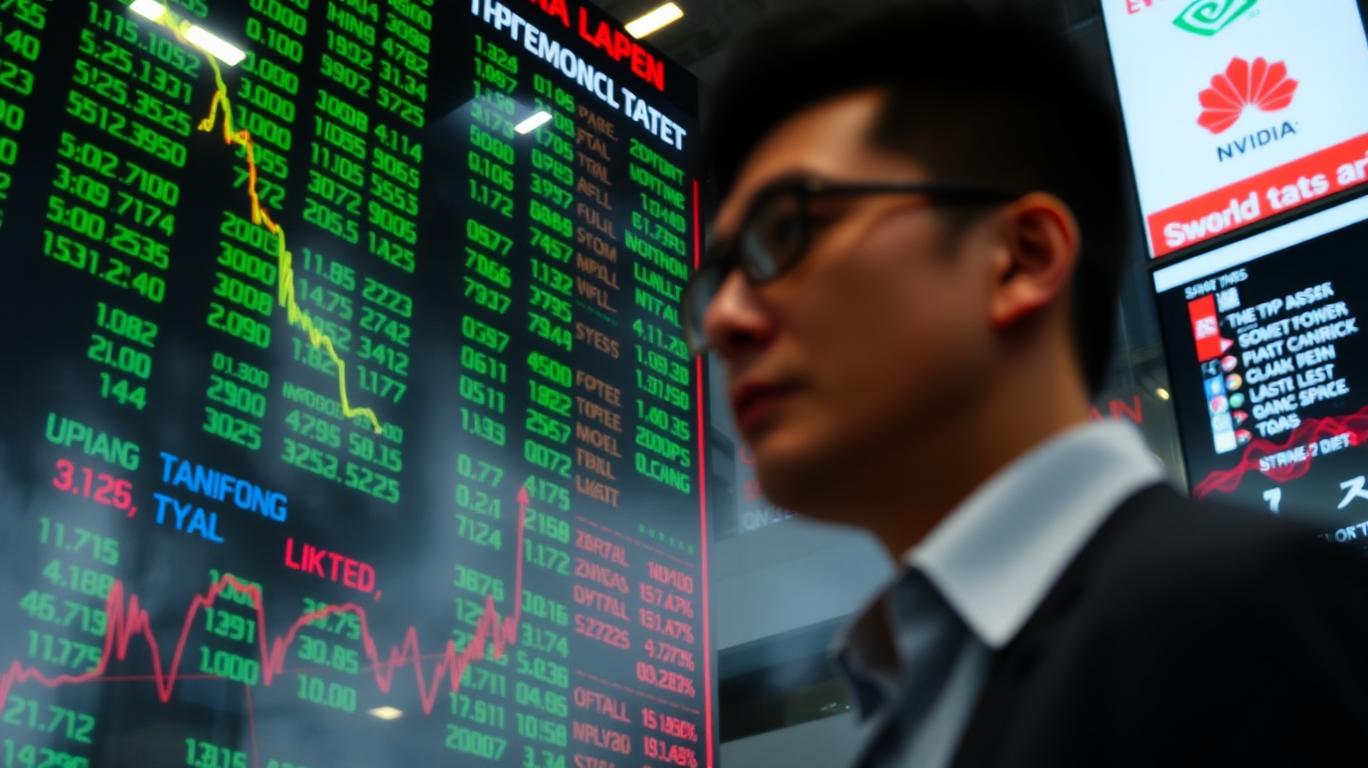
Asian shares mostly slipped today, despite Nvidia's robust earnings report, reflecting a mix of regional geopolitical dynamics, sector-specific factors, and investor sentiment. The tech giant reported a 94% increase in revenue and a 106% rise in profit, driven by strong demand for its AI chips. However, broader Asian markets remained cautious, with the MSCI Asia Pacific Index falling 0.6%.
Geopolitical tensions between China and the US have been a significant factor influencing Asian stock markets. The US-China trade war and ongoing disputes over technology and intellectual property have strained relations, contributing to a risk-off sentiment among investors. This, in turn, has led to a decline in Asian stock markets.
Economic policies of key Asian countries have also played a role in shaping market performance. Japan's government has been implementing fiscal stimulus and monetary easing to combat deflation, while India has been focusing on structural reforms to boost growth. These policies have contributed to varying market performances, with Japan's Nikkei 225 underperforming due to concerns over the country's economic outlook, while India's BSE Sensex has been on a bull run.
The performance of specific sectors within Asian markets has been influenced by global trends and regional dynamics. The tech sector, led by Nvidia, saw a 1.17% increase in the Nikkei Asia300 Tech Index, driven by robust demand for AI chips. However, broader Asian markets, such as the Shanghai Composite and Hang Seng Index, fell by 0.79% and 0.54% respectively, reflecting regional concerns and geopolitical tensions. Meanwhile, the energy sector declined by 1.14% in the Nikkei Asia300 Energy Index, as oil prices slipped due to global supply glut and slowing demand growth.
The strength of the US dollar has also been a significant factor influencing Asian stock markets. A strong dollar makes imports cheaper, reducing inflationary pressures and boosting consumer spending. However, it also makes exports more expensive, potentially hurting the competitiveness of Asian companies. In the context of today's market, the US dollar's strength may have contributed to the overall slip in Asian shares, despite Nvidia's solid earnings report.
Investor sentiment and risk appetite have also contributed to the varied reaction of Asian shares to Nvidia's earnings. The ongoing US-China trade tensions and uncertainty around global economic growth may have dampened enthusiasm for tech stocks, despite Nvidia's strong performance. Additionally, investors may be awaiting clearer signals on the global economic outlook before committing to riskier assets.
In conclusion, the mixed performance of Asian shares today highlights the importance of considering multiple factors, including geopolitical dynamics, sector-specific factors, and investor sentiment, when evaluating market trends. Despite Nvidia's robust earnings report, regional markets remained cautious, reflecting the complex interplay of these factors. As the global economy continues to evolve, investors must remain vigilant and adaptable to capitalize on emerging opportunities and mitigate risks.
Geopolitical tensions between China and the US have been a significant factor influencing Asian stock markets. The US-China trade war and ongoing disputes over technology and intellectual property have strained relations, contributing to a risk-off sentiment among investors. This, in turn, has led to a decline in Asian stock markets.
Economic policies of key Asian countries have also played a role in shaping market performance. Japan's government has been implementing fiscal stimulus and monetary easing to combat deflation, while India has been focusing on structural reforms to boost growth. These policies have contributed to varying market performances, with Japan's Nikkei 225 underperforming due to concerns over the country's economic outlook, while India's BSE Sensex has been on a bull run.
The performance of specific sectors within Asian markets has been influenced by global trends and regional dynamics. The tech sector, led by Nvidia, saw a 1.17% increase in the Nikkei Asia300 Tech Index, driven by robust demand for AI chips. However, broader Asian markets, such as the Shanghai Composite and Hang Seng Index, fell by 0.79% and 0.54% respectively, reflecting regional concerns and geopolitical tensions. Meanwhile, the energy sector declined by 1.14% in the Nikkei Asia300 Energy Index, as oil prices slipped due to global supply glut and slowing demand growth.
The strength of the US dollar has also been a significant factor influencing Asian stock markets. A strong dollar makes imports cheaper, reducing inflationary pressures and boosting consumer spending. However, it also makes exports more expensive, potentially hurting the competitiveness of Asian companies. In the context of today's market, the US dollar's strength may have contributed to the overall slip in Asian shares, despite Nvidia's solid earnings report.
Investor sentiment and risk appetite have also contributed to the varied reaction of Asian shares to Nvidia's earnings. The ongoing US-China trade tensions and uncertainty around global economic growth may have dampened enthusiasm for tech stocks, despite Nvidia's strong performance. Additionally, investors may be awaiting clearer signals on the global economic outlook before committing to riskier assets.
In conclusion, the mixed performance of Asian shares today highlights the importance of considering multiple factors, including geopolitical dynamics, sector-specific factors, and investor sentiment, when evaluating market trends. Despite Nvidia's robust earnings report, regional markets remained cautious, reflecting the complex interplay of these factors. As the global economy continues to evolve, investors must remain vigilant and adaptable to capitalize on emerging opportunities and mitigate risks.

Divulgación editorial y transparencia de la IA: Ainvest News utiliza tecnología avanzada de Modelos de Lenguaje Largo (LLM) para sintetizar y analizar datos de mercado en tiempo real. Para garantizar los más altos estándares de integridad, cada artículo se somete a un riguroso proceso de verificación con participación humana.
Mientras la IA asiste en el procesamiento de datos y la redacción inicial, un miembro editorial profesional de Ainvest revisa, verifica y aprueba de forma independiente todo el contenido para garantizar su precisión y cumplimiento con los estándares editoriales de Ainvest Fintech Inc. Esta supervisión humana está diseñada para mitigar las alucinaciones de la IA y garantizar el contexto financiero.
Advertencia sobre inversiones: Este contenido se proporciona únicamente con fines informativos y no constituye asesoramiento profesional de inversión, legal o financiero. Los mercados conllevan riesgos inherentes. Se recomienda a los usuarios que realicen una investigación independiente o consulten a un asesor financiero certificado antes de tomar cualquier decisión. Ainvest Fintech Inc. se exime de toda responsabilidad por las acciones tomadas con base en esta información. ¿Encontró un error? Reportar un problema


SOBRE NOSOTROS
Nuestra historiaAutores de noticiasBase de conocimientosPolítica de privacidadTérmino de usoDescargo de responsabilidad de corretaje de tercerosTérminos de uso de AIMEDivulgaciones de riesgos de AInvest AICarrerasCONTÁCTENOS
Email: support@ainvest.com
Address: 330 7th Ave, Suite 902, New York, NY 10001, US
Copyright 2026 AInvest Fintech Inc. All rights reserved.


Comentarios
Aún no hay comentarios