
Asian Shares Slip as US Data Fails to Boost Sentiment
Generado por agente de IATheodore Quinn
martes, 7 de enero de 2025, 11:33 pm ET1 min de lectura
AAPL--
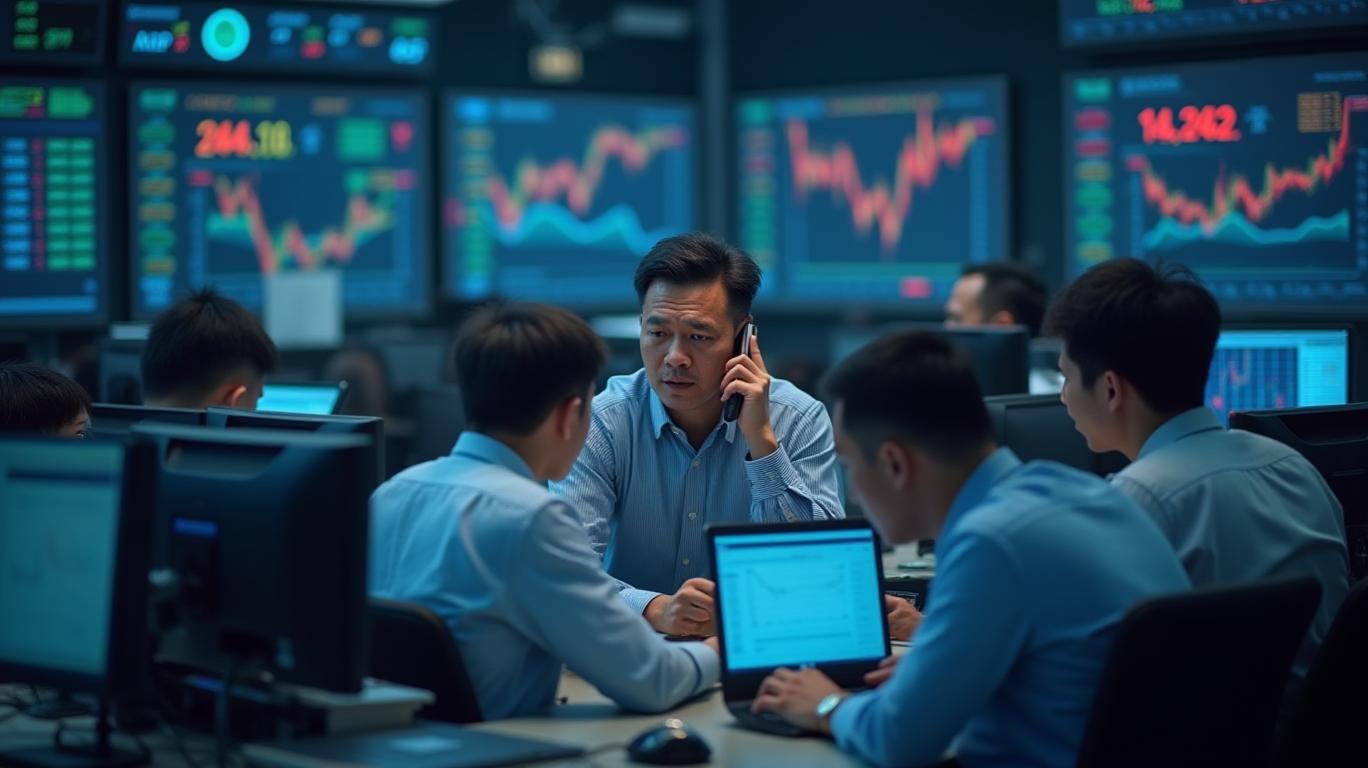
Asian markets started the day on a cautious note, with many indices trading lower despite strong US economic data. The sell-off on Wall Street, sparked by robust US economic data, has spilled over into Asian markets, with investors grappling with elevated inflation worries and uncertainty on trading floors.
The US economy and jobs market remain robust, with the latest readings indicating a pick-up in the services sector and job openings outstripping forecasts. This has further dented hopes for interest rate cuts, as the Federal Reserve may slow down its pace of rate cuts. However, the uncertainty surrounding the US economy and geopolitical tensions in the Middle East have contributed to the divergence observed in Asian markets today.

Geopolitical tensions, particularly in the Middle East, can significantly impact Asian stock markets. For instance, oil prices surged in 2024 due to supply concerns stemming from Middle East conflicts, affecting Asian economies heavily reliant on oil imports. This, in turn, influences Asian stock markets, as seen in the 4% drop in the Taiwanese Taiex and 3% decline in the South Korean Kospi in September 2024, following a 4.5% increase in oil prices (AP News, 2024). Simultaneously, US economic data, such as manufacturing reports, can also sway Asian markets. For example, a worse-than-expected US manufacturing report in August 2024 led to a 2.1% drop in the Australian S&P/ASX 200 (AP News, 2024). Thus, geopolitical tensions and US economic data interact, influencing Asian stock markets in tandem.

Asian Big Tech companies like Tencent and Alibaba have shown remarkable growth, but their fundamentals differ from US counterparts like Nvidia and Apple. Asian tech giants have a strong focus on consumer services and e-commerce, while US companies lead in hardware and AI technology. This sectoral divergence may impact long-term investment strategies, as Asian tech's growth potential in services could be capped by market saturation, while US tech's hardware and AI advancements may drive future growth. Additionally, Asian insurance companies like AIA and Ping An have strong regional presence but face regulatory challenges and lower profitability compared to US insurers like AIG and Prudential. This could affect long-term investment strategies, as regulatory risks and lower profitability may hinder Asian insurers' growth potential.
In conclusion, Asian markets today are grappling with a mix of strong US economic data and geopolitical tensions, leading to a cautious start to the day. Investors should remain vigilant and consider the fundamentals of key Asian companies, particularly in sectors like Big Tech and insurance, when formulating long-term investment strategies. As the market remains volatile, it is essential to stay informed and adapt to changing conditions to maximize returns.
AP--
BABA--
NVDA--
PUK--
Asian markets started the day on a cautious note, with many indices trading lower despite strong US economic data. The sell-off on Wall Street, sparked by robust US economic data, has spilled over into Asian markets, with investors grappling with elevated inflation worries and uncertainty on trading floors.
The US economy and jobs market remain robust, with the latest readings indicating a pick-up in the services sector and job openings outstripping forecasts. This has further dented hopes for interest rate cuts, as the Federal Reserve may slow down its pace of rate cuts. However, the uncertainty surrounding the US economy and geopolitical tensions in the Middle East have contributed to the divergence observed in Asian markets today.
Geopolitical tensions, particularly in the Middle East, can significantly impact Asian stock markets. For instance, oil prices surged in 2024 due to supply concerns stemming from Middle East conflicts, affecting Asian economies heavily reliant on oil imports. This, in turn, influences Asian stock markets, as seen in the 4% drop in the Taiwanese Taiex and 3% decline in the South Korean Kospi in September 2024, following a 4.5% increase in oil prices (AP News, 2024). Simultaneously, US economic data, such as manufacturing reports, can also sway Asian markets. For example, a worse-than-expected US manufacturing report in August 2024 led to a 2.1% drop in the Australian S&P/ASX 200 (AP News, 2024). Thus, geopolitical tensions and US economic data interact, influencing Asian stock markets in tandem.
Asian Big Tech companies like Tencent and Alibaba have shown remarkable growth, but their fundamentals differ from US counterparts like Nvidia and Apple. Asian tech giants have a strong focus on consumer services and e-commerce, while US companies lead in hardware and AI technology. This sectoral divergence may impact long-term investment strategies, as Asian tech's growth potential in services could be capped by market saturation, while US tech's hardware and AI advancements may drive future growth. Additionally, Asian insurance companies like AIA and Ping An have strong regional presence but face regulatory challenges and lower profitability compared to US insurers like AIG and Prudential. This could affect long-term investment strategies, as regulatory risks and lower profitability may hinder Asian insurers' growth potential.
In conclusion, Asian markets today are grappling with a mix of strong US economic data and geopolitical tensions, leading to a cautious start to the day. Investors should remain vigilant and consider the fundamentals of key Asian companies, particularly in sectors like Big Tech and insurance, when formulating long-term investment strategies. As the market remains volatile, it is essential to stay informed and adapt to changing conditions to maximize returns.

Divulgación editorial y transparencia de la IA: Ainvest News utiliza tecnología avanzada de Modelos de Lenguaje Largo (LLM) para sintetizar y analizar datos de mercado en tiempo real. Para garantizar los más altos estándares de integridad, cada artículo se somete a un riguroso proceso de verificación con participación humana.
Mientras la IA asiste en el procesamiento de datos y la redacción inicial, un miembro editorial profesional de Ainvest revisa, verifica y aprueba de forma independiente todo el contenido para garantizar su precisión y cumplimiento con los estándares editoriales de Ainvest Fintech Inc. Esta supervisión humana está diseñada para mitigar las alucinaciones de la IA y garantizar el contexto financiero.
Advertencia sobre inversiones: Este contenido se proporciona únicamente con fines informativos y no constituye asesoramiento profesional de inversión, legal o financiero. Los mercados conllevan riesgos inherentes. Se recomienda a los usuarios que realicen una investigación independiente o consulten a un asesor financiero certificado antes de tomar cualquier decisión. Ainvest Fintech Inc. se exime de toda responsabilidad por las acciones tomadas con base en esta información. ¿Encontró un error? Reportar un problema




Comentarios
Aún no hay comentarios