
Asian Shares Mixed as US Stocks Tumble on Tariff Concerns
Generado por agente de IACyrus Cole
lunes, 24 de febrero de 2025, 12:03 am ET2 min de lectura
ROG--
Asian shares were mixed on Monday, following a sharp decline in US stocks amid worries over escalating tariffs and their potential impact on the global economy. The US-China trade war and subsequent tariffs have had significant implications for Asian economies, particularly those in the ASEAN region, presenting both opportunities and challenges.
Markets were closed in Tokyo for a holiday, but Hong Kong's Hang Seng index lost 0.6% to 23,348.82, and the Shanghai Composite index edged 0.1% lower to 3,375.29. In Australia, the S&P/ASX 200 gained less than 0.1% to 8,300.80. South Korea's Kospi lost 0.7% to 2,636.55, while the Taiex in Taiwan fell 0.6%. India's Sensex declined 0.9%.
The S&P 500 sank 1.7% for its worst day in two months, closing at 6,013.13, after several weaker-than-expected reports on the US economy. The Dow Jones Industrial Average dropped 748 points, or 1.7%, to 43,428.02, while the Nasdaq composite tumbled 2.2% to 19,524.01.
A report from S&P Global suggested US business activity is close to stalling, with growth slowing to a 17-month low as activity unexpectedly shrank for US services businesses. Many in the survey reported pessimism over the future, citing concerns about federal government policies, ranging from spending cuts to tariffs and geopolitical developments. Sales are reportedly being hit by the uncertainty caused by the changing political landscape, and prices are rising amid tariff-related price hikes from suppliers.
The US-China Tensions index, a summary measure of bilateral relations, has risen to historically high levels, indicating increased bilateral frictions (Rogers, Sun, & Webster, 2021). This, in turn, has raised concerns about the potential impact on global growth and trade, with Asian economies particularly vulnerable to changes in Asia-Pacific trade.
The trade war has contributed to slower worldwide economic growth, which weighs on external demand for ASEAN goods. The US-China Tensions index has risen to historically high levels, indicating increased bilateral frictions (Rogers, Sun, & Webster, 2021). This, in turn, has raised concerns about the potential impact on global growth and trade, with Asian economies particularly vulnerable to changes in Asia-Pacific trade.
The trade war has also led to a redirection of trade and investment, with ASEAN countries benefiting from companies seeking to diversify their supply chains and reduce exposure to trade barriers. In 2018-20, ASEAN's share in the value of US imports rose by 2.6%, coincidentally the same amount by which China's share declined (Coxhead, 2022). However, higher tariffs and anti-dumping tariffs from the US pose risks to ASEAN economies, potentially leading to lower real exports and economic growth (Chin, 2023).
To mitigate these risks, ASEAN countries are diversifying their trade relationships, with the Regional Comprehensive Economic Partnership (RCEP) being a notable example (Urata, 2021). By fostering dialogue and cooperation among its members, the organization has been able to present a unified front in the face of global challenges and promote economic integration, reducing the region's reliance on any single trading partner (Severino, 2019).
In conclusion, the US-China trade war and subsequent tariffs have presented both opportunities and challenges for Asian economies, particularly those in the ASEAN region. While the redirection of trade and investment has created new opportunities, higher tariffs and anti-dumping tariffs pose risks to ASEAN economies. To navigate these challenges, ASEAN countries are diversifying their trade relationships and promoting regional integration. As the trade war continues to evolve, ASEAN's role in managing its consequences will only grow in significance.
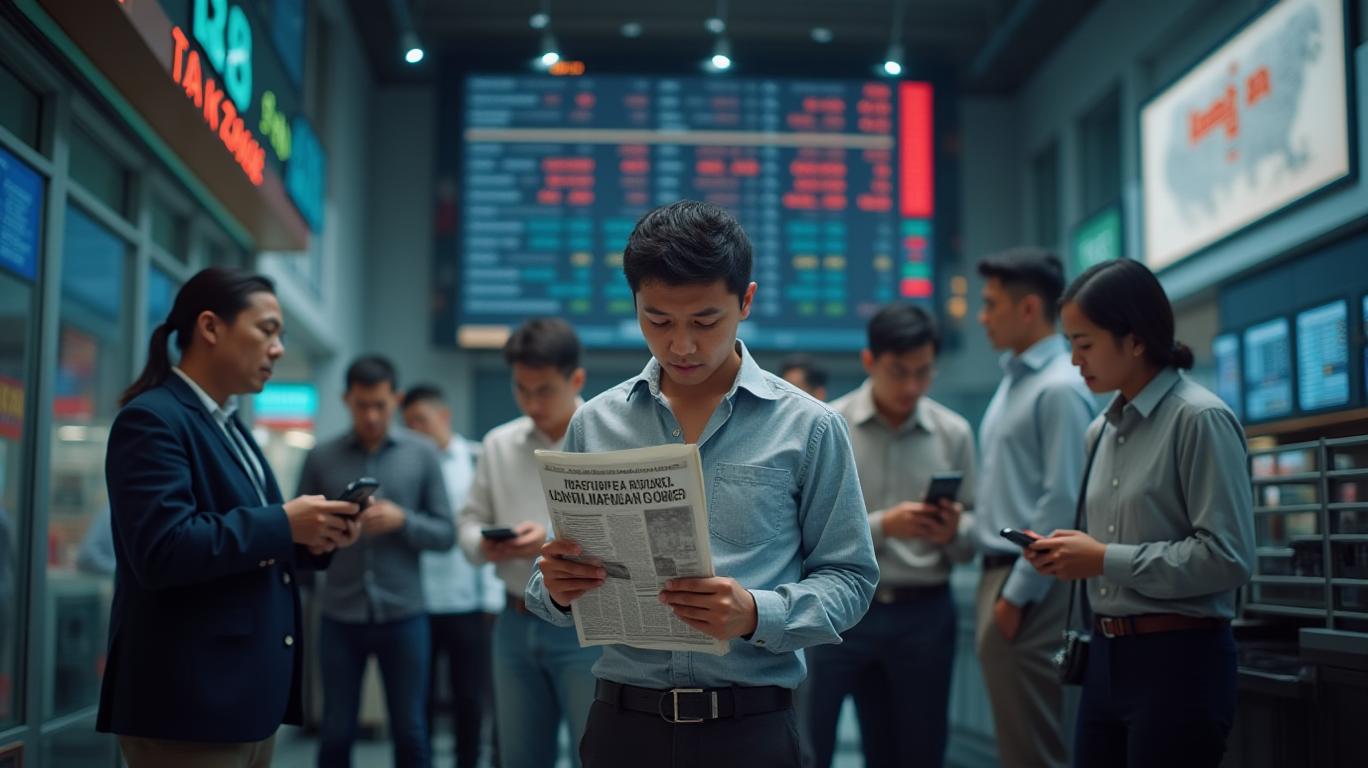
Asian shares were mixed on Monday, following a sharp decline in US stocks amid worries over escalating tariffs and their potential impact on the global economy. The US-China trade war and subsequent tariffs have had significant implications for Asian economies, particularly those in the ASEAN region, presenting both opportunities and challenges.
Markets were closed in Tokyo for a holiday, but Hong Kong's Hang Seng index lost 0.6% to 23,348.82, and the Shanghai Composite index edged 0.1% lower to 3,375.29. In Australia, the S&P/ASX 200 gained less than 0.1% to 8,300.80. South Korea's Kospi lost 0.7% to 2,636.55, while the Taiex in Taiwan fell 0.6%. India's Sensex declined 0.9%.
The S&P 500 sank 1.7% for its worst day in two months, closing at 6,013.13, after several weaker-than-expected reports on the US economy. The Dow Jones Industrial Average dropped 748 points, or 1.7%, to 43,428.02, while the Nasdaq composite tumbled 2.2% to 19,524.01.
A report from S&P Global suggested US business activity is close to stalling, with growth slowing to a 17-month low as activity unexpectedly shrank for US services businesses. Many in the survey reported pessimism over the future, citing concerns about federal government policies, ranging from spending cuts to tariffs and geopolitical developments. Sales are reportedly being hit by the uncertainty caused by the changing political landscape, and prices are rising amid tariff-related price hikes from suppliers.
The US-China Tensions index, a summary measure of bilateral relations, has risen to historically high levels, indicating increased bilateral frictions (Rogers, Sun, & Webster, 2021). This, in turn, has raised concerns about the potential impact on global growth and trade, with Asian economies particularly vulnerable to changes in Asia-Pacific trade.
The trade war has contributed to slower worldwide economic growth, which weighs on external demand for ASEAN goods. The US-China Tensions index has risen to historically high levels, indicating increased bilateral frictions (Rogers, Sun, & Webster, 2021). This, in turn, has raised concerns about the potential impact on global growth and trade, with Asian economies particularly vulnerable to changes in Asia-Pacific trade.
The trade war has also led to a redirection of trade and investment, with ASEAN countries benefiting from companies seeking to diversify their supply chains and reduce exposure to trade barriers. In 2018-20, ASEAN's share in the value of US imports rose by 2.6%, coincidentally the same amount by which China's share declined (Coxhead, 2022). However, higher tariffs and anti-dumping tariffs from the US pose risks to ASEAN economies, potentially leading to lower real exports and economic growth (Chin, 2023).
To mitigate these risks, ASEAN countries are diversifying their trade relationships, with the Regional Comprehensive Economic Partnership (RCEP) being a notable example (Urata, 2021). By fostering dialogue and cooperation among its members, the organization has been able to present a unified front in the face of global challenges and promote economic integration, reducing the region's reliance on any single trading partner (Severino, 2019).
In conclusion, the US-China trade war and subsequent tariffs have presented both opportunities and challenges for Asian economies, particularly those in the ASEAN region. While the redirection of trade and investment has created new opportunities, higher tariffs and anti-dumping tariffs pose risks to ASEAN economies. To navigate these challenges, ASEAN countries are diversifying their trade relationships and promoting regional integration. As the trade war continues to evolve, ASEAN's role in managing its consequences will only grow in significance.

Divulgación editorial y transparencia de la IA: Ainvest News utiliza tecnología avanzada de Modelos de Lenguaje Largo (LLM) para sintetizar y analizar datos de mercado en tiempo real. Para garantizar los más altos estándares de integridad, cada artículo se somete a un riguroso proceso de verificación con participación humana.
Mientras la IA asiste en el procesamiento de datos y la redacción inicial, un miembro editorial profesional de Ainvest revisa, verifica y aprueba de forma independiente todo el contenido para garantizar su precisión y cumplimiento con los estándares editoriales de Ainvest Fintech Inc. Esta supervisión humana está diseñada para mitigar las alucinaciones de la IA y garantizar el contexto financiero.
Advertencia sobre inversiones: Este contenido se proporciona únicamente con fines informativos y no constituye asesoramiento profesional de inversión, legal o financiero. Los mercados conllevan riesgos inherentes. Se recomienda a los usuarios que realicen una investigación independiente o consulten a un asesor financiero certificado antes de tomar cualquier decisión. Ainvest Fintech Inc. se exime de toda responsabilidad por las acciones tomadas con base en esta información. ¿Encontró un error? Reportar un problema


SOBRE NOSOTROS
Nuestra historiaAutores de noticiasBase de conocimientosPolítica de privacidadTérmino de usoDescargo de responsabilidad de corretaje de tercerosTérminos de uso de AIMEDivulgaciones de riesgos de AInvest AICarrerasCONTÁCTENOS
Email: support@ainvest.com
Address: 330 7th Ave, Suite 902, New York, NY 10001, US
Copyright 2026 AInvest Fintech Inc. All rights reserved.


Comentarios
Aún no hay comentarios