
Asian Oil Refiners Face Tough Decisions Amid Soaring Crude Costs
Generado por agente de IATheodore Quinn
miércoles, 22 de enero de 2025, 11:24 pm ET2 min de lectura
Asian oil refiners are grappling with a perfect storm of challenges, as soaring crude costs, logistical hurdles, and weak demand force them to consider run cuts and closures. The region's refiners, which account for a significant portion of global oil demand, are facing a critical juncture that could have far-reaching implications for regional oil supply and demand dynamics, as well as global oil prices and market stability.
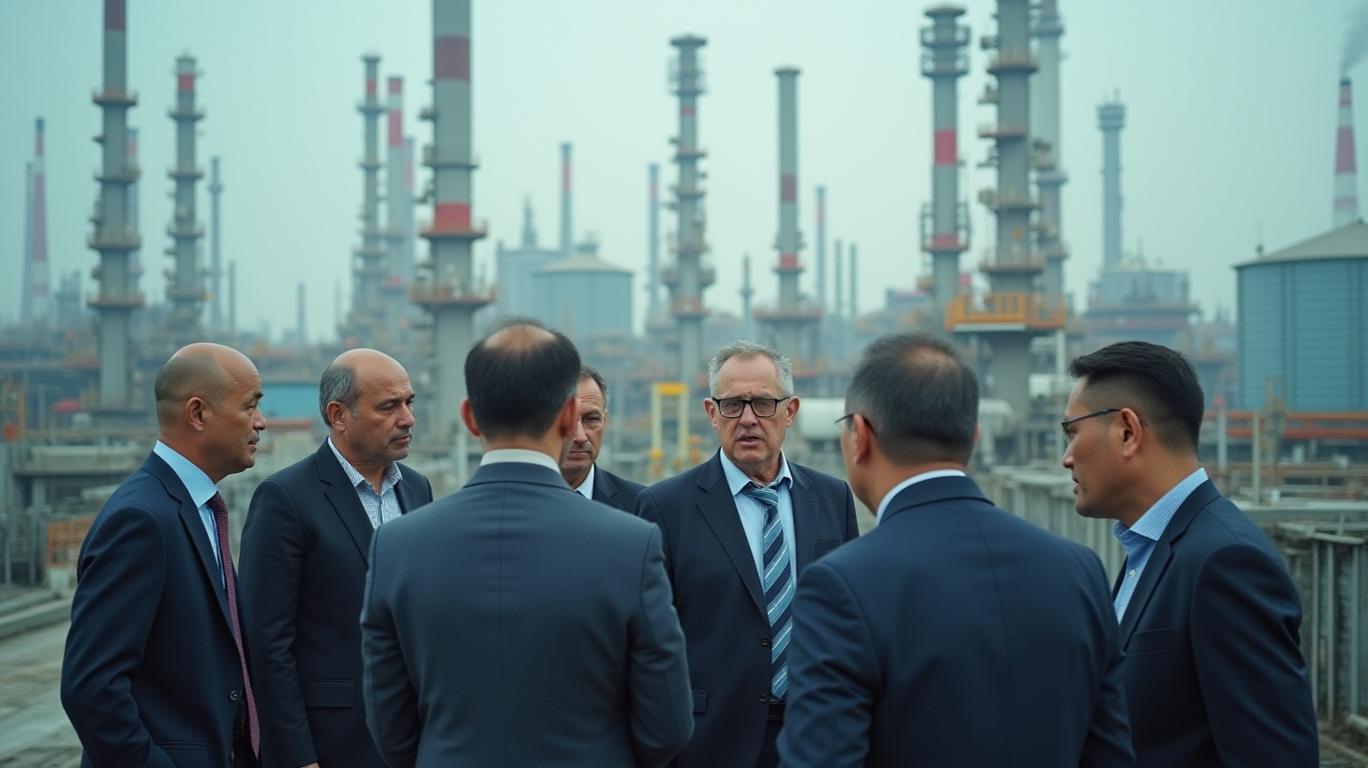
Rising crude costs and logistical challenges are putting immense pressure on Asian refiners, who are struggling to maintain profitability. The freight rate for a very large crude carrier (VLCC) capable of carrying 2 million barrels of oil from the U.S. Gulf Coast to China has surged to $9.69 million, up from $6.64 million in early April 2024. This increase in shipping costs, coupled with higher tanker insurance fees, is making Middle Eastern crude purchases less attractive, leading refiners to consider reducing their intake of Middle Eastern crude and increasing their purchases of US and African crude to diversify their supply sources (Source: Platts).
Moreover, the incoming Trump administration's stricter enforcement of sanctions could further squeeze refiners' margins by halting access to cheap crude from countries like Iran. This would make it even harder for refiners to maintain profitability, potentially accelerating shutdowns (Source: Reuters).
Weakening demand and oversupply are also contributing to the refiners' woes. The rapid electrification of vehicles and flagging economic growth in China are leading to a peak in fuel demand, causing a significant drop in crude imports and refinery output. This oversupply situation is putting pressure on refiners' margins and making it difficult for weaker operators to remain viable (Source: Wood Mackenzie).

The excess capacity and inefficiency plaguing the Asian refining industry are further exacerbating the challenges faced by refiners. The industry is now facing a moment of reckoning as rapid electrification and economic slowdown make the weakest operators unviable. Up to 10% of China's oil refining capacity could face closure in the next ten years, according to Reuters.
Run cuts and closures in China, the world's second-largest refining industry, could lead to a reduction in crude oil imports and refinery output. This could cap crude imports into China, accounting for 11% of global demand, and result in a decline in Chinese crude imports, as seen in 2024 (a 1.9% drop). This could weigh on global oil prices and contribute to market stability by preventing prices from rising too rapidly.
In conclusion, Asian oil refiners are facing a perfect storm of challenges, as rising crude costs, logistical hurdles, and weak demand force them to consider run cuts and closures. The region's refiners are at a critical juncture that could have significant implications for regional oil supply and demand dynamics, as well as global oil prices and market stability. However, the extent of these implications would depend on various factors, such as the pace and scale of closures, the response of other regional refiners, and global oil market dynamics.



Divulgación editorial y transparencia de la IA: Ainvest News utiliza tecnología avanzada de Modelos de Lenguaje Largo (LLM) para sintetizar y analizar datos de mercado en tiempo real. Para garantizar los más altos estándares de integridad, cada artículo se somete a un riguroso proceso de verificación con participación humana.
Mientras la IA asiste en el procesamiento de datos y la redacción inicial, un miembro editorial profesional de Ainvest revisa, verifica y aprueba de forma independiente todo el contenido para garantizar su precisión y cumplimiento con los estándares editoriales de Ainvest Fintech Inc. Esta supervisión humana está diseñada para mitigar las alucinaciones de la IA y garantizar el contexto financiero.
Advertencia sobre inversiones: Este contenido se proporciona únicamente con fines informativos y no constituye asesoramiento profesional de inversión, legal o financiero. Los mercados conllevan riesgos inherentes. Se recomienda a los usuarios que realicen una investigación independiente o consulten a un asesor financiero certificado antes de tomar cualquier decisión. Ainvest Fintech Inc. se exime de toda responsabilidad por las acciones tomadas con base en esta información. ¿Encontró un error? Reportar un problema


SOBRE NOSOTROS
Nuestra historiaAutores de noticiasBase de conocimientosPolítica de privacidadTérmino de usoDescargo de responsabilidad de corretaje de tercerosTérminos de uso de AIMEDivulgaciones de riesgos de AInvest AICarrerasCONTÁCTENOS
Email: support@ainvest.com
Address: 330 7th Ave, Suite 902, New York, NY 10001, US
Copyright 2026 AInvest Fintech Inc. All rights reserved.


Comentarios
Aún no hay comentarios