
Asian Officials Brace for Trump's Tariff Reprieve
Generado por agente de IAWesley Park
jueves, 10 de abril de 2025, 1:39 am ET3 min de lectura
Wary Asian Officials Seek to Ensure Trump Tariff Reprieve Sticks
Listen up, folks! The market is on a rollercoaster ride, and Asian officials are scrambling to make sense of President Trump's latest tariff reprieve. The 90-day pause on tariffs for most countries, except China, has sent shockwaves through global markets. But will this reprieve stick, or is it just another twist in Trump's unpredictable trade policy?
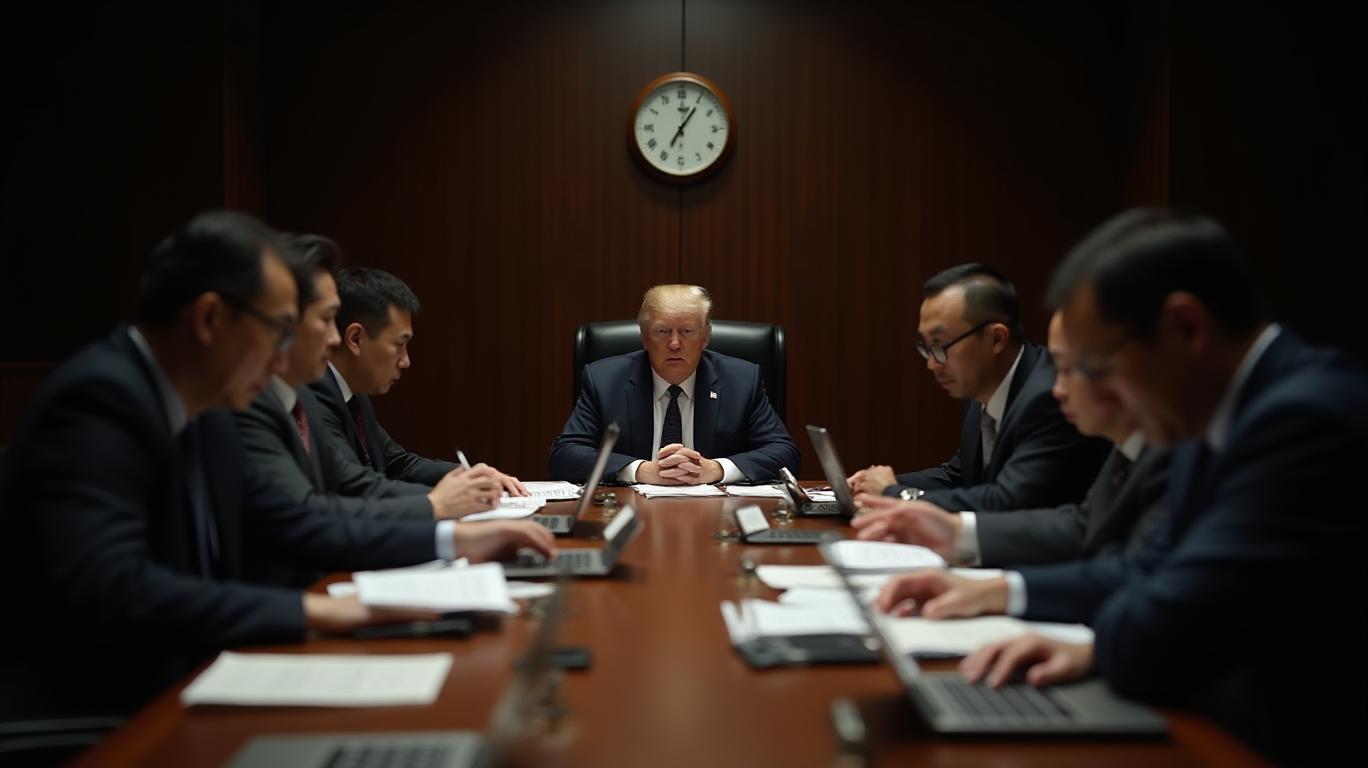
The Market's Wild Ride
The market's wild ride began on April 2, 2025, when Trump announced a 10% tariff on all imports, effective on April 5. The announcement sent shockwaves through the global economy, triggering the worst two-day loss in United States stock market history. On Thursday and Friday alone, $6.6 trillion in value was wiped out before markets closed for the weekend. After a slight recovery on Tuesday, stocks fell once again on Wednesday as President Trump’s new tariffs on imports from dozens of countries took effect, including a steep 104 percent tariff on goods from China – dramatically escalating fears of a global trade war.
The Tariff Reprieve: A Breath of Fresh Air or a Trap?
The tariff reprieve announced by President Trump on April 10, 2025, has significant potential long-term effects on the global supply chain. The reprieve, which includes a 90-day pause on tariffs for most countries except China, aims to provide a window for negotiations and stabilize markets. However, the long-term impacts could be complex and multifaceted.
Market Stabilization and Investment Confidence
The reprieve has already led to a surge in global stock markets, with the S&P 500 closing 9.5% higher and the Dow Jones surging by 7.8%. This market stabilization could boost investor confidence and encourage businesses to maintain or even increase their investments in global supply chains. As Trump noted, "I thought that people were jumping a little bit out of line, they were getting yippy, you know," referring to the market volatility that preceded the reprieve.
Supply Chain Diversification
The tariff reprieve might prompt companies to reassess their supply chain strategies. For instance, the Philippines, which was less exposed to the tariffs due to its economic reliance on services and agricultureANSC--, could see increased investment. Liu Gang, an electronics factory owner in the Philippines, sees this moment as a chance to double down on his operations, stating, "I tell companies: ‘Come to the Philippines.’" This could lead to a more diversified global supply chain, reducing reliance on any single country.
Increased Costs and Inflation
Despite the reprieve, the baseline 10% tariff on almost all U.S. imports remains in effect. This could lead to increased costs for businesses and consumers, potentially fueling inflation. Economists at Wells FargoWFC-- warned that the tariffs could cause a "modest" stagflationary shock, eroding real income growth and causing spending and overall economic activity to contract.
Trade War Escalation
The trade war with China continues to escalate, with China retaliating with 84% tariffs on U.S. imports. This could lead to further disruptions in the global supply chain, as companies may need to find alternative suppliers or production locations. As Chinese companies prepare to hike prices or quit the U.S. market due to the "unprecedented blow" from the tariff hikes, the supply chain for goods like electronics and machinery could be significantly impacted.
Adaptation Strategies for Asian Countries
1. Investment in Domestic Manufacturing
Countries like the Philippines, which have lower labor costs and are less reliant on manufacturing, could attract more investment in domestic manufacturing. For example, labor in the Philippines is cheaper, with factory workers earning around $274 a month compared to $820 in China. This could make the Philippines a more attractive location for companies looking to avoid high tariffs.
2. Diversification of Export Markets
Asian countries could diversify their export markets to reduce reliance on the U.S. market. For instance, China has already been diversifying its production and sourcing to places like Vietnam and India, which could become more attractive as the trade war continues. This diversification could help mitigate the impact of U.S. tariffs and ensure a more stable supply chain.
3. Technological Innovation and Automation
Countries could invest in technological innovation and automation to reduce production costs and increase efficiency. This could make them more competitive in the global market and less vulnerable to tariffs. For example, the HYS factory in Batangas province, Philippines, operates machines to make aluminum parts for Japanese and American companies, showcasing the potential for automation in manufacturing.
4. Strengthening Regional Trade Agreements
Asian countries could strengthen regional trade agreements to facilitate trade within the region. This could help offset the impact of U.S. tariffs and ensure a more stable supply chain. For instance, the Regional Comprehensive Economic Partnership (RCEP) could play a crucial role in promoting intra-regional trade and investment.
The Bottom Line
The tariff reprieve could have both stabilizing and disruptive effects on the global supply chain. Asian countries are likely to adapt by diversifying their supply chains, investing in domestic manufacturing, and strengthening regional trade agreements. However, the ongoing trade war with China and the potential for increased costs and inflation remain significant challenges.
So, what's the play? Stay tuned, folks! The market's wild ride is far from over, and Asian officials are bracing for whatever comes next. Keep your eyes on the ball and your portfolio diversified – this is one rollercoaster you don't want to miss!



Divulgación editorial y transparencia de la IA: Ainvest News utiliza tecnología avanzada de Modelos de Lenguaje Largo (LLM) para sintetizar y analizar datos de mercado en tiempo real. Para garantizar los más altos estándares de integridad, cada artículo se somete a un riguroso proceso de verificación con participación humana.
Mientras la IA asiste en el procesamiento de datos y la redacción inicial, un miembro editorial profesional de Ainvest revisa, verifica y aprueba de forma independiente todo el contenido para garantizar su precisión y cumplimiento con los estándares editoriales de Ainvest Fintech Inc. Esta supervisión humana está diseñada para mitigar las alucinaciones de la IA y garantizar el contexto financiero.
Advertencia sobre inversiones: Este contenido se proporciona únicamente con fines informativos y no constituye asesoramiento profesional de inversión, legal o financiero. Los mercados conllevan riesgos inherentes. Se recomienda a los usuarios que realicen una investigación independiente o consulten a un asesor financiero certificado antes de tomar cualquier decisión. Ainvest Fintech Inc. se exime de toda responsabilidad por las acciones tomadas con base en esta información. ¿Encontró un error? Reportar un problema


SOBRE NOSOTROS
Nuestra historiaAutores de noticiasBase de conocimientosPolítica de privacidadTérmino de usoDescargo de responsabilidad de corretaje de tercerosTérminos de uso de AIMEDivulgaciones de riesgos de AInvest AICarrerasCONTÁCTENOS
Email: support@ainvest.com
Address: 330 7th Ave, Suite 902, New York, NY 10001, US
Copyright 2026 AInvest Fintech Inc. All rights reserved.


Comentarios
Aún no hay comentarios