
Asian Markets Shaken: Trump's Tariffs Spark Yen Rally
Generado por agente de IAWesley Park
martes, 26 de noviembre de 2024, 10:26 pm ET2 min de lectura
BABA--
HMC--
TM--
WMT--
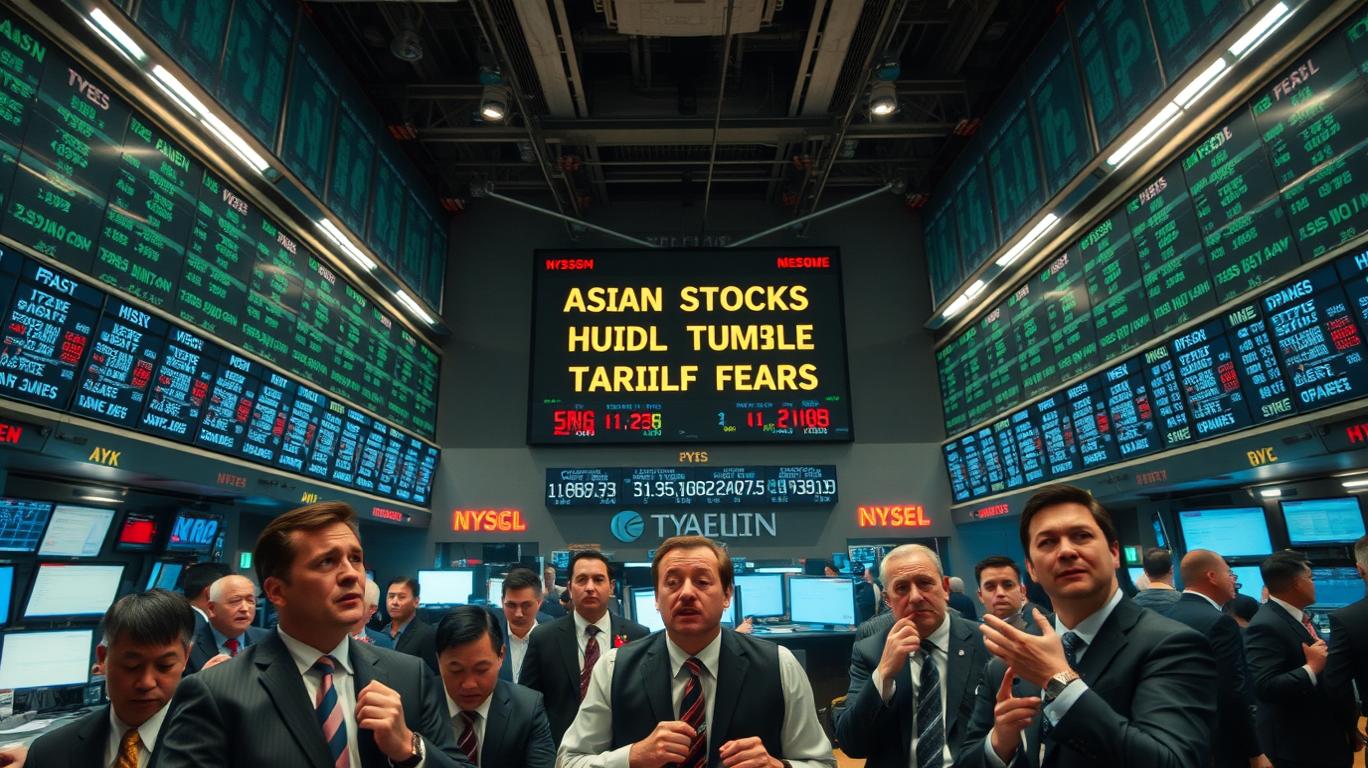
Asian stocks stumbled Tuesday as President-elect Donald Trump's latest tariff proposals sent ripples through global markets. The S&P 500 climbed 0.6% to top its all-time high, but markets abroad mostly fell. The CSI 300 in China slipped 0.1%, while the Hang Seng in Hong Kong was nearly flat. The Nikkei 225 in Japan edged down by less than 0.1%. Notably, the technology sector in Asian markets, which includes companies like Samsung and Tencent, fell by 1.7%. Meanwhile, the automotive sector, which includes companies like Toyota and Honda, was down 0.5%. The retail sector, which includes companies like Walmart and Alibaba, also slipped by 0.3%. These responses indicate that Asian markets are sensitive to Trump's tariff proposals, with technology and automotive sectors being particularly vulnerable.
Retaliatory tariffs from Asian countries could significantly impact U.S. exports, given that Asian nations are major trading partners. In 2021, U.S. exports to Asia totaled $301.1 billion (U.S. Census Bureau), making up 38.4% of total U.S. exports. Rebalancing trade relations could lead to a decrease in U.S. exports, potentially slowing down U.S. economic growth. On the other hand, U.S. imports from Asia reached $617.7 billion in 2021, indicating that Asian nations rely heavily on U.S. markets. Imposing tariffs could lead to price increases for U.S. consumers, potentially affecting consumer sentiment and spending. Furthermore, retaliatory tariffs could lead to a reduction in global trade, which would impact the U.S. economy negatively.
Asian central banks and governments are employing various strategies to mitigate the economic consequences of Trump's tariffs. Japan's Bank of Japan maintains its ultra-loose monetary policy, while the Bank of Korea has cut interest rates and the Chinese government has announced a $157 billion stimulus package. Additionally, Asian governments are exploring bilateral trade agreements and promoting domestic consumption to boost their economies.
The strength of the Japanese yen influences Asian stocks due to its status as a safe-haven currency. When global markets are uncertain or geopolitical tensions rise, investors often park their funds in yen-denominated assets, leading to an appreciation of the yen. This can negatively impact Asian stocks, particularly Japanese equities, as a stronger yen makes exports more expensive, hurting corporate profits. Conversely, a weaker yen boosts exports and can drive up Asian stock prices. Factors contributing to yen fluctuations include interest rate differentials, monetary policy, and risk sentiment. The Bank of Japan's quantitative easing and negative interest rates have historically kept the yen weak, but geopolitical risks and global market uncertainty can cause the yen to strengthen, as seen in the past few days amidst Trump's tariff threats.

In conclusion, Asian markets are facing headwinds due to Trump's tariff proposals, with the yen strengthening as a result. Asian governments and central banks are implementing measures to mitigate the economic consequences, while investors seek safe havens in yen-denominated assets. As the situation unfolds, it is essential to monitor the developments closely and adapt investment strategies accordingly. Despite the current turmoil, Asian markets offer opportunities for long-term investors, as the region's economies continue to grow and diversify.
word count: 594
Retaliatory tariffs from Asian countries could significantly impact U.S. exports, given that Asian nations are major trading partners. In 2021, U.S. exports to Asia totaled $301.1 billion (U.S. Census Bureau), making up 38.4% of total U.S. exports. Rebalancing trade relations could lead to a decrease in U.S. exports, potentially slowing down U.S. economic growth. On the other hand, U.S. imports from Asia reached $617.7 billion in 2021, indicating that Asian nations rely heavily on U.S. markets. Imposing tariffs could lead to price increases for U.S. consumers, potentially affecting consumer sentiment and spending. Furthermore, retaliatory tariffs could lead to a reduction in global trade, which would impact the U.S. economy negatively.
Asian central banks and governments are employing various strategies to mitigate the economic consequences of Trump's tariffs. Japan's Bank of Japan maintains its ultra-loose monetary policy, while the Bank of Korea has cut interest rates and the Chinese government has announced a $157 billion stimulus package. Additionally, Asian governments are exploring bilateral trade agreements and promoting domestic consumption to boost their economies.
The strength of the Japanese yen influences Asian stocks due to its status as a safe-haven currency. When global markets are uncertain or geopolitical tensions rise, investors often park their funds in yen-denominated assets, leading to an appreciation of the yen. This can negatively impact Asian stocks, particularly Japanese equities, as a stronger yen makes exports more expensive, hurting corporate profits. Conversely, a weaker yen boosts exports and can drive up Asian stock prices. Factors contributing to yen fluctuations include interest rate differentials, monetary policy, and risk sentiment. The Bank of Japan's quantitative easing and negative interest rates have historically kept the yen weak, but geopolitical risks and global market uncertainty can cause the yen to strengthen, as seen in the past few days amidst Trump's tariff threats.
In conclusion, Asian markets are facing headwinds due to Trump's tariff proposals, with the yen strengthening as a result. Asian governments and central banks are implementing measures to mitigate the economic consequences, while investors seek safe havens in yen-denominated assets. As the situation unfolds, it is essential to monitor the developments closely and adapt investment strategies accordingly. Despite the current turmoil, Asian markets offer opportunities for long-term investors, as the region's economies continue to grow and diversify.
word count: 594

Divulgación editorial y transparencia de la IA: Ainvest News utiliza tecnología avanzada de Modelos de Lenguaje Largo (LLM) para sintetizar y analizar datos de mercado en tiempo real. Para garantizar los más altos estándares de integridad, cada artículo se somete a un riguroso proceso de verificación con participación humana.
Mientras la IA asiste en el procesamiento de datos y la redacción inicial, un miembro editorial profesional de Ainvest revisa, verifica y aprueba de forma independiente todo el contenido para garantizar su precisión y cumplimiento con los estándares editoriales de Ainvest Fintech Inc. Esta supervisión humana está diseñada para mitigar las alucinaciones de la IA y garantizar el contexto financiero.
Advertencia sobre inversiones: Este contenido se proporciona únicamente con fines informativos y no constituye asesoramiento profesional de inversión, legal o financiero. Los mercados conllevan riesgos inherentes. Se recomienda a los usuarios que realicen una investigación independiente o consulten a un asesor financiero certificado antes de tomar cualquier decisión. Ainvest Fintech Inc. se exime de toda responsabilidad por las acciones tomadas con base en esta información. ¿Encontró un error? Reportar un problema


SOBRE NOSOTROS
Nuestra historiaAutores de noticiasBase de conocimientosPolítica de privacidadTérmino de usoDescargo de responsabilidad de corretaje de tercerosTérminos de uso de AIMEDivulgaciones de riesgos de AInvest AICarrerasCONTÁCTENOS
Email: support@ainvest.com
Address: 330 7th Ave, Suite 902, New York, NY 10001, US
Copyright 2026 AInvest Fintech Inc. All rights reserved.


Comentarios
Aún no hay comentarios