
Asia FX and Crypto: How U.S.-China Trade Optimism and Dollar Weakness Shape Risk-On Investing
U.S.-China Trade Optimism: A Catalyst for Asia FX Resilience
Recent progress in U.S.-China trade negotiations has alleviated market fears of a prolonged escalation. A 90-day temporary agreement to reduce reciprocal tariffs from 125% to 10% 90-day agreement has signaled a de-escalation in hostilities, with both sides committing to address fentanyl precursor controls and agricultural trade imbalances, according to a SpectrumLocalNews report. This optimism has bolstered confidence in Asian economies, particularly those integrated into global supply chains.
The weakening U.S. dollar-a 11% decline against major currencies in H1 2025, according to an Aspiriant insight-has further amplified this trend. As the Fed prepares to cut rates by 25 basis points in Q4 2025, capital flows are shifting toward emerging markets. Asia's FX markets have responded with strength: the Chinese yuan (CNH), South Korean won (KRW), and Taiwanese dollar (TWD) all posted significant gains against the greenback, according to an FXGuys outlook. This dynamic is supported by proactive monetary easing in Asia, with the Reserve Bank of India (RBI) and Bank of Japan (BOJ) maintaining accommodative policies to stimulate domestic demand, as noted in the FXGuys outlook.
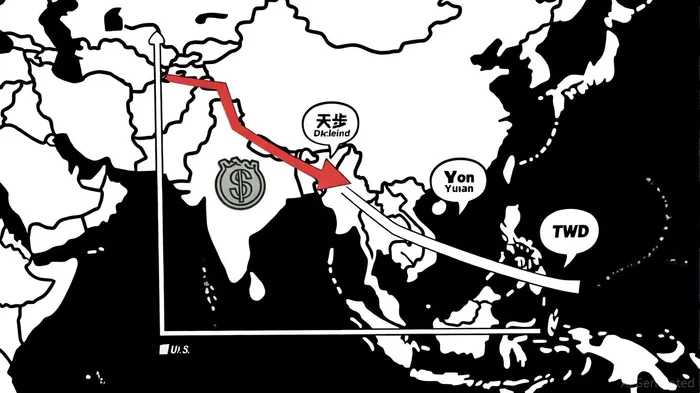
Dollar Weakness and the Rise of Asia's Risk-On Appetite
The dollar's weakness has created a fertile environment for capital reallocation into Asia. According to J.P. Morgan's Q3 2025 analysis, Asia's FX markets attracted inflows driven by strong AI demand, Fed rate cuts, and a shift in global liquidity. Emerging markets like China, South Korea, and India delivered over 20% returns in USD terms, with tech-focused equities outperforming.
In China, despite domestic demand challenges, investment in AI and chip self-reliance has driven market gains. The MSCI Emerging Markets index outperformed the MSCI World index, with Asia Pacific ex-Japan equities leading the charge, according to a Schroders review. This trend is underpinned by the Fed's September rate cut and a broader search for yield in a low-interest-rate environment.
Crypto Markets: Surging Volumes and Institutional Participation
Asia's cryptocurrency markets have mirrored the FX sector's momentum. Q3 2025 saw the crypto market cap surge to $4.0 trillion, a 16.4% quarter-over-quarter increase, as reported in the Coingecko report. BitcoinBTC-- ETF inflows alone totaled $7.8 billion, while spot trading volumes on centralized exchanges hit $5.1 trillion, with Binance capturing 35.09% market share, according to the TokenInsight report.
Decentralized finance (DeFi) also rebounded, with Total Value Locked (TVL) rising 40.2% to $161 billion by September, per the Coingecko report. This growth reflects institutional confidence, as firms like CME Group expanded product offerings, including SolanaSOL-- and XRPXRP-- futures, noted in a CME deep dive. Meanwhile, MEXC's enhanced risk-control framework reduced organized crime cases by 36%, signaling improved trust in the ecosystem, according to the MEXC risk-control report (see MEXC risk-control report).
Strategic Implications for Investors
The confluence of U.S.-China trade optimism and dollar weakness presents a dual opportunity for investors. In FX, Asia's resilient economies and accommodative policies make them attractive for currency plays and equity exposure. For crypto, the surge in institutional participation and regulatory progress (e.g., MEXC's anti-fraud measures) suggest a maturing market capable of sustaining long-term inflows.
However, risks persist. Persistent U.S.-China trade tensions could reverse gains, while geopolitical uncertainties in the region remain. A balanced approach-diversifying across Asian equities, FX, and crypto while hedging against dollar volatility-offers a pragmatic path forward.
Conclusion
Q3 2025 has underscored Asia's growing role as a hub for risk-on capital. As U.S.-China trade dynamics evolve and the dollar weakens, investors must remain agile, leveraging both traditional and digital assets to capitalize on this reallocation. The region's structural strengths, from AI-driven growth to policy-driven easing, position it as a cornerstone of global investment strategies in the coming quarters.






Comentarios
Aún no hay comentarios