
Asia's Energy Crossroads: Why Natural Gas Demand Is Crumbling—and Where Investors Should Turn Instead
The narrative of Asia's energy future is undergoing a seismic shift. Natural gas, once hailed as the transitional fuel of choice for reducing coal emissions, now faces a structural reckoning. Declining LNG imports, stubborn coal dominance, and accelerating clean energy adoption are converging to create a compelling case for investors to reallocate capital away from gas-centric plays and toward the industries truly defining Asia's energy landscape.
The LNG Slump: A Symptom of Deeper Shifts
Asia's natural gas demand is under pressure. Through May 2025, regional LNG imports fell 6.2% year-on-year, with China's purchases dropping to a five-year low. The culprit? A potent mix of high LNG prices—sticking above $10/mmBtu despite periodic dips—and the resurgent affordability of coal.
The Resurgence of Coal: A Structural Anchor
Coal remains Asia's energy bedrock. In China, where 58% of electricity still comes from coal, new plant approvals are surging. Even as renewables expand, coal's cost advantage—$50–$70/ton versus $100+ LNG—ensures its dominance. India, too, is doubling down: coal production rose 6% in 2024, underpinning its 8% GDP growth.
This is not a temporary blip. Governments are prioritizing energy security over emissions targets. For investors, coal's resilience means gas will struggle to reclaim market share.
The Clean Energy Surge: The Real Game-Changer
While coal holds sway, the future belongs to renewables. Solar and wind costs have plunged to $0.03/kWh in India and China, undercutting both gas and coal. Southeast Asia is adding 10 GW of solar annually, while China's offshore wind capacity is set to triple by 2027.
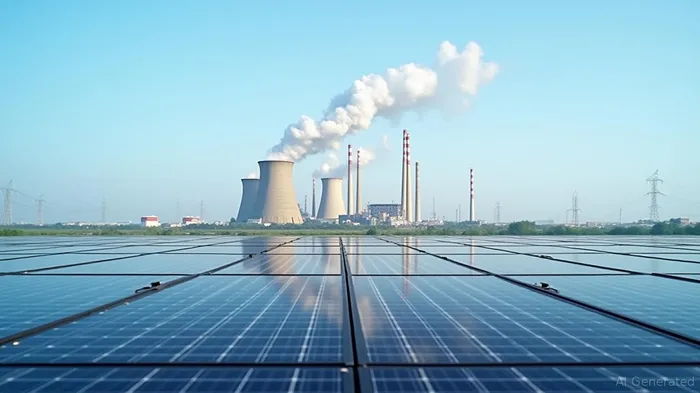
Battery storage and hydrogen tech are further accelerating the shift. In Japan, Toyota's new green hydrogen plant and South Korea's $20B renewable fund underscore the scale of this transformation.
The Structural Case Against Gas
Gas faces a triple threat:
1. Cost Competition: LNG's $10/mmBtu price floor clashes with $50/ton coal and $0.03/kWh solar.
2. Infrastructure Gaps: Asia's gas pipeline and FSRU networks lag behind renewable grid expansions.
3. Policy Shifts: Governments are prioritizing “clean coal” retrofits and solar subsidies over gas subsidies.
By 2030, gas's share of Asia's energy mix could shrink from 12% to 9%, as renewables and coal commandeer growth.
Investment Imperatives: Pivot to the Winners
The writing is on the wall for gas investors. Here's where capital should flow:
- Coal's Last Stand: Short-term gains in coal stocks (e.g., India's Coal India Limited (COALINDIA.NS)) as Asia's growth economies burn through reserves.
- Renewables Dominance: Solar leaders like JinkoSolar (JKS) and wind innovators such as Vestas (VWS.CO) are poised to capture 90% of new power capacity additions by 2030.
- Hydrogen & Storage: Companies like Plug Power (PLUG) and CATL (300750.SZ) are building the infrastructure for Asia's decarbonized future.
Act Now—or Risk Being Left Behind
The decline of natural gas is not a temporary dip but a structural realignment. Investors who cling to gas-centric plays risk obsolescence as coal and renewables redefine Asia's energy map. The time to pivot is now—before the transition overtakes the market.
Doubt? Consider this: China's solar capacity alone will surpass its LNG import volume by 2026. The question isn't whether gas is fading—it's how quickly you can position your portfolio for what comes next.
The energy crossroads is here. Follow the data—and the dollars—to where Asia's future truly lies.







Comentarios
Aún no hay comentarios