
From Ashes to Opportunity: Geopolitical Risks and Strategic Investments in Haiti and Beyond
The burning of Port-au-Prince's Grand Hôtel Oloffson on July 6, 2025, marks a pivotal moment in Haiti's history. Once a symbol of resilience and cultural vitality, this historic Gothic gingerbread structure—inspiration for Graham Greene's The Comedians and a sanctuary for artists, diplomats, and world leaders—was reduced to ashes by gangs. Its destruction underscores the escalating systemic instability in Haiti, where violence now controls 90% of Port-au-Prince. For investors, this tragedy is not merely a humanitarian crisis but a stark reminder of the risks and opportunities inherent in emerging markets.
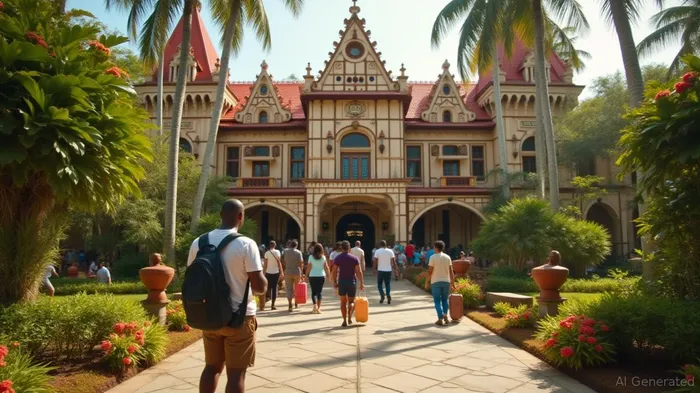
The Systemic Fragility Exposed
The Oloffson's fate mirrors Haiti's broader collapse. Gang violence has crippled its tourism sector—a once-vibrant industry that employed over 100,000 people pre-pandemic—now contributing just 0.8% to GDP, down from 3.2% in 2010. reveals a precipitous decline, exacerbated by targeted attacks on cultural landmarks. The hotel's ashes symbolize not only economic loss but the erosion of Haiti's cultural identity—a heritage that once drew global elites and artists.
Gang control over critical infrastructure, including supply routes and neighborhoods, has paralyzed logistics and deterred both tourists and investors. This systemic fragility extends beyond Haiti: emerging markets face rising geopolitical risks, from political instability in Latin America to resource nationalism in Africa. Investors must now treat such risks not as anomalies but as integral to portfolio strategy.
Geopolitical Risk Assessment: A New Imperative
The Oloffson's destruction highlights the need for robust geopolitical risk frameworks. Traditional metrics—GDP growth, inflation, or political stability—fail to capture the volatility of regions like Haiti, where gang cartels now rival state authority. Investors must adopt tools that assess:
1. Security Infrastructure: How exposed are assets to violence, corruption, or resource scarcity?
2. Institutional Resilience: Can local governments or international bodies (e.g., UN peacekeeping forces) mitigate risks?
3. Cultural and Social Capital: Does the community's pride in heritage—such as the Oloffson's legacy—offer a foundation for revival?
For instance, the Fort-Liberté Model—a $10 million initiative to restore Haiti's 18th-century Fort Pointe de la Roche into a cultural-commercial hub—demonstrates how fortified, community-driven projects can thrive amid instability. Such ventures require blended finance models, combining diaspora remittances ($2 billion annually) with grants from institutions like the World Bank.
Defensive Sector Plays: Opportunities in Chaos
The crisis also presents opportunities in defensive sectors, where resilience is paramount:
1. Cybersecurity (e.g., PRKR ETF):
As geopolitical risks rise, demand for cybersecurity solutions grows. Emerging markets, often lacking robust digital infrastructure, are prime targets for cyberattacks. The SPDR S&P Cybersecurity ETF (PRKR), which tracks companies like Palo Alto NetworksPANW-- (PANW) and CrowdStrikeCRWD-- (CRWD), offers exposure to firms mitigating cyber threats in volatile regions.
2. Infrastructure Resilience (e.g., Caterpillar Inc. (CAT)):
Projects like the Fort-Liberté Model require durable, fortified infrastructure. Companies like CaterpillarCAT-- (CAT), which specialize in heavy machinery for construction and resource extraction, benefit from demand for resilient infrastructure in high-risk areas.
3. Cultural Preservation Funds:
Investors can back initiatives like the Haitian Cultural Heritage Preservation (HCHP), which combines tourism revival with community empowerment. Such funds align with ESG principles and leverage cultural assets (e.g., Vodou festivals, historic sites) to attract diaspora investment.
Balancing Risk and Reward
Haiti's crisis is a microcosm of emerging markets' challenges: volatility is inevitable, but so are pockets of opportunity. Investors should:
- Prioritize fortified, community-led ventures like the Fort-Liberté Model, which blend economic growth with cultural preservation.
- Leverage geopolitical risk tools to identify regions where instability is contained or reversible.
- Focus on defensive sectors that benefit from systemic fragility, such as cybersecurity or infrastructure resilience.
The Oloffson's proprietor, Richard Morse, famously declared, “They can only burn it once.” For investors, this mantra applies to emerging markets: once systemic risks are understood, opportunities emerge from the ashes.
In conclusion, Haiti's tragedy underscores the necessity of rethinking risk in emerging markets. By integrating geopolitical analysis and deploying capital into defensive sectors and culturally rooted projects, investors can navigate instability—and perhaps even sow the seeds of rebirth.
Data sources: UNDP, World Bank, Haitian Cultural Heritage Preservation reports, and financial databases.







Comentarios
Aún no hay comentarios