
Asda's Strategic Cloud Partnership with Microsoft: A Catalyst for Retail Competitiveness and Shareholder Value
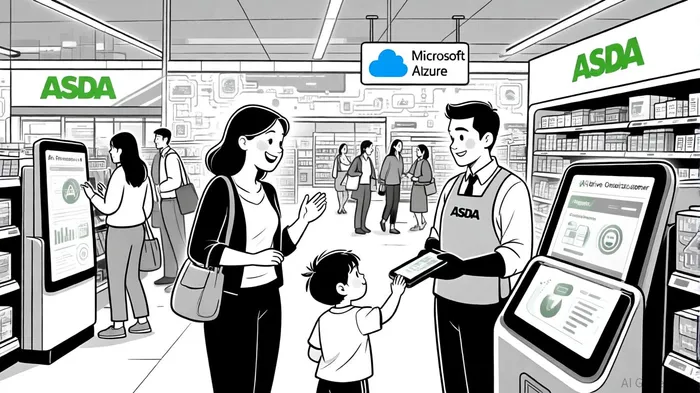
In an era where digital transformation defines retail success, Asda's renewed partnership with MicrosoftMSFT-- in 2025 has emerged as a landmark move in the UK grocery sector. By anchoring its operations on Microsoft Azure and leveraging AI tools like Azure Databricks, Microsoft Fabric, and Copilot Studio, Asda is redefining its operational model to prioritize agility, customer-centricity, and cost efficiency. This cloud-first strategy, described as one of the largest technology deals in UK retail history[1], is not merely a technological upgrade but a strategic pivot to secure long-term competitiveness and shareholder value.
Strategic Cloud Integration: Building a Digital Backbone
Asda's collaboration with Microsoft centers on Azure as the core infrastructure for its digital transformation. According to a report by the Retail Tech Innovation Hub, this partnership enables Asda to process vast datasets in real time, optimizing pricing, inventory management, and customer insights[3]. For instance, Azure Databricks and Microsoft Fabric are being used to analyze consumer behavior patterns, allowing the retailer to tailor promotions and product availability dynamically[2]. This data-driven approach not only reduces waste but also strengthens Asda's position as a price leader, a critical differentiator in a highly competitive market.
The partnership also includes a joint investment fund to accelerate the adoption of next-generation technologies, such as AI-powered automation and predictive analytics[4]. Microsoft's Digital Skills Initiative further ensures that Asda's 140,000 employees are equipped to leverage these tools, fostering a culture of innovation and productivity[5]. As Microsoft UK and Ireland CEO Darren Hardman noted, this collaboration exemplifies how cloud and AI can “transform retail at scale,” empowering staff and modernizing operations[1].
Enhancing Retail Competitiveness: Operational Efficiency and Customer Experience
The cloud-first model is already yielding tangible benefits. By automating routine tasks through Microsoft 365 Copilot, Asda employees can focus on strategic initiatives, such as improving in-store service and personalizing digital interactions[6]. For example, the Scan & Go app, now active on 26,000 devices across 600 stores, accounts for 8% of transactions and is a key driver of digital engagement[7]. This innovation not only enhances customer convenience but also provides Asda with real-time transactional data to refine its offerings.
Operational efficiency gains are equally significant. Asda's Project Future, launched post-Walmart separation, has already reduced annual IT operational costs by half in 2025[7]. By migrating 2,500 IT systems to Azure, the retailer has streamlined workflows, minimized downtime, and improved scalability. These efficiencies are critical in a sector where margin pressures are relentless, and even incremental cost savings can translate into substantial profit growth.
Shareholder Value Creation: Financial Metrics and Market Position
While Asda reported a 3.4% decline in like-for-like sales in recent quarters[8], its cloud-driven initiatives are beginning to show promise in stabilizing market share and improving profitability. Adjusted EBITDA (after rent) rose 5.8%, signaling progress in its turnaround plan[8]. Analysts attribute this resilience to the cloud partnership's ability to enhance decision-making and reduce operational friction.
The strategic shift also positions Asda to attract top talent in technology and AI, a factor that could drive long-term innovation and investor confidence[5]. By aligning with Microsoft's ecosystem, Asda is not only future-proofing its operations but also signaling to shareholders that it is committed to leveraging cutting-edge tools to outperform rivals. This is particularly relevant as competitors like Sainsbury's and Currys also adopt cloud and AI strategies[9].
Conclusion: A Blueprint for Retail Resilience
Asda's partnership with Microsoft underscores the transformative power of cloud and AI in retail. By embedding Azure and AI tools into its operations, the retailer is not only addressing immediate challenges but also laying the groundwork for sustained competitiveness. For investors, this strategy offers a compelling narrative: a digitally enabled business model that balances cost efficiency, customer satisfaction, and innovation. As the UK retail landscape evolves, Asda's cloud-first approach may well serve as a blueprint for how traditional retailers can thrive in the digital age.





Comentarios
Aún no hay comentarios