
Asante Gold's Strategic Leap: Analyzing the TSX Venture Exchange Listing and Ghana's Gold Potential
Asante Gold Corporation's recent listing on the TSX Venture Exchange (TSXV) under the ticker symbol "ASE" marks a pivotal moment in its strategic evolution. The transition from the Canadian Securities Exchange (CSE) to the TSXV, effective September 23, 2025, is not merely a regulatory shift but a calculated move to amplify investor visibility and liquidity. According to a report by GlobeNewswire, the company secured a $500 million financing package—comprising $125 million in senior debt, $237 million in equity, and $50 million in gold stream agreements—to fuel its growth ambitions in Ghana's gold sector[1]. This capital infusion aligns with Ghana's broader industry trends, where gold production is projected to surge by 30% to 40% in 2025, driven by advanced extraction technologies and exploration in the Ashanti Belt[2].
Strategic Positioning in Ghana's Gold Sector
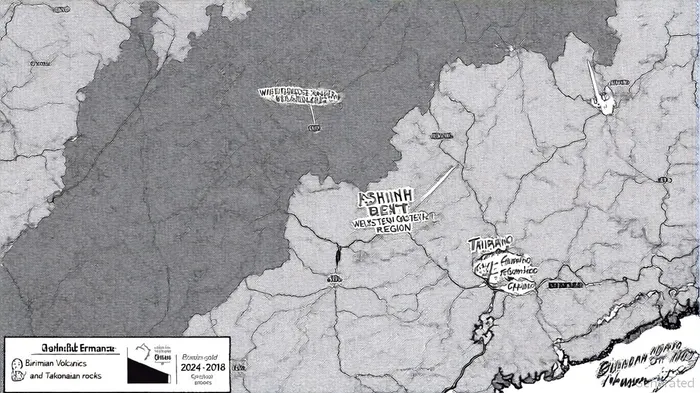
Ghana's gold mining sector is undergoing a transformative phase, with the Ashanti Belt and Western Region emerging as critical hubs. A geospatial study published in ScienceDirect reveals that gold mineralization in Ghana is concentrated in Birimian Volcanics and Tarkwaian rocks, covering 23.34% of the country's landmass[4]. Asante Gold's operations at the Bibiani and Chirano mines, located in these geologically rich zones, position it to capitalize on this growth. The company's Kubi Gold Project and exploration initiatives in the Golden Triangle further underscore its strategic alignment with Ghana's resource potential[1].
The removal of the gold export withholding tax and the establishment of the Ghana Gold Board (GoldBod) have also enhanced the sector's attractiveness. These reforms, as highlighted by Ghana Business News, aim to formalize small-scale mining, reduce environmental degradation, and attract responsible investment[3]. For Asante, this regulatory clarity complements its $160 million capital raise and infrastructure projects, such as the new sulphide treatment plant at Bibiani, which are critical to achieving its 2028 production target of 500,000 ounces[2].
Financial Prudence and Risk Mitigation
Asante's financing package is structured to balance growth with financial stability. The $150 million senior debt facility includes a $130 million term loan and a $20 million revolving credit line, while the $125 million mezzanine facility offers flexibility to pay interest in cash or in-kind during the first 24 months[5]. To hedge against gold price volatility, the company executed swap transactions for 154,000 ounces at $3,386 per ounce and deferred premium put options covering 395,000 ounces[1]. These measures, as noted by The Vaultz News, ensure downside protection while retaining upside exposure, a critical strategy during the ramp-up period[3].
Challenges and Opportunities
Despite Ghana's promising outlook, challenges persist. Illegal mining (galamsey) continues to threaten environmental and public health, with mercury contamination affecting rivers and farmlands[2]. Asante's commitment to sustainable practices, including infrastructure development and job creation, aligns with Ghana's national goals to formalize mining and reduce environmental harm[3]. Additionally, the company's first-quarter 2026 revenue growth—driven by record gold prices and operational improvements—demonstrates its ability to navigate these challenges[2].
Conclusion
Asante Gold's TSXV listing and $500 million financing package represent a strategic masterstroke in leveraging Ghana's gold potential. By aligning with the country's geological advantages, regulatory reforms, and production growth projections, the company is well-positioned to achieve its 2028 production targets while mitigating financial and operational risks. For investors, this move underscores Asante's role as a key player in a sector poised for significant expansion.







Comentarios
Aún no hay comentarios