
Artificial Intelligence-Driven Semiconductor Stocks in 2026: Navigating Growth Amid Supply Chain Constraints
The semiconductor industry is undergoing a seismic shift as artificial intelligence (AI) reshapes global demand for advanced chips. By 2026, , driven by surging demand for AI accelerators, GPUs, and high-bandwidth memory (HBM) in data centers, edge computing, and consumer electronics. However, this growth is shadowed by persistent supply chain bottlenecks, including constrained packaging capacity, material shortages, and a global talent gap. For investors, the challenge lies in identifying companies poised to capitalize on AI-driven demand while mitigating the risks of a fragmented and volatile supply chain.
Market Dynamics: A Supercycle Fueled by AI
The AI semiconductor market is entering a "supercycle" characterized by exponential growth and structural imbalances. According to Gartner, , . forecasts , .
This growth is driven by AI's insatiable appetite for compute power. Data centers now dominate chip demand, with AI accelerators and GPUs accounting for a disproportionate share of production capacity. For instance, NVIDIA's Blackwell architecture GPUs, built on TSMC's sub-5nm processes, are already reshaping the landscape, with . Such concentration highlights the industry's shift toward specialized AI hardware, where performance and efficiency trump traditional metrics like unit volume.
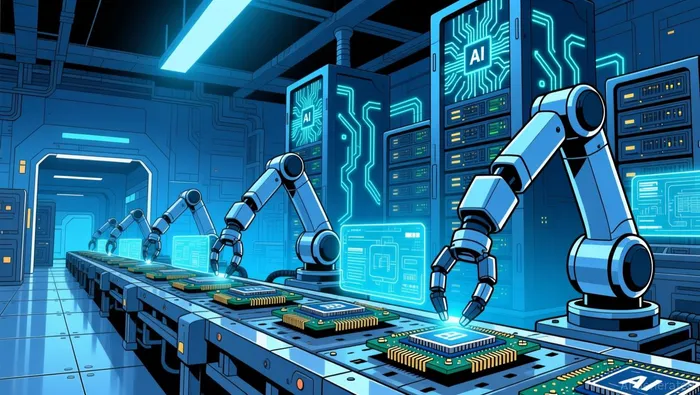
Supply Chain Constraints: Bottlenecks and Strategic Risks
Despite robust demand, the semiconductor industry faces critical supply-side challenges. Advanced packaging technologies like TSMC's CoWoS are a key bottleneck, . This shortage is exacerbated by the structural undersupply of HBM, a critical component for AI accelerators. SK Hynix and Micron have already booked their 2026 HBM production, leaving limited room for new entrants.
Lithography equipment for sub-5nm nodes further compounds the problem. ASML's EUV machines, essential for cutting-edge chip manufacturing, . Meanwhile, the global shortage of from chip design to manufacturing threatens to slow innovation and scale-up efforts. These constraints are pushing lead times to record levels and creating a high degree of uncertainty for buyers, particularly in .
Key Players: Strategic Positioning in a Fragmented Market
The 2026 semiconductor landscape is dominated by a handful of companies with critical roles in AI's value chain:
- NVIDIA (NVDA): The undisputed leader in AI compute, NVIDIA's dominance stems from its CUDA software ecosystem and partnerships with foundries like TSMCTSM--. Recent product launches, including the Blackwell architecture, underscore its focus on AI training and inference. NVIDIA's collaboration with SK Group to build a 50,000-GPU in South Korea further solidifies its position as the backbone of global AI infrastructure.
TSMC (TSM): As the world's largest contract chipmaker, TSMC's advanced packaging and sub-5nm manufacturing capabilities are indispensable for AI chips. Its 2026 roadmap includes scaling CoWoS output to 90,000 wafers/month and preparing for 2nm-class processes. However, its reliance on a single customer (NVIDIA) for over 70% of CoWoS capacity raises concerns about long-term diversification.
SK Hynix (HYXRF): The HBM leader, SK Hynix's 2025 development of HBM4 and its 2026 mass production plans position it as a critical enabler for next-generation AI systems. Its partnership with NVIDIA to leverage technologies for chip design also highlights its strategic alignment with AI's growth trajectory.
Samsung Electronics (SSNLF): Combining memory and foundry capabilities, Samsung's gate-all-around (GAA) transistor technology challenges TSMC's dominance in advanced nodes. Its dual focus on HBM and AI-specific manufacturing positions it to capture market share in both memory and logic chips (https://www.mrlcg.com/resources/blog/the-top-10-semiconductor-companies-to-keep-an-eye-on-for-2026/).
Investment Considerations: Balancing Growth and Risk
For investors, the key is to balance the long-term growth potential of AI-driven semiconductors with the near-term risks of supply chain volatility. NVIDIA's ecosystem lock-in and TSMC's manufacturing leadership offer compelling upside, but their exposure to bottlenecks like HBM and packaging capacity requires careful monitoring. SK Hynix and Samsung, meanwhile, benefit from their roles in enabling AI infrastructure but face margin pressures from tight HBM supply and rising material costs.
Strategic partnerships and vertical integration will be critical. Companies that secure long-term supply agreements (e.g., NVIDIA's CoWoS allocation) or diversify their manufacturing footprint (e.g., Samsung's GAA technology) are better positioned to navigate constraints. Additionally, firms investing in AI-driven design tools-like SK Hynix's use of NVIDIA's framework-can accelerate R&D cycles and maintain a competitive edge.
Conclusion: A High-Stakes Opportunity
The AI semiconductor market in 2026 represents a high-stakes opportunity for investors willing to navigate its complexities. While supply chain constraints will persist through 2027, the structural shift toward AI compute creates a durable growth tailwind. Companies with leading positions in advanced packaging, HBM, and AI-specific architectures are best poised to capitalize on this transformation. For those with the patience and insight to identify these leaders, the rewards could be substantial.







Comentarios
Aún no hay comentarios