
Arthur Hayes' HYPE Liquidation and the Evolving Role of Celebrity Influence in Crypto Wealth Management
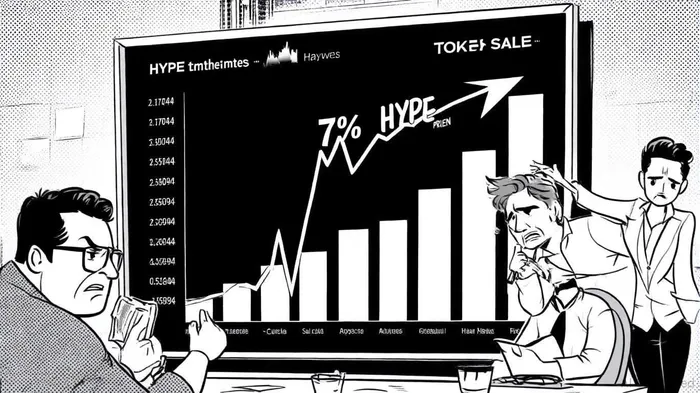
Arthur Hayes, co-founder of BitMEX, recently liquidated 96,628 HYPE tokens for $5.1 million, securing a 19.2% profit[1]. This move, occurring just weeks after Hayes predicted a 126x price surge for HYPE during the WebX 2025 conference[2], sparked immediate market volatility. The token's price dipped 7% post-sale as traders debated whether the transaction signaled a loss of confidence or strategic risk management[3]. Maelstrom, Hayes' crypto fund, clarified the decision was driven by concerns over a looming token unlock event—237.8 million HYPE tokens vesting over 24 months, potentially introducing $500 million in monthly sell pressure[4]. Despite this, Hayes reaffirmed his long-term bullish stance, suggesting a 126x gain by 2028 remains plausible[5].
This case underscores a broader trend: celebrity traders and influencers are reshaping investor sentiment and capital flows in digital asset fund management. Their endorsements, often amplified through social media, create short-term price surges but frequently lead to long-term losses for retail investors[6]. For instance, celebrity-driven hype has historically triggered up to 6,800% price spikes in tokens, only for projects to collapse due to liquidity manipulation or regulatory scrutiny[7]. The psychological mechanisms at play—social proof and aspirational appeal—drive investors to prioritize perceived authority over fundamental analysis[8].
Institutional investors, however, are increasingly adopting tools like social media sentiment analysis to navigate these dynamics. A study by Hasselgren et al. demonstrates how platforms like Facebook can be leveraged to quantify collective sentiment through metrics such as post likes, enabling data-driven investment decisions[9]. Advanced AI models, including those developed by Augmento, now dissect crypto crowd psychology in real time, offering multi-dimensional sentiment data to refine trading strategies[10]. For example, high social media engagement with a token often correlates with lower future returns, potentially due to bot-driven activity[11].
The integration of sentiment analysis is further supported by regulatory developments. The EU's Markets in Crypto-Assets (MiCA) framework and the SEC's approval of spot BitcoinBTC-- ETFs have bolstered institutional confidence in digital assets[12]. As a result, many funds are shifting from traditional spot trading to derivatives, using sentiment data to hedge against volatility[13]. This shift aligns with the growing recognition that celebrity-driven speculation, while lucrative in the short term, demands rigorous risk management.
The implications for digital asset fund management are profound. While celebrity endorsements can enhance a project's credibility and attract capital, they also introduce systemic risks. Overreliance on such influence can lead to irrational exuberance, as seen in cases like Kim Kardashian's crypto promotions, which resulted in regulatory penalties and investor losses[14]. Institutions must balance sentiment-driven strategies with quantitative analysis to avoid being swayed by hype cycles.
Arthur Hayes' HYPE liquidation exemplifies the duality of celebrity influence: it can both catalyze and destabilize markets. For fund managers, the challenge lies in harnessing the predictive power of social media sentiment while mitigating the risks of celebrity-driven speculation. As the crypto-wealth management sector evolves, the integration of AI-driven analytics and regulatory guardrails will be critical to ensuring sustainable growth.






Comentarios
Aún no hay comentarios