
Art Market Volatility and Asset Risk: The Perelman Case and the Decline of Non-Vibrant Art
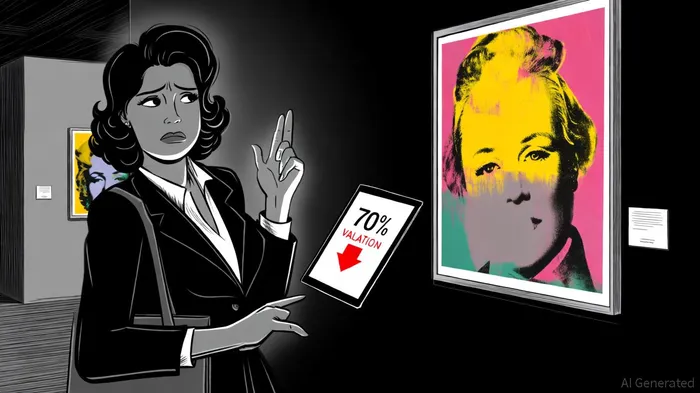
The art market's volatility has long been a double-edged sword for high-net-worth investors (HNWIs), offering both cultural prestige and financial risk. Recent events, such as Ron Perelman's failed $400 million insurance claim for artworks allegedly damaged in a 2018 fire, underscore how intangible factors like “vibrancy” and condition can drastically influence valuation and investment outcomes. Perelman argued that smoke and humidity exposure diminished the “oomph” of five high-value works—two by Andy Warhol, two by Ed Ruscha, and one by Cy Twombly—despite insurers' insistence that no physical damage was detectable[1]. The case, which culminated in a judicial dismissal of Perelman's claim, highlights the growing tension between subjective art valuation and the objective demands of financial markets.
The Subjectivity of “Oomph” in Art Valuation
Perelman's legal battle hinged on the concept of “intangible loss of value,” a term that reflects the art world's reliance on qualitative assessments. His team cited scientific analyses suggesting chemical degradation from the fire's aftermath, arguing that even imperceptible changes could shorten a work's “lifespan” and reduce its market appeal[2]. Insurers, however, countered that Perelman's claims were financially motivated, noting his prior sales of other fire-damaged artworks and his attempts to sell two of the contested pieces post-incident[3]. This dichotomy reveals a critical vulnerability in art as an asset class: its value is often dictated by perception, not physical integrity.
According to a 2025 UBS and Art Basel report, 72% of collectors prioritize works with “cultural significance and vibrancy,” traits that directly correlate with market resilience[4]. For HNWIs, this means that even minor shifts in an artwork's condition—whether due to environmental exposure or aging—can trigger steep devaluations. Perelman's case exemplifies how such risks are magnified when investors rely on subjective metrics to justify claims, particularly in legal disputes where objective evidence is scarce.
Market Trends and the Shift Toward Resilience
The 2024-2025 art market has seen a strategic pivot by HNWIs toward lower-priced segments and emerging artists, a trend accelerated by economic uncertainty. Global sales in 2024 totaled $57.5 billion, a 12% decline from 2023, but transaction volumes rose by 3%, indicating a shift toward more accessible works[5]. Smaller galleries and online platforms have thrived, with 52% of HNWI expenditures now directed toward early-career artists[6]. This diversification strategy mitigates the risks associated with high-end, condition-sensitive works like those in Perelman's collection.
Data from the Art Basel and UBS 2025 report further reveals that private sales through auction houses increased by 14% in 2024, reflecting a preference for discreet transactions during volatile periods[7]. For investors, this underscores the importance of liquidity and transparency—factors that Perelman's case inadvertently exposed. His insurers' scrutiny of his financial history, including the 2022 bankruptcy of Revlon, highlighted how art claims can be entangled with broader wealth management strategies[8].
Strategic Implications for High-Net-Worth Investors
The Perelman case offers three key lessons for HNWIs navigating art market volatility:
Prioritize Condition and Provenance: Investors must rigorously document an artwork's condition and restoration history. Perelman's inability to prove physical damage—despite his claims of diminished vibrancy—underlines the need for third-party certifications and scientific assessments[9].
Diversify Across Segments: The 2024 market shift toward emerging artists and digital platforms demonstrates that diversification can buffer against high-end market fluctuations. HNWIs are increasingly allocating 30-40% of their art portfolios to mid-tier and emerging artists, balancing blue-chip investments with growth potential[10].
Leverage Digital Tools: Online sales now account for 18% of the global market, offering greater liquidity and accessibility[11]. Investors should integrate digital platforms into their strategies, using them to both acquire and liquidate assets swiftly.
Conclusion
Ron Perelman's legal defeat serves as a cautionary tale for HNWIs: in an art market increasingly defined by subjectivity and volatility, the line between asset and liability can blur. As investors adapt to shifting demand and economic headwinds, the focus on vibrancy, condition, and diversification will remain paramount. The Perelman case, while unique in its legal drama, reflects a broader truth: in art, as in finance, perception is reality—and reality is often hard to prove.







Comentarios
Aún no hay comentarios