
Arizona Sonoran's Cactus Project: A Strategic Copper Play with 11 Billion Pounds of M&I Resources and Clear Path to Feasibility
In the shadow of a global copper market teetering between short-term volatility and long-term scarcity, Arizona Sonoran Copper Company Inc. (ASCUF) has emerged as a compelling case study in brownfield reactivation. The CactusWHD-- Project, a 11.0 billion-pound copper resource in the Measured and Indicated (M&I) category, now represents one of the most advanced undeveloped copper projects in North America. With 75% of its resource classified as leachable material[1], the project's low-capital intensity and proximity to existing infrastructure position it as a rare, near-term solution to a supply-constrained market.
A Brownfield Renaissance: From Inferred to Measured
Arizona Sonoran's recent infill drilling at Parks/Salyer South and other zones has driven a 51% conversion of Inferred resources to M&I, a testament to the project's geological clarity and operational discipline[1]. This leap in resource confidence is not merely academic: it underpins a Pre-Feasibility Study (PFS) slated for Q4 2025, with a final investment decision potentially as early as Q4 2026[1]. The Cactus Project's brownfield status—leveraging historical data and existing land access—reduces both technical and regulatory risk, a critical advantage in an industry where new projects often take a decade to materialize[2].
The project's 151% increase in M&I copper resources at Cactus West and East deposits, achieved by incorporating lower-grade primary sulfide material, further underscores its scalability[1]. Unlike many high-grade projects that face rapid depletion, Cactus's resource base is designed for longevity, with leaching technology enabling cost-effective extraction of lower-grade ore.
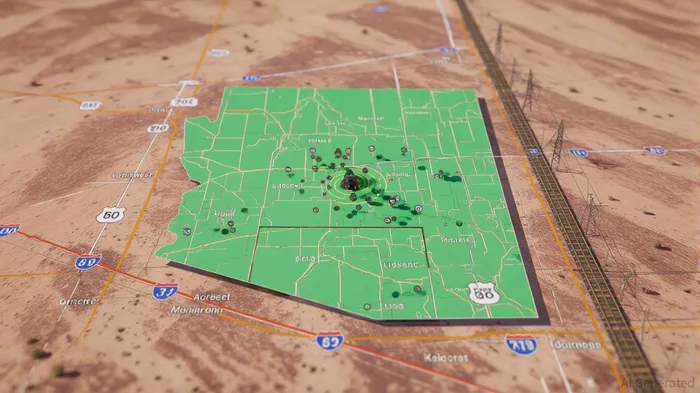
Valuation in a High-Stakes Market
Arizona Sonoran's market valuation of $330.7 million in 2025 appears modest when juxtaposed with the project's economic potential. A Preliminary Economic Assessment (PEA) outlines an after-tax net present value (NPV8) of $2 billion and an internal rate of return (IRR) of 24%[2], metrics that suggest a significant undervaluation. The company's focus on low-capital development—capitalizing on pre-existing infrastructure such as highways, rail, and power connections—further amplifies its appeal in a sector where capital expenditures often spiral out of control[2].
Analyst sentiment reinforces this narrative. All two Wall Street analysts covering the stock have issued “Buy” ratings[1], while Raymond James and RBC have reiterated “Outperform” designations[2]. These endorsements are not mere optimism; they reflect confidence in the company's ability to navigate permitting hurdles and deliver a project that aligns with the energy transition's insatiable demand for copper.
Copper's Dual Dilemma: Short-Term Volatility, Long-Term Scarcity
The 2025 copper market is a study in contrasts. On one hand, J.P. Morgan anticipates a destocking cycle in the U.S. and softer Chinese demand in H2 2025, potentially pushing LME prices toward $9,100/metric tonne in Q3 before stabilizing at $9,350/metric tonne by year-end[1]. On the other, structural demand from electric vehicles (EVs), AI data centers, and renewable energy infrastructure is accelerating. EVs alone require four times the copper of conventional vehicles, while AI's rise is projected to consume 1-2% of global copper demand by 2030[2].
This duality creates a paradox: while near-term prices may wane due to inventory imbalances, the long-term outlook remains bullish. Arizona Sonoran's Cactus Project, with its low-cost, high-margin profile, is uniquely positioned to thrive in this environment. Unlike capital-intensive greenfield projects, Cactus's brownfield model avoids the delays and cost overruns that plague new developments, ensuring a faster path to cash flow.
Strategic Positioning in a Fragmented Supply Chain
Global copper supply remains bottlenecked by aging mines, environmental constraints, and the 17-year lead time for new projects[2]. Chile, the world's largest producer, is grappling with declining ore grades and water shortages[2], while China's refining dominance (45% of global capacity in 2024) raises geopolitical concerns[2]. In this context, Arizona Sonoran's U.S.-based project offers a critical diversification benefit.
The Cactus Project's private land ownership and advanced permitting status mitigate the regulatory risks that have stalled other North American projects. Its proximity to the U.S. power grid and transportation networks also reduces exposure to the volatile energy costs that plague remote operations. For investors, this translates to a project that is not only technically robust but also geopolitically resilient.
Conclusion: A Mispriced Opportunity
Arizona Sonoran's Cactus Project embodies the rare intersection of geological certainty, operational efficiency, and strategic relevance. With 11 billion pounds of M&I resources and a clear path to feasibility, the project's economics are compelling even in a $9,000/metric tonne environment. Analysts' “Buy” consensus[1] and the company's alignment with the energy transition's copper demands suggest that the current valuation of $330.7 million is a temporary mispricing.
For investors seeking exposure to a supply-constrained market without the speculative risks of junior miners, Arizona Sonoran offers a rare combination of near-term visibility and long-term scalability. As the PFS unfolds in 2025, the company's ability to secure financing and navigate permitting will be critical. But given the project's strengths and the copper market's trajectory, the risks appear well-rewarded.







Comentarios
Aún no hay comentarios