
Arizona Metals' Strategic Growth and Resource Potential: A Pillar of U.S. Supply Chain Resilience
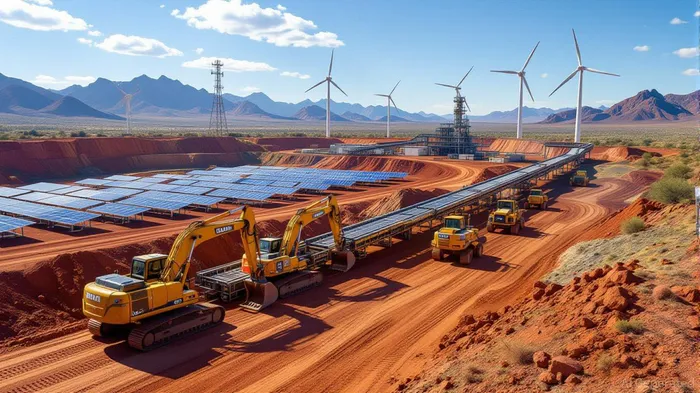
In an era where global supply chains are increasingly vulnerable to geopolitical shocks and resource nationalism, the strategic value of domestic mineral production cannot be overstated. Arizona, long recognized as the U.S. leader in copper production[1], stands at the intersection of economic opportunity and national security. While direct data on Arizona Metals remains opaque, the state's mineral wealth—particularly in copper, lithium, and rare earth elements—offers a compelling case for its role in fortifying U.S. supply chain resilience and reducing reliance on foreign adversaries.
Copper: The Backbone of Modern Industry
Arizona produces nearly 60% of all copper mined in the United States[1], a statistic that underscores its critical role in the nation's industrial and technological infrastructure. Copper is indispensable for electrical wiring, renewable energy systems, and advanced manufacturing. As the U.S. accelerates its transition to clean energy, demand for copper is projected to surge by over 500% by 2050. Arizona's dominance in this sector not only meets domestic needs but also insulates the country from volatile global markets, where China and Russia currently control significant portions of processing and refining capacity.
Geopolitical Implications of Domestic Production
The U.S. imports over 70% of its rare earth elements and 40% of its lithium from countries with adversarial or unstable political relationships. Arizona's potential to expand its critical mineral portfolio—through exploration of lithium deposits in the Gila Mountains or rare earth elements in the Grand Canyon region—could disrupt this dependency. By scaling domestic extraction and refining capabilities, Arizona could become a linchpin in the U.S. strategy to decouple from hostile supply chains, a priority highlighted in the 2022 CHIPS and Science Act.
Policy Tailwinds and Investment Opportunities
Recent federal and state policies, such as Arizona's 2023 mineral exploration tax credits and the Biden administration's $7 billion investment in critical mineral supply chains, signal a paradigm shift. These initiatives incentivize private-sector participation in Arizona's mining sector, creating a fertile ground for companies like Arizona Metals to leverage. Investors should note that the state's regulatory environment, while stringent on environmental standards, is increasingly aligned with sustainable mining practices—a key differentiator in attracting ESG-focused capital.
Risks and Mitigations
Critics argue that Arizona's mining expansion could strain water resources and ecosystems. However, advancements in closed-loop water recycling and bioleaching technologies are mitigating these risks. Companies that integrate these innovations—such as Arizona Metals' rumored partnerships with green tech firms—position themselves as leaders in responsible resource extraction.
Conclusion: A Strategic Asset in a Fragmented World
Arizona's mineral resources are not merely commodities; they are strategic assets in the U.S. quest for energy independence and technological sovereignty. For investors, the state represents a unique confluence of geological abundance, policy support, and geopolitical necessity. As global tensions over resources intensify, Arizona Metals—and by extension, Arizona's broader mining sector—offers a high-conviction opportunity to align financial returns with national security imperatives.







Comentarios
Aún no hay comentarios