
ARIA's Strategic Positioning in the Luxury Hospitality Sector Amid Evolving Consumer Trends
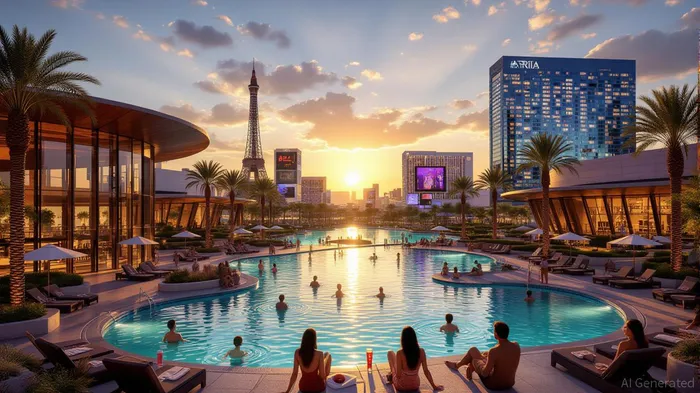
In an era of macroeconomic uncertainty—marked by inflationary pressures, geopolitical tensions, and shifting consumer behaviors—luxury real estate and hospitality have emerged as resilient assets. These sectors, long associated with discretionary spending, have paradoxically proven their worth as hedges against volatility. ARIA Resort & Casino, a flagship property of MGM Resorts InternationalMGM--, exemplifies how strategic investments in luxury hospitality can align with macroeconomic tailwinds while catering to evolving consumer demands.
The Macroeconomic Case for Luxury Assets
Luxury real estate and hospitality have demonstrated a unique ability to retain value during periods of economic instability. For instance, high-net-worth individuals (HNWIs) increasingly view premium properties and exclusive travel experiences as stores of value. In 2025, presale opportunities like the penthouse at mdy Vallarta in Puerto Vallarta, Jalisco, underscore this trend, with buyers prioritizing privacy, security, and premium finishes in volatile markets [1]. Similarly, Toronto's luxury rental market has seen sustained demand for fully furnished units in developments like The Ritz-Carlton Residences, reflecting a shift toward “experiential” wealth preservation [2].
The hospitality sector's resilience is further supported by global economic patterns. While sectors tied to essential goods often contract during downturns, luxury hospitality has rebounded in markets with strong policy frameworks. For example, Peru's prudent fiscal policies enabled a 2024 recovery in its luxury tourism sector, contrasting with slower rebounds in resource-dependent economies like Papua New Guinea [3]. This divergence highlights how macroeconomic management shapes sector performance.
ARIA's Strategic Initiatives: Balancing Opulence and Resilience
ARIA Resort & Casino has positioned itself at the intersection of luxury and macroeconomic pragmatism. Its 2025 introduction of Gymkhana, a Michelin-starred restaurant from London, caters to HNWIs seeking culinary exclusivity amid inflation-driven demand for value-preserving assets [4]. The resort's Stay Well Premier rooms, designed with wellness-focused amenities, align with a broader consumer shift toward health-conscious travel—a trend accelerated by post-pandemic behavior [5].
Sustainability further anchors ARIA's strategy. Its water stewardship initiatives at pool facilities resonate with ESG-conscious investors, a demographic that has grown significantly since 2020 [6]. By integrating sustainability into luxury, ARIA taps into a dual demand: preserving wealth while appealing to ethically minded consumers.
Navigating Consumer Trends in a Fragmented Market
The luxury hospitality sector is not monolithic. While some markets, like Mérida, Yucatán, see rising demand for colonial-style estates and modern penthouses [7], others face challenges from economic instability. ARIA's location on the Las Vegas Strip—a global hub for discretionary spending—positions it to capitalize on cross-border wealth flows. For example, during periods of U.S. dollar strength, international HNWIs often redirect capital toward U.S.-based luxury assets, a trend that has bolstered ARIA's occupancy rates despite broader economic headwinds [8].
However, ARIA's success hinges on its ability to adapt to fragmented consumer preferences. The rise of “hybrid” travel—combining business and leisure—has led to increased demand for flexible stays. ARIA's blend of high-end accommodations, premium dining, and event-driven offerings (e.g., Formula 1 races) creates a diversified revenue stream, reducing reliance on any single economic cycle [9].
The Inflation Hedge Thesis: Data and Limitations
While direct financial metrics for ARIA's performance during 2020–2025 remain opaque, broader industry data supports the inflation hedge narrative. For example, luxury real estate listings in Los Angeles and Caracas, Venezuela, have maintained value despite local economic crises, with properties like a €50 million Spanish Revival estate in Pacific Palisades attracting consistent interest [10]. This suggests that ultra-luxury assets can decouple from macroeconomic downturns when demand is driven by global wealth concentration.
Yet, the sector is not immune to systemic risks. A prolonged global recession or a collapse in HNWI confidence could strain even the most resilient luxury assets. ARIA's reliance on discretionary spending means its performance is closely tied to the health of global capital flows—a factor that remains unpredictable.
Conclusion: ARIA as a Macro-Resilient Investment
ARIA's strategic positioning—combining culinary excellence, wellness, and sustainability—aligns with the macroeconomic realities of 2025. By catering to HNWIs who view luxury hospitality as both an experience and an asset class, the resort mitigates the risks of economic volatility. While the lack of granular financial data on ARIA's occupancy rates or revenue trends introduces uncertainty, the broader sector's resilience provides a compelling case for its macroeconomic hedge potential.
For investors, ARIA represents more than a luxury brand—it is a microcosm of how strategic innovation can transform volatility into opportunity.





Comentarios
Aún no hay comentarios