
Argentina's Wheat Crop Grows on Rainfall Resilience, Boosting Profit Margins Amid Global Market Shifts
The Argentine wheat sector is emerging as a resilient force in global agricultureANSC--, with recent rainfall easing drought concerns and positioning the country to capitalize on rising international prices. After a year of weather-driven volatility, the Pampas region’s crops are showing signs of recovery, while shifting dynamics in commodity markets offer farmers opportunities to boost profit margins. Yet, the path forward remains fraught with risks tied to climate extremes and policy uncertainty.

Production Outlook: Rainfall Reverses Drought Trajectory
Argentina’s wheat production for the 2024/25 marketing year is now forecast at 17.5 million metric tons, according to USDA data, reflecting a 10% year-over-year increase despite mid-season dryness that initially dampened expectations. The rebound stems from March 2025 rains, which alleviated soil moisture deficits in key growing regions like the Pampas. While late-2024 forecasts had dipped due to dryness during the critical flowering stage, recent harvest data shows yields improving to 3.03 tons per hectare, nearing the July 2024 high of 3.00 t/ha.
However, the March rains came with a caveat: catastrophic flooding in Bahía Blanca caused by 400+ mm of rainfall in 8 hours, displacing communities and straining infrastructure. While wheat fields in drier regions benefited, the event underscores the volatility of climate patterns in the region.
Weather’s Double-Edged Sword
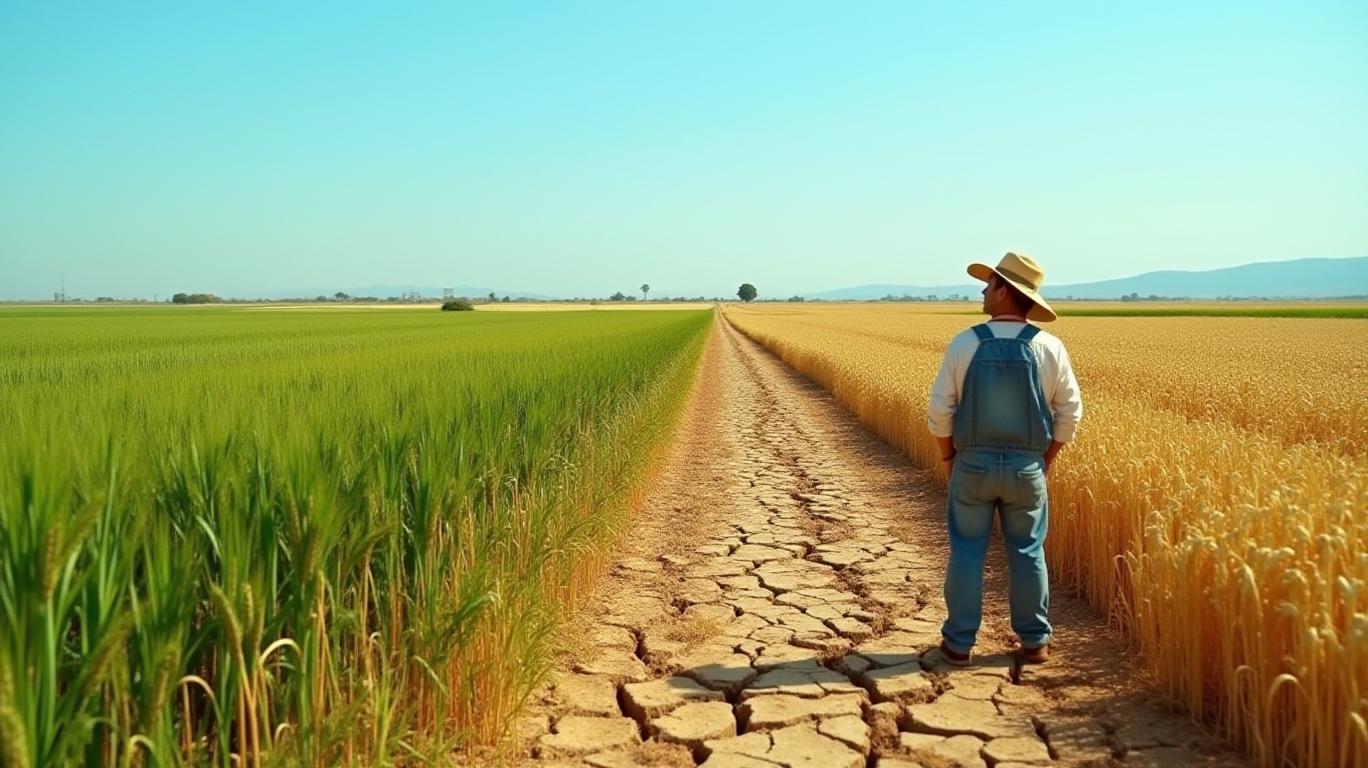
The Pampas’ climate has become a story of extremes. After a 10% rise in wheat yields since 2023/24, farmers are navigating a paradox: rains that revive crops can also disrupt harvests or drown neighboring corn and soybean fields.
- Wheat’s Resilience: The crop’s shorter growing season and deeper root systems make it less vulnerable to prolonged drought than corn or soybeans. This structural advantage has allowed wheat to outperform other staples, with harvest progress hitting 94.7% by early 2025 despite delays from heavy rains.
- Competing Crops Under Pressure: Soybeans and corn, meanwhile, face moisture stress in central regions. Soybean ratings dropped to 53% “excellent” in late 2024, while corn faced yellowing leaves due to dry spells. This divergence could shift farmer focus—and investment—toward wheat, further bolstering its production outlook.
Profit Margins: Riding Global Price Trends
The combination of strong production and rising international wheat prices is setting the stage for healthier profit margins. Global wheat export prices climbed in late 2024, driven by reduced Black Sea supply and strong demand from Asia. Argentine farmers, benefiting from a weaker peso and competitive exchange rates, are positioned to capture these gains.
- Export Revenue Boost: With 18.6 million tons projected for export (per the Buenos Aires Grain Exchange), Argentina’s wheat could generate over $4.5 billion in revenue at current prices—up from $3.9 billion in 2023/24.
- Cost Dynamics: Input costs, including fertilizers and labor, remain a wild card. However, the government’s recent agricultural subsidy reforms aim to stabilize expenses, potentially widening margins further.
Risks on the Horizon
While the outlook is promising, three risks could test Argentina’s agricultural resilience:
1. Climate Whiplash: The March floods highlighted how extreme rainfall can disrupt logistics and damage non-wheat crops. A 4 mm/day increase in rainfall intensity (per climate attribution studies) due to global warming raises the stakes for adaptive farming practices.
2. Policy Uncertainty: Export taxes and currency controls remain a concern. Wheat farmers currently face a 12% export tax, but political shifts could alter this.
3. Commodity Competition: If corn and soybean prices rebound sharply, farmers may reallocate resources away from wheat, limiting its growth potential.
Conclusion: A Resilient Sector, but Caution Remains
Argentina’s wheat sector is proving its mettle, leveraging rainfall resilience and favorable global prices to drive production and profit margins upward. With yields nearing 2024 highs and export markets primed, the country is well-positioned to reinforce its role as a swing supplier in global wheat markets. However, the interplay of climate volatility, policy instability, and intercrop competition means farmers and investors must remain agile.
The March 2025 floods serve as a reminder: In an era of climate extremes, Argentina’s wheat success hinges not just on rain, but on managing its abundance—and scarcity—with foresight.

Final Takeaway: Argentina’s wheat narrative is one of resilience, but its durability will depend on mitigating climate and policy risks while capitalizing on its competitive advantages in a tightening global grain market.





Comentarios
Aún no hay comentarios