
Argentina's Soymeal Exports to China: A Strategic Inflection Point for Commodity Traders
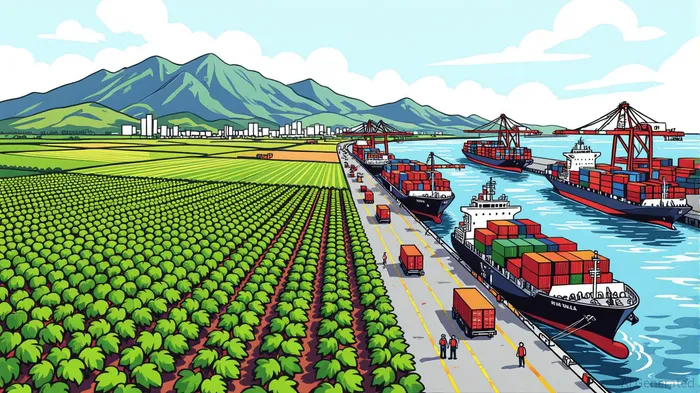
The global soy complex is undergoing a seismic shift as Argentina's soymeal exports to China emerge as a pivotal corridor for commodity traders. While precise customs data for 2023–2025 remains elusive, broader trends in Argentina's agricultural exports and China's insatiable demand for protein-rich feed ingredients paint a compelling picture of strategic opportunity.
Argentina's Strategic Position in the Soy Complex
Argentina, the world's third-largest soybean producer[3], has long dominated global soybean meal exports. In 2024, the country exported 38 million metric tons of corn and maintained a robust soybean oil export sector[1], with soybean meal—a byproduct of oil extraction—remaining a cornerstone of its agricultural trade. Argentina's economic reforms in 2025, including the lifting of currency controls, have further streamlined export efficiency[1], positioning it to capitalize on China's growing appetite for soy-based feed.
China, the world's largest soybean importer, consumes approximately 30% of global soybean meal[3], driven by its expanding livestock and aquaculture industries. While Brazil dominates as China's top soybean supplier, Argentina ranks among the top three, alongside the U.S.[2]. This tripartite competition underscores Argentina's strategic relevance, even as Brazil's record production in 2025 (6.75 million metric tons in September alone[4]) intensifies regional rivalry.
Market Dynamics and Growth Projections
The global edible soybean meal market, valued at $10.69 billion in 2024, is projected to grow at a 3.9% compound annual growth rate (CAGR), reaching $14.03 billion by 2031[3]. This expansion is fueled by China's demand for cost-effective protein sources, with soybean meal accounting for 45–50% crude protein—a critical input for livestock and aquaculture feed[3]. Argentina's ability to supply this demand hinges on its competitive pricing, logistical improvements, and geopolitical stability, all of which have improved post-2025 reforms[1].
Implications for Commodity Traders
For traders, Argentina's soymeal exports to China represent a dual opportunity: hedging against Brazil's dominance and leveraging Argentina's economic reforms. While Brazil's 2025 soybean exports to China surged to 6.75 million metric tons[4], Argentina's strategic advantages—such as its diversified export portfolio (including corn and wheat[1])—offer resilience against supply shocks. Additionally, Argentina's lifting of currency controls[1] reduces transaction risks, making its soy complex more attractive to international buyers.
However, challenges persist. Brazil's scale and infrastructure give it a logistical edge, while Argentina's political volatility—though mitigated in 2025—remains a wildcard. Traders must also navigate China's shifting import patterns, which saw a 2025 decline in soybean imports compared to 2024[2], potentially signaling domestic production adjustments or trade policy shifts.
Conclusion
Argentina's soymeal exports to China are not merely a trade statistic but a strategic inflection point for the global soy complex. As China's demand for animal protein accelerates, Argentina's role as a reliable, cost-competitive supplier will grow in significance. For commodity traders, this corridor offers a high-conviction bet on the intersection of agricultural demand, geopolitical dynamics, and economic reform. The absence of granular customs data for 2023–2025 does not diminish the strategic logic—rather, it underscores the urgency for investors to monitor Argentina's evolving position in this critical trade nexus.







Comentarios
Aún no hay comentarios