
Argentina’s March 2026 Budget Balance Plunges, Raising Reforms’ Credibility
Argentina’s Budget Balance for March 2026 came in at 1,411 million, down from 3,126 million in the previous period according to financial reports.
- The decline indicates that fiscal consolidation remains challenging, despite President Javier Milei’s aggressive reform agenda.
- Investors are watching Argentina’s fiscal health due to its implications for inflation, interest rates, and country risk.
- A key limitation is the lack of clarity on how the government will adjust its strategy to meet its fiscal goals without undermining economic stability.
Argentina’s latest budget balance of 1,411 million fell below the previous period’s 3,126 million, signaling a setback in the country’s fiscal consolidation efforts. This decline came despite the implementation of aggressive reforms under President Javier Milei, who has prioritized fiscal balance and restrictive monetary policy as cornerstones of economic recovery. While the government has emphasized the need for structural reforms to stabilize the economy, these data raise questions about the immediate effectiveness of its approach.
Argentina’s fiscal performance has long been a focal point for global investors due to its historical volatility. A weaker budget position may exacerbate inflationary pressures and delay the return of investor confidence. Country risk remains elevated, with Argentina still facing high debt levels and a fragile exchange rate. In a broader context, the government must balance its reform agenda with the need to maintain growth, especially given the fragile state of the domestic economy and the political challenges of sustaining fiscal discipline across electoral cycles.
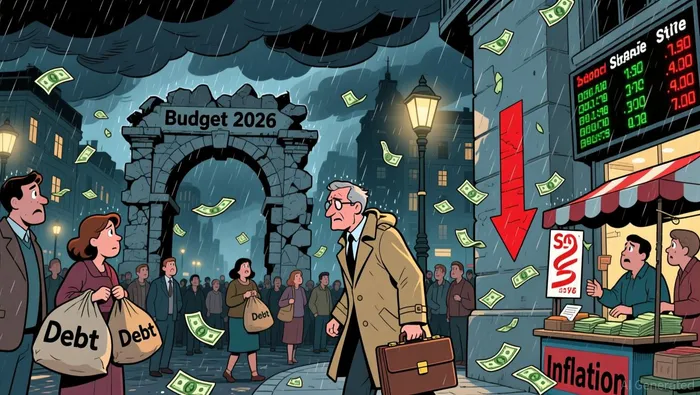
What Does March 2026 Budget Balance Signal About Argentina’s Fiscal Health?
Argentina’s budget balance is one of the most direct indicators of the government’s fiscal discipline and its ability to reduce public debt and inflation. A declining balance suggests that either revenues have fallen short of expectations or expenditures have increased beyond planned levels. The March 2026 reading, at 1,411 million, is significantly lower than the previous period’s 3,126 million, raising concerns about the sustainability of Argentina’s fiscal reform agenda in the short term.
The decline in the budget balance could be due to a number of factors, including lower-than-expected tax revenues, increased subsidies or spending in key economic sectors, or continued inflationary pressures that distort nominal fiscal figures. While the government has not yet released a detailed breakdown of the figures, the drop highlights the structural challenges of maintaining fiscal balance in an economy with a history of high inflation and debt overhang. Investors should closely watch upcoming fiscal reports to assess whether this is a one-off anomaly or a sign of a broader slowdown in fiscal consolidation.
Why Are Investors Watching Argentina’s Budget Balance Now?
Argentina’s fiscal position is of particular interest to global investors because of its high country risk profile and the potential implications for emerging market capital flows. A weaker budget balance may lead to higher borrowing costs and renewed inflationary concerns, which could trigger capital flight and pressure the peso further. This is especially relevant in the current global macroeconomic environment, where many emerging markets are grappling with high interest rates and tighter credit conditions.
President Javier Milei has made fiscal discipline a central pillar of his economic strategy, emphasizing the need for long-term structural reforms over short-term stabilization measures. His administration has framed fiscal balance as a prerequisite for lower interest rates, reduced inflation, and improved institutional credibility. However, the March 2026 data indicates that achieving these goals may take longer than initially expected, particularly given the challenges of political consensus and the broader economic environment.
Milei’s Reforms and the Road Ahead for Argentina’s Economy
President Milei’s reform agenda, grounded in classical liberal economics, has focused on deregulation, fiscal consolidation, and structural changes to boost productivity and competitiveness. His administration has emphasized that fiscal discipline is not merely a short-term sacrifice but a necessary foundation for long-term economic growth. The March 2026 budget balance, however, suggests that the path to fiscal sustainability is still fraught with challenges.
Going forward, investors will need to monitor whether the government can maintain its reform momentum despite political and economic headwinds. The ability to deliver measurable fiscal outcomes will be crucial in building institutional credibility and attracting foreign investment. At the same time, the government will need to ensure that its fiscal discipline does not come at the expense of economic growth, particularly in a market with high poverty rates and a fragile labor market.
Investors should watch upcoming fiscal reports, central bank statements, and potential changes in monetary policy for further insights into Argentina’s economic trajectory. The sustainability of Milei’s reforms will depend not only on the government’s ability to implement them but also on the broader political and economic environment in which they are carried out.







Comentarios
Aún no hay comentarios