
Argentina's High-Stakes Economic Gambit: Navigating Currency Risk and Emerging Market Exposure
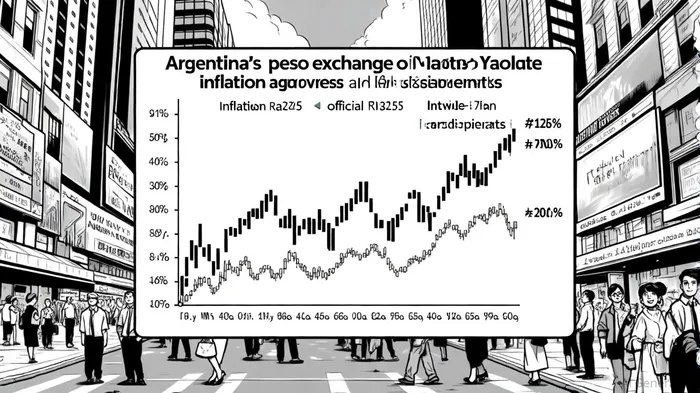
Argentina's economy is at a crossroads, teetering between a hard-won stabilization and the ghosts of its past defaults. Under President 's radical fiscal reforms, , marking a pivotal shift from years of currency controls and hyperinflation[1]. These measures aim to dismantle the “cepo” restrictions, stabilize the peso, and reintegrate Argentina into global capital markets. But for investors, the question remains: Is this a once-in-a-lifetime opportunity or a high-risk bet on a nation still haunted by structural fragility?
A Stabilization Plan Built on Fire and Fury
Milei's administration has embraced a scorched-earth approach to fiscal discipline, slashing public spending by 20% and cutting capital expenditures, public wages, and pensions[2]. The (BCRA) has adopted a hybrid monetary framework: an official exchange rate with a preannounced 2% monthly devaluation, paired with a floating parallel (blue) dollar rate. This dual-track system is designed to align market expectations while avoiding abrupt currency shocks. According to a report by the , .
The IMF's $20 billion Extended Fund Facility (EFF) is critical to this strategy, providing liquidity to build international reserves and fund fiscal consolidation[4]. , signaling multilateral confidence in Argentina's reform agenda. Yet, as Bloomberg notes, , creating a paradox: while lower inflation and fiscal surpluses are positive, an overvalued currency could stifle exports and deter foreign investment[5].
Credit Rating Upgrades: A Glimmer of Hope
's recent upgrade of Argentina's credit rating to Caa1—a first in five years—reflects cautious optimism[6]. , , and the IMF's financial backing as key drivers[7]. S&P's stable outlook on Argentina's transfer and convertibility risks also suggests reduced interference in foreign currency transactions[8]. However, these ratings remain speculative-grade, , weak external buffers, and political instability.
FDI Inflows: A Ray of Light in a Dark Room
(FDI) has surged in Q3 2024, , driven by mining, construction, and energy sectors[9]. The U.S., Spain, and Brazil are leading contributors, lured by Argentina's lithium reserves and tax incentives under the RIGI regime[10]. The construction industry, buoyed by FDI, . Yet, as Deloitte warns, Argentina's high informality rate (over 40% of the economy) and institutional weaknesses could erode investor returns[12].
Currency Risk: The Sword of Damocles
Despite progress, the peso remains a ticking time bomb. , . The BCRA's interventions—daily trading bands and dollar sales—have stabilized the currency temporarily, but a rapid devaluation could reignite inflation and trigger capital flight[14]. .
Emerging Market Exposure: A Calculated Gamble
For emerging market investors, Argentina offers a mix of allure and peril. The OECD's 2025 report notes that Argentina's reforms have positioned it for a “strong recovery,” but fiscal discipline and structural reforms are non-negotiable for sustained success[16]. The country's reliance on volatile agricultural exports and global commodity prices means external shocks—like a slowdown in China or Brazil—could derail progress[17].
The Bottom Line: Caution and Opportunity
Argentina's economic stabilization is a work in progress. The IMF's support, fiscal austerity, and credit upgrades are positive signals, but the peso's volatility, political instability, and structural weaknesses demand caution. For investors with a high risk tolerance, Argentina's undervalued assets and reform momentum present opportunities. However, hedging against currency risk and diversifying exposure across sectors will be crucial. As the OECD aptly puts it, “Argentina's path is narrow but navigable—if it stays the course.”[18]







Comentarios
Aún no hay comentarios