
Argentina Economy: Shrinking 2.6% in Q3, Recession Break Imminent?
Generado por agente de IAWesley Park
jueves, 12 de diciembre de 2024, 3:54 pm ET1 min de lectura
BCO--
As we delve into the third quarter of 2024, Argentina's economic landscape presents a fascinating conundrum. Despite initial expectations, the economy is projected to shrink by a significant 2.6% in Q3, raising the question: is Argentina on the brink of breaking its recession?
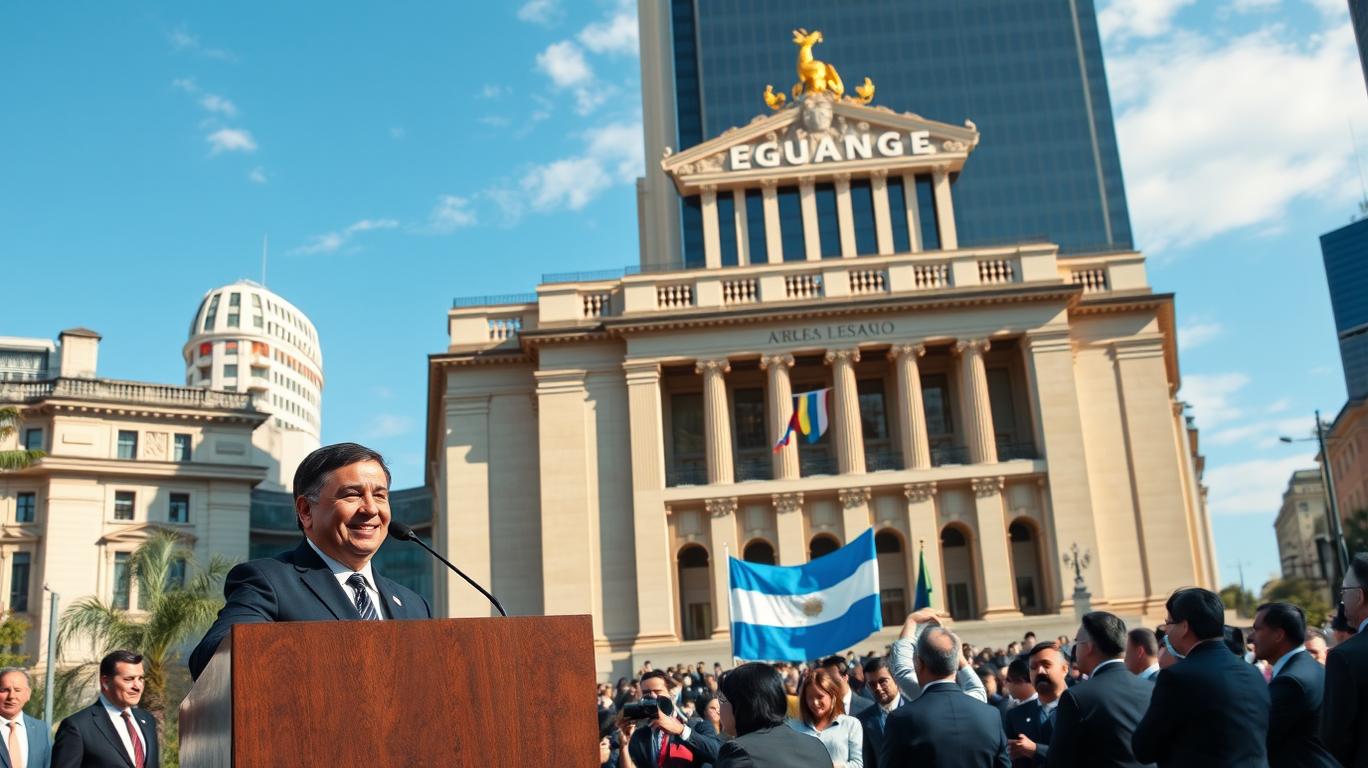
The government's fiscal adjustment framework, aimed at achieving zero deficit, has had a substantial impact on economic activity. The framework, which includes reducing budgetary allocations and increasing taxes, has led to a significant decline in private consumption and domestic investment. This contraction is primarily due to the government's rigorous fiscal adjustment and monetary contraction, which have negatively impacted private consumption and domestic investment.
The Central Bank of Argentina (BCRA) has played a crucial role in the country's economic performance during this period. In 2024, the BCRA maintained a crawling peg of 2% per month, aiming to reinforce the disinflation process. However, this policy slowed down the accumulation of reserves and made it harder to accumulate international reserves. The BCRA's strategy of maintaining a stable broad money supply and offsetting money issued from foreign currency purchases while maintaining a fiscal surplus helped control inflation and stabilize the exchange rate. Despite the challenges, the BCRA's monetary policy contributed to a gradual normalization of the exchange rate market, expected to continue in 2025.
The government's commitment to fiscal balance and monetary discipline has also contributed to a disinflation process, with inflation expected to settle around 35% by 2025. The maintenance of a crawling peg at 2% m/m has reinforced the disinflation process but has slowed down the accumulation of reserves by the Central Bank (BCRA). The government anticipates a gradual normalization of the exchange rate market during 2025.
As we navigate the complexities of Argentina's economic landscape, it is essential to consider the role of external factors such as labor market dynamics, wage inflation, and geopolitical tensions affecting semiconductor supply chains. These factors may influence the country's economic recovery and the potential break from its ongoing recession.
In conclusion, Argentina's economy is facing significant challenges, with a projected 2.6% shrink in Q3 2024. The government's fiscal adjustment framework and the Central Bank's monetary policy have had a substantial impact on economic activity, private consumption, and domestic investment. As the country works towards fiscal sustainability and exchange rate unification, it is crucial to address external factors and foster independent corporate initiatives to support a stable and enduring economic recovery.
Action AlertsPLUS, managed by the article's co-writer, holds no positions in any mentioned securities. The financial insights provided in this article are neutral and based on the author's analysis and understanding of the market.
WTRG--
As we delve into the third quarter of 2024, Argentina's economic landscape presents a fascinating conundrum. Despite initial expectations, the economy is projected to shrink by a significant 2.6% in Q3, raising the question: is Argentina on the brink of breaking its recession?
The government's fiscal adjustment framework, aimed at achieving zero deficit, has had a substantial impact on economic activity. The framework, which includes reducing budgetary allocations and increasing taxes, has led to a significant decline in private consumption and domestic investment. This contraction is primarily due to the government's rigorous fiscal adjustment and monetary contraction, which have negatively impacted private consumption and domestic investment.
The Central Bank of Argentina (BCRA) has played a crucial role in the country's economic performance during this period. In 2024, the BCRA maintained a crawling peg of 2% per month, aiming to reinforce the disinflation process. However, this policy slowed down the accumulation of reserves and made it harder to accumulate international reserves. The BCRA's strategy of maintaining a stable broad money supply and offsetting money issued from foreign currency purchases while maintaining a fiscal surplus helped control inflation and stabilize the exchange rate. Despite the challenges, the BCRA's monetary policy contributed to a gradual normalization of the exchange rate market, expected to continue in 2025.
The government's commitment to fiscal balance and monetary discipline has also contributed to a disinflation process, with inflation expected to settle around 35% by 2025. The maintenance of a crawling peg at 2% m/m has reinforced the disinflation process but has slowed down the accumulation of reserves by the Central Bank (BCRA). The government anticipates a gradual normalization of the exchange rate market during 2025.
As we navigate the complexities of Argentina's economic landscape, it is essential to consider the role of external factors such as labor market dynamics, wage inflation, and geopolitical tensions affecting semiconductor supply chains. These factors may influence the country's economic recovery and the potential break from its ongoing recession.
In conclusion, Argentina's economy is facing significant challenges, with a projected 2.6% shrink in Q3 2024. The government's fiscal adjustment framework and the Central Bank's monetary policy have had a substantial impact on economic activity, private consumption, and domestic investment. As the country works towards fiscal sustainability and exchange rate unification, it is crucial to address external factors and foster independent corporate initiatives to support a stable and enduring economic recovery.

Divulgación editorial y transparencia de la IA: Ainvest News utiliza tecnología avanzada de Modelos de Lenguaje Largo (LLM) para sintetizar y analizar datos de mercado en tiempo real. Para garantizar los más altos estándares de integridad, cada artículo se somete a un riguroso proceso de verificación con participación humana.
Mientras la IA asiste en el procesamiento de datos y la redacción inicial, un miembro editorial profesional de Ainvest revisa, verifica y aprueba de forma independiente todo el contenido para garantizar su precisión y cumplimiento con los estándares editoriales de Ainvest Fintech Inc. Esta supervisión humana está diseñada para mitigar las alucinaciones de la IA y garantizar el contexto financiero.
Advertencia sobre inversiones: Este contenido se proporciona únicamente con fines informativos y no constituye asesoramiento profesional de inversión, legal o financiero. Los mercados conllevan riesgos inherentes. Se recomienda a los usuarios que realicen una investigación independiente o consulten a un asesor financiero certificado antes de tomar cualquier decisión. Ainvest Fintech Inc. se exime de toda responsabilidad por las acciones tomadas con base en esta información. ¿Encontró un error? Reportar un problema


SOBRE NOSOTROS
Nuestra historiaAutores de noticiasBase de conocimientosPolítica de privacidadTérmino de usoDescargo de responsabilidad de corretaje de tercerosTérminos de uso de AIMEDivulgaciones de riesgos de AInvest AICarrerasCONTÁCTENOS
Email: support@ainvest.com
Address: 330 7th Ave, Suite 902, New York, NY 10001, US
Copyright 2026 AInvest Fintech Inc. All rights reserved.


Comentarios
Aún no hay comentarios