
Argan and Danone's Strategic Logistics Partnership: A Catalyst for Sustainable Growth in Europe's Evolving Supply Chain Sector
The European logistics sector is undergoing a profound transformation, driven by post-pandemic demand for resilient supply chains, sustainability mandates, and the rise of cold storage infrastructure. At the forefront of this evolution is ArganAGX--, a leader in logistics real estate, whose recent partnership with Danone-a global food and beverage giant-signals a pivotal step in consolidating its market leadership. By developing a state-of-the-art logistics site in Sorigny, France, Argan is not only addressing Danone's operational needs but also aligning with broader industry trends that prioritize sustainability, efficiency, and regionalization. This collaboration, underpinned by a nine-year lease and cutting-edge green technology, positions both companies to capitalize on Europe's $12.5 billion cold storage market, which is projected to grow at 5–6% annually through 2025, according to a FreightWaves report.
Strategic Synergy: Cold Storage and Sustainability
The Sorigny logistics site, spanning 8,200 square meters, includes 6,400 square meters of positive cold storage (2–6°C) and an 800-square-meter office block, according to a GlobeNewswire release. Crucially, the facility is part of Argan's Aut0nom®-labelled developments, which integrate renewable energy solutions such as solar power and on-site green energy production. This design reduces the site's carbon footprint by up to 60%, aligning with Danone's net-zero ambitions and the EU's Corporate Sustainability Reporting Directive (CSRD), according to a Forbes analysis. By 2026, when the facility becomes operational, it will double Danone's logistics capacity in Western France, enabling the company to distribute dairy and plant-based products closer to consumer hubs in the Greater West region, per an InvestorsHangout report.
This partnership reflects a broader industry shift toward localized supply chains. As OC&C Strategy Consultants note, European companies are increasingly prioritizing regional production and distribution to mitigate global supply chain risks. For Argan, the Sorigny project reinforces its reputation as a developer of premium, sustainable logistics assets, a niche that commands premium rents in a market where 40% of cold storage capacity remains fragmented among smaller operators.
Post-Pandemic Trends and Market Dynamics
The pandemic accelerated demand for cold storage, particularly for perishable goods, as consumers shifted toward fresh, healthy, and locally sourced food. This trend is expected to persist, with a JLL forecast indicating that cold storage demand in Europe will remain robust through 2025. Argan's collaboration with Danone taps into this demand while addressing two critical pain points: energy efficiency and automation. The Sorigny site's Aut0nom® technology not only reduces energy consumption but also supports Danone's need for flexible, tech-enabled logistics solutions.
Automation, however, remains selective in the cold storage sector. While high-bay warehouses are ideal for standardized products like frozen meals, fresh produce and dairy still require conventional facilities with human oversight. Argan's Sorigny site strikes a balance, offering advanced temperature controls and energy systems without over-reliance on automation-a strategic choice that aligns with Danone's product portfolio.
Regulatory Tailwinds and Competitive Positioning
The EU's CSRD and Corporate Sustainability Due Diligence (CSDD) regulations are reshaping corporate behavior, compelling companies to decarbonize supply chains and disclose environmental impacts. Argan's partnership with Danone demonstrates how logistics providers can help tenants meet these requirements. By embedding renewable energy and carbon-neutral operations into its developments, Argan is differentiating itself in a market where 70% of cold storage operators lack comparable sustainability credentials, according to an OC&C report.
Moreover, speculative construction-a trend where developers build facilities without pre-leased tenants-is gaining traction in high-growth regions like Iberia and Eastern Europe. Argan's Sorigny project, though pre-leased, mirrors this speculative approach by anticipating Danone's future needs and setting a benchmark for sustainable logistics. This forward-looking strategy could attract other ESG-focused tenants, further solidifying Argan's market leadership.
Investment Implications
For investors, Argan's partnership with Danone underscores the company's ability to secure long-term, high-margin contracts in a sector poised for structural growth. The nine-year lease, coupled with the facility's sustainability features, provides Argan with stable cash flows and a competitive edge in a market where ESG compliance is becoming a non-negotiable for tenants. Meanwhile, Danone's investment in Sorigny enhances its operational resilience and aligns with its broader strategy to localize production, a move that could boost its market share in Europe's $150 billion dairy sector.
In a post-pandemic landscape where supply chain agility and sustainability are paramount, Argan and Danone's collaboration exemplifies how strategic partnerships can drive long-term value. As the EU's regulatory environment tightens and consumer preferences evolve, companies that prioritize innovation and environmental stewardship-like Argan and Danone-are likely to outperform peers in the coming decade.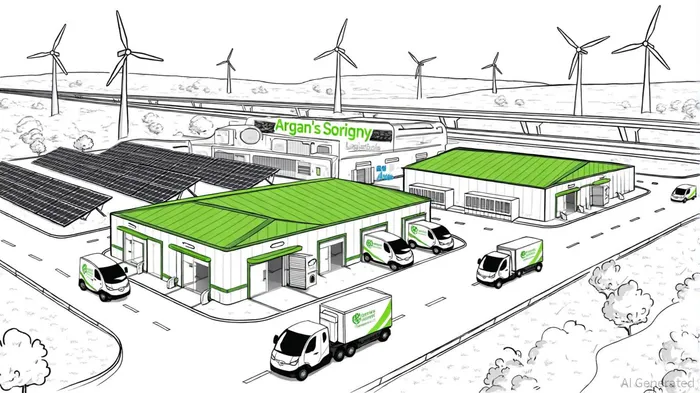





Comentarios
Aún no hay comentarios