
Ares Management Slides 4.59% As Technicals Signal Bearish Momentum Below Key Support
Generado por agente de IAAinvest Technical Radar
martes, 19 de agosto de 2025, 6:41 pm ET2 min de lectura
ARES--
Ares Management (ARES) closed at $180.59 on August 19, 2025, declining 4.59% during the session with an intraday low of $179.37 and high of $189.76. This analysis evaluates key technical indicators to assess the stock’s trajectory.
Candlestick Theory
Recent candlesticks reveal bearish momentum, with the August 19 session printing a long red candle closing near its low after breaching the $183–$185 support zone (July 21–24 lows). The failure to sustain above $189.76 resistance highlights selling pressure. Key support now resides near $178–$179, aligning with the July 21 swing low ($178.38). Resistance is established at $189–$191, reinforced by the August 14–15 highs.
Moving Average Theory
The 50-day moving average (MA) near $185 has crossed below the 100-day MA (approximately $178), signaling short-term bearish momentum. The 200-day MA (around $170) remains in an uptrend, affirming the longer-term bullish bias. The current price ($180.59) trading below the 50-day MA but above the 100-day and 200-day MAs suggests intermediate-term consolidation within a broader uptrend.
MACD & KDJ Indicators
The MACD histogram shows persistent negative momentum, with the MACD line below its signal line since mid-August, indicating bearish continuation. However, the KDJ oscillator presents a near-term oversold signal: The %K value (7.7) and %J (-3.0) are deeply oversold (August 19 calculation: %K = [(180.59 - 179.37) / (195.26 - 179.37)] × 100 = 7.7). This divergence suggests potential exhaustion in downward momentum, though sustained values below 20 warrant caution.
Bollinger Bands
Bollinger Bands expanded sharply on August 19, reflecting heightened volatility during the sell-off. The price closed near the lower band ($179), typically an oversold signal. While this may foreshadow a mean-reversion bounce, the band expansion supports continued near-term volatility. A close above the 20-day moving average (~$185) would signal stabilization.
Volume-Price Relationship
Volume surged 73% on August 19 relative to the prior session, confirming the bearish price move. This distribution pattern—higher volume on down days—implies institutional selling. Conversely, the August 12 rally (+3.33%) saw only moderate volume, undermining its sustainability. Volume divergence remains a concern for recovery attempts.
Relative Strength Index (RSI)
The 14-day RSI (approximated at 28) entered oversold territory, its lowest level since April 2025. While this suggests depleted selling pressure, RSI divergence is absent; prior lows (e.g., July 21) coincided with similarly depressed RSI readings. A rebound above 30 is needed to support reversal potential.
Fibonacci Retracement
Using the 2025 swing high ($199.94 on January 31) and swing low ($113.24 on April 4), key retracement levels are $179.48 (23.6%) and $166.82 (38.2%). The August 19 low ($179.37) tested the 23.6% support level, aligning with historical swing lows ($178.38). Confluence at this zone may offer technical support. A decisive break below $179.48 would expose the 38.2% retracement.
Confluence and Divergence
Significant confluence exists near $178–$179, combining the 23.6% Fibonacci level, July 21 price low, and lower BollingerBINI-- Band. This enhances support validity. However, bearish divergences emerge: MACD deterioration contrasts with oversold KDJ/RSI readings, reflecting internal conflict between momentum and reversal signals. The high-volume breakdown below the 50-day MA favors near-term caution, though oversold oscillators increase rebound probability.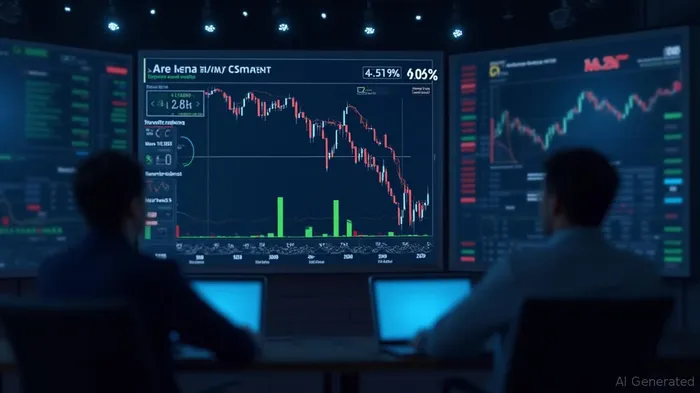
Ares Management (ARES) closed at $180.59 on August 19, 2025, declining 4.59% during the session with an intraday low of $179.37 and high of $189.76. This analysis evaluates key technical indicators to assess the stock’s trajectory.
Candlestick Theory
Recent candlesticks reveal bearish momentum, with the August 19 session printing a long red candle closing near its low after breaching the $183–$185 support zone (July 21–24 lows). The failure to sustain above $189.76 resistance highlights selling pressure. Key support now resides near $178–$179, aligning with the July 21 swing low ($178.38). Resistance is established at $189–$191, reinforced by the August 14–15 highs.
Moving Average Theory
The 50-day moving average (MA) near $185 has crossed below the 100-day MA (approximately $178), signaling short-term bearish momentum. The 200-day MA (around $170) remains in an uptrend, affirming the longer-term bullish bias. The current price ($180.59) trading below the 50-day MA but above the 100-day and 200-day MAs suggests intermediate-term consolidation within a broader uptrend.
MACD & KDJ Indicators
The MACD histogram shows persistent negative momentum, with the MACD line below its signal line since mid-August, indicating bearish continuation. However, the KDJ oscillator presents a near-term oversold signal: The %K value (7.7) and %J (-3.0) are deeply oversold (August 19 calculation: %K = [(180.59 - 179.37) / (195.26 - 179.37)] × 100 = 7.7). This divergence suggests potential exhaustion in downward momentum, though sustained values below 20 warrant caution.
Bollinger Bands
Bollinger Bands expanded sharply on August 19, reflecting heightened volatility during the sell-off. The price closed near the lower band ($179), typically an oversold signal. While this may foreshadow a mean-reversion bounce, the band expansion supports continued near-term volatility. A close above the 20-day moving average (~$185) would signal stabilization.
Volume-Price Relationship
Volume surged 73% on August 19 relative to the prior session, confirming the bearish price move. This distribution pattern—higher volume on down days—implies institutional selling. Conversely, the August 12 rally (+3.33%) saw only moderate volume, undermining its sustainability. Volume divergence remains a concern for recovery attempts.
Relative Strength Index (RSI)
The 14-day RSI (approximated at 28) entered oversold territory, its lowest level since April 2025. While this suggests depleted selling pressure, RSI divergence is absent; prior lows (e.g., July 21) coincided with similarly depressed RSI readings. A rebound above 30 is needed to support reversal potential.
Fibonacci Retracement
Using the 2025 swing high ($199.94 on January 31) and swing low ($113.24 on April 4), key retracement levels are $179.48 (23.6%) and $166.82 (38.2%). The August 19 low ($179.37) tested the 23.6% support level, aligning with historical swing lows ($178.38). Confluence at this zone may offer technical support. A decisive break below $179.48 would expose the 38.2% retracement.
Confluence and Divergence
Significant confluence exists near $178–$179, combining the 23.6% Fibonacci level, July 21 price low, and lower BollingerBINI-- Band. This enhances support validity. However, bearish divergences emerge: MACD deterioration contrasts with oversold KDJ/RSI readings, reflecting internal conflict between momentum and reversal signals. The high-volume breakdown below the 50-day MA favors near-term caution, though oversold oscillators increase rebound probability.

Divulgación editorial y transparencia de la IA: Ainvest News utiliza tecnología avanzada de Modelos de Lenguaje Largo (LLM) para sintetizar y analizar datos de mercado en tiempo real. Para garantizar los más altos estándares de integridad, cada artículo se somete a un riguroso proceso de verificación con participación humana.
Mientras la IA asiste en el procesamiento de datos y la redacción inicial, un miembro editorial profesional de Ainvest revisa, verifica y aprueba de forma independiente todo el contenido para garantizar su precisión y cumplimiento con los estándares editoriales de Ainvest Fintech Inc. Esta supervisión humana está diseñada para mitigar las alucinaciones de la IA y garantizar el contexto financiero.
Advertencia sobre inversiones: Este contenido se proporciona únicamente con fines informativos y no constituye asesoramiento profesional de inversión, legal o financiero. Los mercados conllevan riesgos inherentes. Se recomienda a los usuarios que realicen una investigación independiente o consulten a un asesor financiero certificado antes de tomar cualquier decisión. Ainvest Fintech Inc. se exime de toda responsabilidad por las acciones tomadas con base en esta información. ¿Encontró un error? Reportar un problema


SOBRE NOSOTROS
Nuestra historiaAutores de noticiasBase de conocimientosPolítica de privacidadTérmino de usoDescargo de responsabilidad de corretaje de tercerosTérminos de uso de AIMEDivulgaciones de riesgos de AInvest AICarrerasCONTÁCTENOS
Email: support@ainvest.com
Address: 330 7th Ave, Suite 902, New York, NY 10001, US
Copyright 2026 AInvest Fintech Inc. All rights reserved.


Comentarios
Aún no hay comentarios